THE CLASSIC COLLECTION✦Windmills: A book of fablesCLASSIC FREE BOOKS
Windmills: A book of fables
Gilbert Cannan
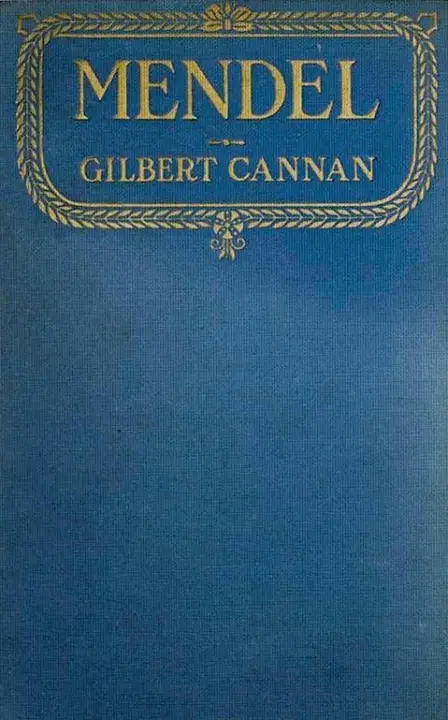
THE CLASSIC COLLECTION · 1916
"Mendel: A Story of Youth" by Gilbert Cannan is a novel written in the early 20th century. The narrative follows the life of Mendel Kühler, a young Jewish boy who immigrates with his family from Austrian Poland to London, documenting their struggles with poverty, identity, and ambition. Central to the story are Mendel's aspirations to become an artist, juxtaposed against the harsh realities faced by his family in a foreign land. The opening of the story introduces us to the Kühler family as they arrive in London, grappling with the chaos of the city and their uncertain future. Mendel and his family navigate their new environment, filled with both hope and despair, as they confront the challenges of life in a bustling metropolis far removed from their previous home. Mendel's unique sensitivity to beauty sets the stage for his artistic aspirations, while his mother, Golda, and father, Jacob, embody the complexity of familial expectations amid economic hardship. The foundation of Mendel's character and the dynamics that will shape his journey are thoughtfully established, hinting at the struggles and triumphs yet to come.
Introduction adapted from the source catalogue; source summaries may be automatically generated.
Free to read · English · 126,993 words · No account needed
MAKE TIME FOR A GOOD BOOK
On by default. Untick to stop anonymous reading totals. Each page counts after 10 seconds in view. How this works.
Anonymous counting is on unless you have switched it off.
They found common ground in Blake, whom Mendel consented to read
because Blake was the only English painter who had had any idea of art
at all.
Blake brought them much closer together, and their tussles were sharper, but less futile and exasperating.
"Why don't you take a lesson from Mrs. Blake?" he asked, after they
had read the Life.
"What? And sit and hold your hand? You'd turn round and hit me."
"I believe I would," he laughed. "By Jove! I believe I would."
He was not easy for her to handle. It was like playing with high explosives, save that she was not playing.
She said to him once, when they had come very near the intimacy she
desired:--
"I believe you would understand me if only you could let go."
"How can I let go," he roared, "when I feel that you are weighing and judging and criticizing every word I say, every thing I do?"
And she was silent for a long time. It was a new and dreadful idea, that she was hemming him in by making him feel that she was judging him. It was so far from her intention that she protested:--
"I am not judging you. I accept you just as you are."
"Accept!" he grumbled. "Accept! When you keep me at arm's-length!"
"I go as far as we can, then it breaks down."
"What breaks down?"
"I don't know what to call it. Sympathy, if you like."
"Oh! then if it breaks down it isn't any good, and we may as well give it up for ever. I will learn to shuffle along without you."
"I won't shuffle. I refuse to hear of your shuffling."
"Then you want to know what to do?"
"What?"
"Take your place by my side, walk along with me like a sober, decent
woman."
"But I want to fly with you, hand in hand."
She was elated, exalted. Her eyes shone and she glowed with excitement and hope. Surely he would understand now! Surely she had found words for it at last!
"That's rubbish," he said. "Men aren't birds, and they are not angels. If you want to fly, go up in an airyoplane. That's another machine like the cinema. It relieves human beings of another mania."
She turned away to hide the tears that had gushed to her eyes. Why did he waste his strength? Why did he keep his force from entering into his imagination?
That evening was most miserable for her, and she was glad when it came
to an end.
Your reading position is saved on this browser. Take it to another device with a library code. Reading pages adapt to text, rather than matching a printed edition.
Gilbert Cannan
Gilbert Cannan
Gilbert Cannan
Gilbert Cannan
BEHIND THE BOOK
This eBook is for the use of anyone anywhere in the United States and most other parts of the world at no cost and with almost no restrictions whatsoever. You may copy it, give it away or re-use it under the terms of the Project Gutenberg License included with this eBook or online at www.gutenberg.org. If you are not located in the United States, you will have to check the laws of the country where you are located before using this eBook. Read the source licence.
The original source file, including credits and licence, is retained by this library. Request an original-format copy at no charge. Please include the book title and Project Gutenberg identifier #54931.
KEEP YOUR CURIOSITY GOING
Coulson Kernahan

Maurice Baring
Frances Wright
Cécile Tormay

Frederic Jesup Stimson

W. H. P. (William Henry Pope) Jarvis