The northern whale-fishery
William Scoresby
THE CLASSIC COLLECTION · 1835
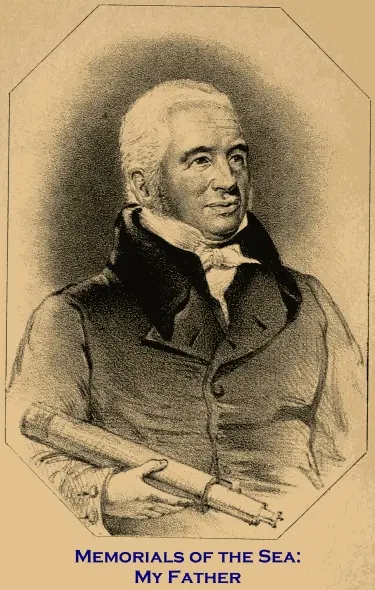
"Memorials of the Sea: My Father" by William Scoresby is a historical account written in the early 19th century. This work recounts the adventurous life of William Scoresby, Esq., a notable figure from Whitby who made significant contributions to the Greenland whale-fishing industry. The narrative is presented through the perspective of his son, the Reverend William Scoresby, D.D., who shares his father's remarkable experiences and achievements, which include his journey from humble beginnings to becoming a prominent Arctic navigator. At the start of the memoir, the author introduces the early life of his father, detailing his upbringing in a farming family and his early education. Inspired by a desire for adventure, William Scoresby decided to leave farming for a life at sea, ultimately becoming an apprentice in Whitby. The opening highlights some formative events, including his decision to pursue seafaring after rejecting an unfulfilling rural life. It sets the tone for a tale filled with challenges, personal growth, and encounters with fortune and misfortune in the perilous world of maritime exploration and whaling. The memoir not only charts Scoresby's professional progress but also touches on broader themes of providence, resilience, and the nature of adventure itself.
Introduction adapted from the source catalogue; source summaries may be automatically generated.
Free to read · English · 56,896 words · No account needed
MAKE TIME FOR A GOOD BOOK
On by default. Untick to stop anonymous reading totals. Each page counts after 10 seconds in view. How this works.
Anonymous counting is on unless you have switched it off.
"This act of generous friendship," remarks the writer of the Memoir, "deserves to be recorded on three accounts: first, for the honour of our common nature; secondly, to be contrasted with the villany of the pretended soldier; and thirdly, to illustrate the watchful Providence of God."
Having delivered their cargo at Limehouse, and taken in ballast, they sailed on their second voyage, to St. Petersburgh, for a cargo of hemp and iron. Here they were unfortunately caught in the formation of ice, with but little expectation of escaping during the winter. But on the 4th of November, a gale from the eastward having broken up the impeding ice, they immediately sailed, and in four days reached Elsinore, where they expected to join convoy for England. All the men-of-war from home, however, having sailed, they joined a fleet of similarly unprotected ships, numbering altogether six-and-twenty sail, and together proceeded for England. About half-way across the German ocean, they proved the advantage of their mutual association for defence, a large cutter privateer having hove in sight, and attacked the rear of the fleet. For a considerable time the enemy's fire was directed from a respectful distance against the nearest ships, which they, according to their proportion of armament, as actively returned,--so actively, indeed, that, in their ill-provided warlike stores, they soon expended the greater part of their ammunition. The enemy, however, ignorant of this circumstance, and unable to detach any single vessel, kept aloof, probably for the chance of the night; but the night proved dark, and afforded them a screen from the prowler, and they all escaped unscathed into port.
They reached Portsmouth, their new destination, about the middle of December, and delivered their cargo among the naval stores of the King's Yard.
During the discharging of the cargo, my Father received vexatious abuse, without any provocation on his part, from the chief-mate of the ship, which so annoyed him that, under the impulse of a strongly excited feeling, he had resolved to quit the Jane, and enter on board His Majesty's ship the Royal George, just then passing them from the graving-dock, where she had been undergoing repairs. But reflecting on something which, in the bustle and confusion amongst her crew as she hauled away, he had observed incongruous with his feelings, he happily paused in his hasty resolve, and ultimately decided on submitting himself to a continuance, though under the constant exposure to like arbitrary annoyance, of the duties of his humble station, with a view to the fulfilment of the engagement he had entered into with the owner of the Jane. And, as estimated by the probability of his being involved in the disaster of that ill-fated ship, had he entered on board of her, the decision appeared to be Providentially guided; for at no long interval after this time it was that the Royal George came to her end so strangely, as to place the catastrophe alone and without parallel, amid the varied and marvellous records of our naval history. The story is well known. She was "careening," for the purpose of having some caulking of her seams effected, or damage of her copper sheathing repaired, whilst anchored at Spithead, with her lower-deck ports open in all imaginable safety. A sudden squall, whilst the ship swung across the tide, laid her on her beam-ends; the water poured in by the open ports in such force and quantity, that she sunk in less than eight minutes, involving officers, men, and visitors, so generally in the common catastrophe, that out of about 1200 souls, or upward, on board, only 331 escaped alive! The brave Admiral Kempenfelt, an experienced and accomplished navigator, who, through many perils of war and tempest had passed unscathed, suffered among the rest, a fate which, very probably, had been that of my Father, had he carried out his impetuously-formed design. But, with the good hand of God upon him, he escaped the then unimagined peril.
Your reading position is saved on this browser. Take it to another device with a library code. Reading pages adapt to text, rather than matching a printed edition.
William Scoresby
William Scoresby
BEHIND THE BOOK
This eBook is for the use of anyone anywhere in the United States and most other parts of the world at no cost and with almost no restrictions whatsoever. You may copy it, give it away or re-use it under the terms of the Project Gutenberg License included with this eBook or online at www.gutenberg.org. If you are not located in the United States, you will have to check the laws of the country where you are located before using this eBook. Read the source licence.
The original source file, including credits and licence, is retained by this library. Request an original-format copy at no charge. Please include the book title and Project Gutenberg identifier #35183.
KEEP YOUR CURIOSITY GOING
Cécile Tormay

Moritz Busch
John L. Ransom
Frances Wright
Cécile Tormay

Mabel Potter Daggett