The northern whale-fishery
William Scoresby
THE CLASSIC COLLECTION · 1835
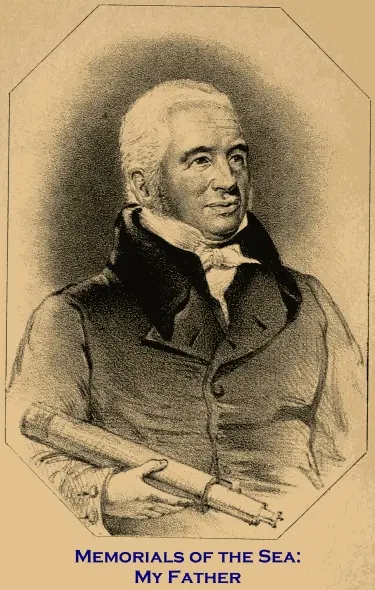
"Memorials of the Sea: My Father" by William Scoresby is a historical account written in the early 19th century. This work recounts the adventurous life of William Scoresby, Esq., a notable figure from Whitby who made significant contributions to the Greenland whale-fishing industry. The narrative is presented through the perspective of his son, the Reverend William Scoresby, D.D., who shares his father's remarkable experiences and achievements, which include his journey from humble beginnings to becoming a prominent Arctic navigator. At the start of the memoir, the author introduces the early life of his father, detailing his upbringing in a farming family and his early education. Inspired by a desire for adventure, William Scoresby decided to leave farming for a life at sea, ultimately becoming an apprentice in Whitby. The opening highlights some formative events, including his decision to pursue seafaring after rejecting an unfulfilling rural life. It sets the tone for a tale filled with challenges, personal growth, and encounters with fortune and misfortune in the perilous world of maritime exploration and whaling. The memoir not only charts Scoresby's professional progress but also touches on broader themes of providence, resilience, and the nature of adventure itself.
Introduction adapted from the source catalogue; source summaries may be automatically generated.
Free to read · English · 56,896 words · No account needed
MAKE TIME FOR A GOOD BOOK
On by default. Untick to stop anonymous reading totals. Each page counts after 10 seconds in view. How this works.
Anonymous counting is on unless you have switched it off.
Fortunately for them, the Bay of Biscay maintained its too dreaded celebrity at the season referred to, by becoming the scene of a formidable sea and storm. The gale commenced rather suddenly, and became rapidly so fierce, that the seamen, who were quite inadequate in number, as well as in capabilities, were unable to get in the sail within the limits of safety. The canvas was flapping furiously aloft, and all efforts to reef were distressingly slow. Meanwhile my Father and his comrade were eyed with indignation and surprise by the Captain, as they moved on the deck, or stood holding by the "weather-rail," with quiet composure, as if ignorant of, or indifferent to, the increasing peril of the position of the ship. At last, an exclamation of astonishment burst from the Captain, that, regardless of the general safety, they should not offer a helping hand. They replied most coolly, "that the crew, they understood, was ample, and needed no help of theirs, and they were but passengers!" The perplexed commander turned away in ill-concealed vexation. Still the gale increased in severity, till the ship was thrown almost on her "beam-ends," and their situation became quite alarming. He then renewed his application under a severe taunt, as if it were unmanly to allow the crew to struggle so against the difficulties of the storm, and they, two able and efficient seamen, looking on! "Destroy the paper," they said, "and let us work our passage, and we shall be ready for your orders." Desperate now, in his anxiety to save the canvas and spars, and, indeed, to secure the safety of the ship, the Captain produced the important and vexatious paper, and tearing it passionately into pieces, he scattered its fragments on the wild waste of waters to leeward.
Forthwith the two emancipated passengers spring forward to their duty as members of the crew. They could not have been unobservant of the slovenly manner in which yards and sails had been prepared for the operation of reefing,--so ill-arranged, indeed, with a ship heeling almost yard-arm in the water, and sails flying over the yards to leeward, as to render the operation scarcely practicable. First of all the yards are, in a seamanlike manner, laid to pass; braces are hauled taught, and lower yards steadied by the "trusses" and "lifts;" "reef-tackles," with a helping hand probably by the men aloft, are well hauled out, and the inflated and flapping canvas pressed in by the "buntlines" to the yards,--and then, bounding into the rigging, their feet scarcely touch the "ratlines," as, aided by the elasticity of tension in the shrouds, they ascend up the mast. Way is instinctively made by the previously dispirited hands for my Father to the "weather-earing" of the topsail, and for his friend to leeward. Here, as in most other operations, his singular energy, strength and skill, render him wonderfully efficient. Seated across the yard-arm, with shoulder steadied and supported by the "lift,"--the "earing" passed round and reeved in the "reef-cringle" of the sail,--he is enabled, with little aid from the hands on the yard, to haul out the sail by vast muscular strength, skilfully applied, to the fitting position, when the cry "Haul out to leeward," is replied to by his associate there with similar vigour and celerity of action, so that the enclosed section of the sail, previously so intractable under other hands, is in a few moments laid compact on the yard, and securely enfolded within the "reef-points." Thus reef succeeded reef, till the broad flapping sail displayed but its smallest dimensions--the "close-reef" adapted for the storm, whilst corresponding operations were performed on the other sails with marvellous smartness and despatch; for the superior energy and commanding efficiency of these leaders, of a previously heartless and dispirited crew, had happily infused into all a new spirit of confidence, and stimulated to unwonted effort to imitate their admired ability, and thus to become useful helps in the task to be accomplished.
Your reading position is saved on this browser. Take it to another device with a library code. Reading pages adapt to text, rather than matching a printed edition.
William Scoresby
William Scoresby
BEHIND THE BOOK
This eBook is for the use of anyone anywhere in the United States and most other parts of the world at no cost and with almost no restrictions whatsoever. You may copy it, give it away or re-use it under the terms of the Project Gutenberg License included with this eBook or online at www.gutenberg.org. If you are not located in the United States, you will have to check the laws of the country where you are located before using this eBook. Read the source licence.
The original source file, including credits and licence, is retained by this library. Request an original-format copy at no charge. Please include the book title and Project Gutenberg identifier #35183.
KEEP YOUR CURIOSITY GOING
Cécile Tormay

Moritz Busch
John L. Ransom
Frances Wright
Cécile Tormay

Mabel Potter Daggett