The northern whale-fishery
William Scoresby
THE CLASSIC COLLECTION · 1835
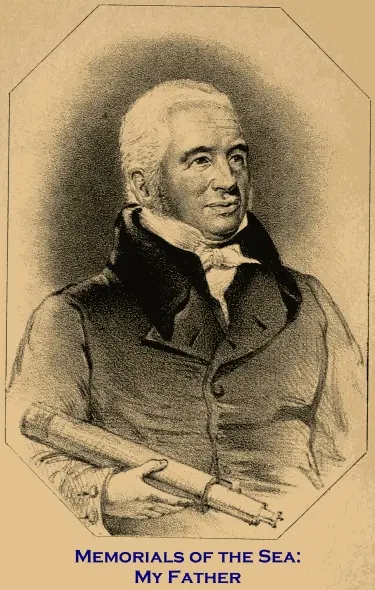
"Memorials of the Sea: My Father" by William Scoresby is a historical account written in the early 19th century. This work recounts the adventurous life of William Scoresby, Esq., a notable figure from Whitby who made significant contributions to the Greenland whale-fishing industry. The narrative is presented through the perspective of his son, the Reverend William Scoresby, D.D., who shares his father's remarkable experiences and achievements, which include his journey from humble beginnings to becoming a prominent Arctic navigator. At the start of the memoir, the author introduces the early life of his father, detailing his upbringing in a farming family and his early education. Inspired by a desire for adventure, William Scoresby decided to leave farming for a life at sea, ultimately becoming an apprentice in Whitby. The opening highlights some formative events, including his decision to pursue seafaring after rejecting an unfulfilling rural life. It sets the tone for a tale filled with challenges, personal growth, and encounters with fortune and misfortune in the perilous world of maritime exploration and whaling. The memoir not only charts Scoresby's professional progress but also touches on broader themes of providence, resilience, and the nature of adventure itself.
Introduction adapted from the source catalogue; source summaries may be automatically generated.
Free to read · English · 56,896 words · No account needed
MAKE TIME FOR A GOOD BOOK
On by default. Untick to stop anonymous reading totals. Each page counts after 10 seconds in view. How this works.
Anonymous counting is on unless you have switched it off.
SECTION II.--Natural Science.
To my Father's natural science, or original, almost intuitive, perception and application of scientific principles, I have already made repeated allusion. But this characteristic of originality, as well as superiority of mind, deserves, I think, more special consideration.
Having to deal with circumstances perpetually varying, and frequently presenting features entirely new, the profession to which he had devoted himself afforded almost the best possible opportunities for the development and application of this quality of mind. And, in a greater or less degree, every voyage he undertook as commander served to elicit this admirable characteristic. Those who understood him not, very naturally ascribed many of his novel proceedings to eccentricity, and these might be liable to run into this very usual extreme; but, for the most part, the apparent eccentricity was, in reality, a sound result of reflective, philosophical consideration. I might adduce some incidents, perhaps, in which the originality of conception was pushed into an extreme: yet I could recal, possibly, hundreds of others in which such conceptions resulted in proceedings at once admirable, in their fitness, and, as such, worthy of imitation.
1. Take, for example, the process of sallying the ice-bound ship for relieving her of any remediable pressure, and giving free action to the power of wind or "warps" for promoting her progress. And in this we have an adaptation of a previously unapprehended mean and provision, always at hand, possessing extraordinary capabilities as a mechanical force. It may not be uninteresting to elucidate this fact.
Suppose a ship, navigating the Arctic seas, to be held firmly on the sides by the contact of two large sheets, or numerous compacted pieces, of ice. The ice just a-head may be less compact, or there may be a proximate channel, available for "boring" or sailing, if the existing pressure could be relieved so that the ship might be free to move. For the relief of this lateral pressure, no mechanical force, except the action of the wind on the sails when coming somewhat in the direction of "the beam," had heretofore been considered as available, or had been applied. But my Father's device afforded a novel, as well as a powerfully available, agency. In what degree powerful is easily estimated. The ship, in the case referred to, we will suppose is tolerably flat-sided (like the Resolution), and floats, ordinarily, at the depth of the greatest width. Now the power yielded by sallying may be considered as corresponding with that obtained by a wedge acted on by a heavy weight; the wedge, in this case, being the portion of the ship's side that becomes depressed, operating by virtue of the expansion of the ship's width when heeling, and the force acting on the wedge being the weight transferred from an even distribution with an upright position of the ship, to an accumulation of weight on one side, inducing a heeling position. Let the extent of heeling be considered as a "streak" of nine inches, in which case, as the opposite side will be proportionally and equally raised, the width of the line of flotation will be increased, altogether (in a main breadth of 26 feet), about half an inch, or a quarter inch on either side. The depressed side, then, in its progress under water, as far as nine inches, will have expanded a quarter of an inch in width, and the raised side an equal quantity; and both sides will act on the contiguous ices with the mechanical force of a wedge of nine inches long and a quarter-inch at the thick end,--exhibiting, on the ordinary mode of calculating the power of the wedge, a gain of power for either side in the proportion of twice the length of the wedge,[O] or 18 inches, to a quarter inch, or as 72 to 1.
Your reading position is saved on this browser. Take it to another device with a library code. Reading pages adapt to text, rather than matching a printed edition.
William Scoresby
William Scoresby
BEHIND THE BOOK
This eBook is for the use of anyone anywhere in the United States and most other parts of the world at no cost and with almost no restrictions whatsoever. You may copy it, give it away or re-use it under the terms of the Project Gutenberg License included with this eBook or online at www.gutenberg.org. If you are not located in the United States, you will have to check the laws of the country where you are located before using this eBook. Read the source licence.
The original source file, including credits and licence, is retained by this library. Request an original-format copy at no charge. Please include the book title and Project Gutenberg identifier #35183.
KEEP YOUR CURIOSITY GOING
Cécile Tormay

Moritz Busch
John L. Ransom
Frances Wright
Cécile Tormay

Mabel Potter Daggett