THE CLASSIC COLLECTION✦Andersonville diaryCLASSIC FREE BOOKS
Andersonville diary
John L. Ransom
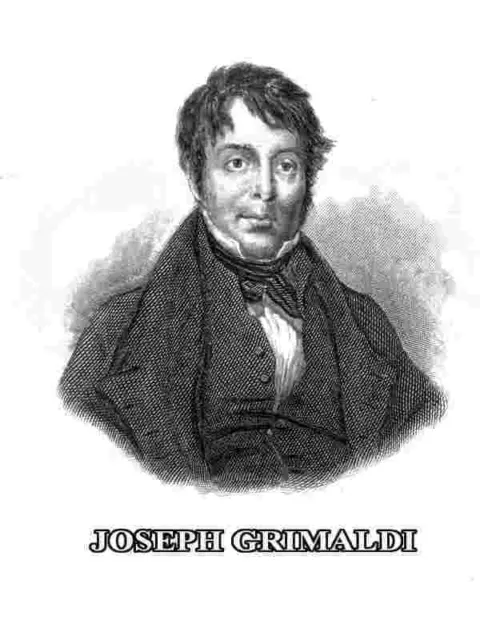
THE CLASSIC COLLECTION · 1838
"Memoirs of Joseph Grimaldi" by Joseph Grimaldi is a historical account written in the early 19th century. The work provides an intimate portrait of the life of the iconic English clown and performer, Joseph Grimaldi, capturing his rise from childhood stardom to becoming a celebrated figure in the theatrical world. This memoir not only offers insight into his personal experiences but also delves into the theatrical culture of the time, including the pantomimes that delighted audiences across London. At the start of the memoir, Joseph Grimaldi reflects on his early fascination with clowns and the pantomime performances that captured his imagination as a child. The introductory chapter recounts his own beginnings in the world of theatre, highlighting his precocious talent as he made his stage debut at a remarkably young age, sowing the seeds for a lifelong connection with performance. Through vivid anecdotes about his eccentric family, especially his father, a clown himself, Grimaldi sets the stage for a rich exploration of his career, foreshadowing the challenges and triumphs that would define his legacy in the world of entertainment.
Introduction adapted from the source catalogue; source summaries may be automatically generated.
Free to read · English · 121,773 words · No account needed
MAKE TIME FOR A GOOD BOOK
On by default. Untick to stop anonymous reading totals. Each page counts after 10 seconds in view. How this works.
Anonymous counting is on unless you have switched it off.
He readily agreed to a proposition which, handsome in itself, greatly exceeded anything he had anticipated. As Mr. Hughes seemed anxious to have the affair settled, and Grimaldi was perfectly content that it should be, two witnesses were sent for, and the articles were drawn up, and signed upon the spot.
Then again they were left alone, and after a few moments more of desultory conversation, Mr. Hughes rose, saying, "I shall see you, I suppose, in the evening, as I am going to Drury Lane to see Blue Beard." He advanced towards the door as he spoke, and then suddenly turning round, added, "Have you anything else to say to me?"
Now was the time, or never. Screwing his courage to the sticking-place, Grimaldi proceeded to place before Mr. Hughes his hopes and prospects, strongly urging that his own happiness and that of his daughter depended upon his consent being given to their marriage.
Mr. Hughes had thought over the subject well, and displayed by no means that displeasure which the young man's anxious fears had prophesied; he urged the youth of both parties as an argument against acceding to their wishes, but finally gave his consent, and by so doing transported the lover with joy.
Mr. Hughes advanced to the door of the room, and throwing it open, as he went out, said to his daughter, who chanced to be sitting in the next room, "Maria, Joe is here: you had better come and welcome him."
Miss Hughes came like a dutiful daughter, and did welcome her faithful admirer, as he well deserved for his true-hearted and constant affection. In the happiness of the moment, the fact that the door of the room was standing wide open quite escaped the notice of both, who never once recollected the possibility of any third person being an unseen witness to the interview.
This was a red-letter day in Grimaldi's calendar; he had nothing to do in the evening at Drury Lane until the last scene but one of Blue Beard, so went shopping with his future wife, buying divers articles of plate, and such other small wares as young housekeepers require.
On hurrying to the theatre at night, he found Mr. Hughes anxiously regarding the machinery of the last scene in Blue Beard, which he was about getting up at the Exeter Theatre.
"This machinery is very intricate, Joe," said the father-in-law upon
seeing him.
"You are right, sir," replied Joe; "and, what is more, it works very
badly."
"So I should expect," was the reply; "and as I am afraid we shall not manage this very well in the country, I wish I could improve it."
Your reading position is saved on this browser. Take it to another device with a library code. Reading pages adapt to text, rather than matching a printed edition.
BEHIND THE BOOK
This eBook is for the use of anyone anywhere in the United States and most other parts of the world at no cost and with almost no restrictions whatsoever. You may copy it, give it away or re-use it under the terms of the Project Gutenberg License included with this eBook or online at www.gutenberg.org. If you are not located in the United States, you will have to check the laws of the country where you are located before using this eBook. Read the source licence.
The original source file, including credits and licence, is retained by this library. Request an original-format copy at no charge. Please include the book title and Project Gutenberg identifier #46709.
KEEP YOUR CURIOSITY GOING
John L. Ransom

Herman W. Mudgett

Harriet Monroe
Daniel Dulany Addison
Charles Lanman

Harold Rosher