THE CLASSIC COLLECTION✦Andersonville diaryCLASSIC FREE BOOKS
Andersonville diary
John L. Ransom
THE CLASSIC COLLECTION · 1838
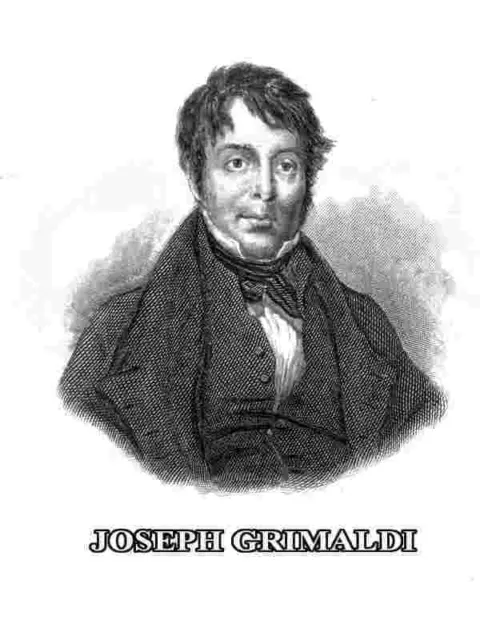
"Memoirs of Joseph Grimaldi" by Joseph Grimaldi is a historical account written in the early 19th century. The work provides an intimate portrait of the life of the iconic English clown and performer, Joseph Grimaldi, capturing his rise from childhood stardom to becoming a celebrated figure in the theatrical world. This memoir not only offers insight into his personal experiences but also delves into the theatrical culture of the time, including the pantomimes that delighted audiences across London. At the start of the memoir, Joseph Grimaldi reflects on his early fascination with clowns and the pantomime performances that captured his imagination as a child. The introductory chapter recounts his own beginnings in the world of theatre, highlighting his precocious talent as he made his stage debut at a remarkably young age, sowing the seeds for a lifelong connection with performance. Through vivid anecdotes about his eccentric family, especially his father, a clown himself, Grimaldi sets the stage for a rich exploration of his career, foreshadowing the challenges and triumphs that would define his legacy in the world of entertainment.
Introduction adapted from the source catalogue; source summaries may be automatically generated.
Free to read · English · 121,773 words · No account needed
MAKE TIME FOR A GOOD BOOK
On by default. Untick to stop anonymous reading totals. Each page counts after 10 seconds in view. How this works.
Anonymous counting is on unless you have switched it off.
"As sure as fate," replied the officer, nodding to a friend who was passing down the street on the other side of the way,--"and if your establishment an't large enough, and powerful enough to resist 'em--"
"Large and powerful enough!" exclaimed the other,--"why there are only three women and one other male person besides myself in the house."
"Ah!" said Mr. Trott, "that isn't near enough."
"Enough! no!" rejoined Grimaldi; "and it would kill my mother."
"I dare say it would," acquiesced the officer; "my mother was killed in
a similar manner."
This, like the rest of the officer's discourse, was far from consolatory, and Grimaldi looked anxiously in his face for something like a ray of hope.
Mr. Trott meditated for some short time, and then, looking up with his head on one side, said, "I think I see a way now, master."
"What is it? What do you propose? I'm agreeable to anything," said Grimaldi, in a most accommodating manner.
"Never mind that," said the officer. "You put yourself into my hands, and I'll be the saving of your property, and the taking of them."
Grimaldi burst into many expressions of admiration and gratitude, and put his hand into Mr. Trott's hands, as an earnest of his readiness to deposit himself there.
"Only rid us," said Grimaldi, "of these dreadful visitors, who really keep us in a state of perpetual misery, and anything you think proper to accept shall be cheerfully paid you."
The officer replied, with many moral observations on the duties of police-officers, their incorruptible honesty, their zeal, and rigid discharge of the functions reposed in them. If Mr. Grimaldi would do his duty to his country, and prosecute them to conviction, that was all he required.
To this, Grimaldi, not having any precise idea of the expense of a prosecution, readily assented, and the officer declared he should be sufficiently repaid by the pleasing consciousness of having done his duty. He did not consider it necessary to add, that a reward had been offered for the apprehension of the same offenders, payable on their conviction.
They walked back to the house together, and the officer having inspected it with the practised eye of an experienced person, declared himself thoroughly satisfied, and stated that if his injunctions were strictly attended to, he had no doubt his final operations would be completely successful.
Your reading position is saved on this browser. Take it to another device with a library code. Reading pages adapt to text, rather than matching a printed edition.
BEHIND THE BOOK
This eBook is for the use of anyone anywhere in the United States and most other parts of the world at no cost and with almost no restrictions whatsoever. You may copy it, give it away or re-use it under the terms of the Project Gutenberg License included with this eBook or online at www.gutenberg.org. If you are not located in the United States, you will have to check the laws of the country where you are located before using this eBook. Read the source licence.
The original source file, including credits and licence, is retained by this library. Request an original-format copy at no charge. Please include the book title and Project Gutenberg identifier #46709.
KEEP YOUR CURIOSITY GOING
John L. Ransom

Herman W. Mudgett

Harriet Monroe
Daniel Dulany Addison
Charles Lanman

Harold Rosher