THE CLASSIC COLLECTION✦Andersonville diaryCLASSIC FREE BOOKS
Andersonville diary
John L. Ransom
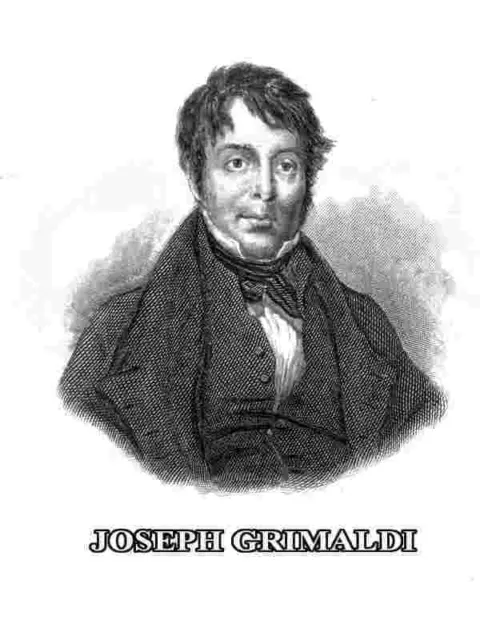
THE CLASSIC COLLECTION · 1838
"Memoirs of Joseph Grimaldi" by Joseph Grimaldi is a historical account written in the early 19th century. The work provides an intimate portrait of the life of the iconic English clown and performer, Joseph Grimaldi, capturing his rise from childhood stardom to becoming a celebrated figure in the theatrical world. This memoir not only offers insight into his personal experiences but also delves into the theatrical culture of the time, including the pantomimes that delighted audiences across London. At the start of the memoir, Joseph Grimaldi reflects on his early fascination with clowns and the pantomime performances that captured his imagination as a child. The introductory chapter recounts his own beginnings in the world of theatre, highlighting his precocious talent as he made his stage debut at a remarkably young age, sowing the seeds for a lifelong connection with performance. Through vivid anecdotes about his eccentric family, especially his father, a clown himself, Grimaldi sets the stage for a rich exploration of his career, foreshadowing the challenges and triumphs that would define his legacy in the world of entertainment.
Introduction adapted from the source catalogue; source summaries may be automatically generated.
Free to read · English · 121,773 words · No account needed
MAKE TIME FOR A GOOD BOOK
On by default. Untick to stop anonymous reading totals. Each page counts after 10 seconds in view. How this works.
Anonymous counting is on unless you have switched it off.
Bologna was fast asleep the first time the man spoke, and, having been roused, had the matter explained to him once more; upon which he sat bolt upright in the coach, and repeating all the man had said, inquired with great distinctness whether he understood it to be put to him, that he must either pay the inside fare, or get out.
"That's it, sir," said the coachman.
"Very well," said Bologna, without the slightest alteration of tone or manner; "then I shall do neither the one nor the other."
The coachman, falling back a space or two from the door, and recovering from a brief trance of astonishment, addressed the passengers, the would-be passenger, the ostlers and stable-boys, who were standing around, upon the mean and shabby conduct of the individual inside, upon this, the passengers remonstrated, the would-be passenger stormed, the coachman and guard bellowed, the ostlers hooted, the stable-boys grinned, Grimaldi worked himself into a state of intense vexation, and the cause of all the tumult sat quite immovable.
"Now, I'll tell you what it is," said the coachman, when his eloquence was quite exhausted, "one word's as good as a thousand. Will you get out?"
"No, I will not," answered the sleepy Harlequin.
"Very well," said the man; "then off goes my benjamin, and out you come like a sack of saw-dust."
As the man was of that portly form and stout build which is the badge of all his tribe, and as, stimulated by the approving murmurs of the lookers-on, he began suiting the action to the word without delay, Bologna thought it best to come to terms; so turned out into the cold air, and took his seat on the coach-top, amidst several expressions of very undisguised contempt from his fellow-passengers.
They performed the rest of the journey in this way, and Grimaldi, alighting at the Angel at Islington, left Bologna to go on to the coach-office in Holborn, previously giving both the guard and coachman something beyond their usual fee, as an intelligible hint that he was not of the same caste as his companion.
Two or three days afterwards, meeting Bologna in the street, he inquired how he had got on at the coach-office.
"Oh, very well," said Bologna; "they abused me finely."
"Just what I expected."
"Yes, and very glad I was of it, too."
"What do you mean?"
Your reading position is saved on this browser. Take it to another device with a library code. Reading pages adapt to text, rather than matching a printed edition.
BEHIND THE BOOK
This eBook is for the use of anyone anywhere in the United States and most other parts of the world at no cost and with almost no restrictions whatsoever. You may copy it, give it away or re-use it under the terms of the Project Gutenberg License included with this eBook or online at www.gutenberg.org. If you are not located in the United States, you will have to check the laws of the country where you are located before using this eBook. Read the source licence.
The original source file, including credits and licence, is retained by this library. Request an original-format copy at no charge. Please include the book title and Project Gutenberg identifier #46709.
KEEP YOUR CURIOSITY GOING
John L. Ransom

Herman W. Mudgett

Harriet Monroe
Daniel Dulany Addison
Charles Lanman

Harold Rosher