THE CLASSIC COLLECTION✦Andersonville diaryCLASSIC FREE BOOKS
Andersonville diary
John L. Ransom
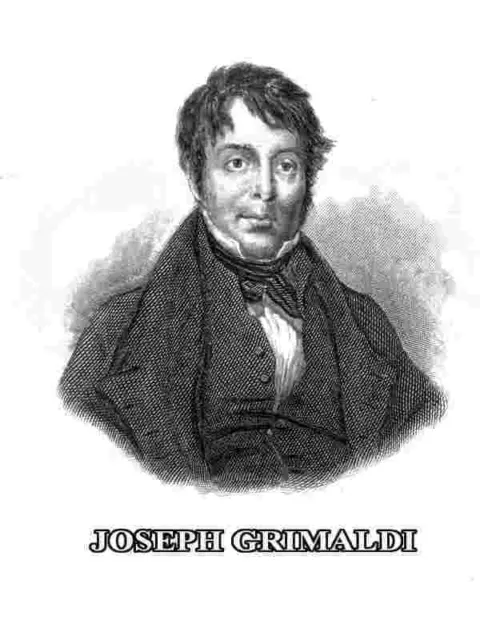
THE CLASSIC COLLECTION · 1838
"Memoirs of Joseph Grimaldi" by Joseph Grimaldi is a historical account written in the early 19th century. The work provides an intimate portrait of the life of the iconic English clown and performer, Joseph Grimaldi, capturing his rise from childhood stardom to becoming a celebrated figure in the theatrical world. This memoir not only offers insight into his personal experiences but also delves into the theatrical culture of the time, including the pantomimes that delighted audiences across London. At the start of the memoir, Joseph Grimaldi reflects on his early fascination with clowns and the pantomime performances that captured his imagination as a child. The introductory chapter recounts his own beginnings in the world of theatre, highlighting his precocious talent as he made his stage debut at a remarkably young age, sowing the seeds for a lifelong connection with performance. Through vivid anecdotes about his eccentric family, especially his father, a clown himself, Grimaldi sets the stage for a rich exploration of his career, foreshadowing the challenges and triumphs that would define his legacy in the world of entertainment.
Introduction adapted from the source catalogue; source summaries may be automatically generated.
Free to read · English · 121,773 words · No account needed
MAKE TIME FOR A GOOD BOOK
On by default. Untick to stop anonymous reading totals. Each page counts after 10 seconds in view. How this works.
Anonymous counting is on unless you have switched it off.
This "Billy Coombes," or whatever the man's name may have been, once said a very ludicrous thing upon the stage, which convulsed the audience with laughter. The play was Romeo and Juliet, and he was cast to perform Sampson. The wardrobe of the theatre being very scanty, he was habited in a most absurd and ridiculous dress, every article of which had evidently formed a portion of a different suit, and which was, moreover, full three sizes too large for him, especially the coat, the cuffs of which, instead of ornamenting his wrists, dangled over his fingers' ends. In this disguise, "Billy," who waxed extremely wroth at the figure he cut, presented himself to the audience, and was, of course, received with a loud laugh.
Now, in the first scene of the play, Sampson, according to the stage-direction, has to bite his thumb at Abram, a servitor of the rival house, upon which the following dialogue ensues:--
"Abram. Do you bite your thumb at us, sir?
"Samp. (aside) Is the law on our side if I say ay?
"Gregory. No.
"Samp. No, sir, I do not bite my thumb at you, sir; but I bite
my thumb sir."
Billy Coombes very coolly omitted biting his thumb at all but the actor who played Abram, desirous to carry on the business of the scene, thought it best to take it for granted that the stage-direction had been complied with, and turning indignantly round, said,
"Do you bite your thumb at us, sir?"
"No, sir," replied Billy Coombes, in a clear and loud voice; "I would, sir, with pleasure, only my master puts me into such a queer coat, sir," holding up one of the long sleeves, "that I can't get at my fist for the life of me."
The audience roared, the actors laughed, and for some minutes the stage-business was at a complete stand-still: Billy meanwhile making many apparently sincere and laboured attempts to uncover his hand, in which at last he thought proper to succeed, and giving the right cue, the play went on.
When Grimaldi returned to town, the rehearsals of "Harlequin and the Sylph of the Oak, or the Blind Beggar of Bethnal Green," commenced at Covent Garden. It was produced with great success at the usual time, and was followed, in April, 1816, by Pocock's melodrama of "Robinson Crusoe, or the Bold Buccaneer," in which Grimaldi played Friday, and Farley acted Crusoe. This was the most successful adaptation of De Foe's great story; it was played for a great many nights, and is still occasionally performed.[66]
Your reading position is saved on this browser. Take it to another device with a library code. Reading pages adapt to text, rather than matching a printed edition.
BEHIND THE BOOK
This eBook is for the use of anyone anywhere in the United States and most other parts of the world at no cost and with almost no restrictions whatsoever. You may copy it, give it away or re-use it under the terms of the Project Gutenberg License included with this eBook or online at www.gutenberg.org. If you are not located in the United States, you will have to check the laws of the country where you are located before using this eBook. Read the source licence.
The original source file, including credits and licence, is retained by this library. Request an original-format copy at no charge. Please include the book title and Project Gutenberg identifier #46709.
KEEP YOUR CURIOSITY GOING
John L. Ransom

Herman W. Mudgett

Harriet Monroe
Daniel Dulany Addison
Charles Lanman

Harold Rosher