THE CLASSIC COLLECTION✦Andersonville diaryCLASSIC FREE BOOKS
Andersonville diary
John L. Ransom
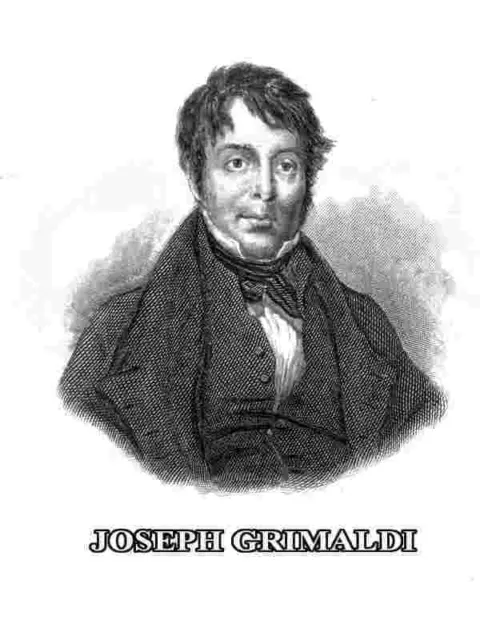
THE CLASSIC COLLECTION · 1838
"Memoirs of Joseph Grimaldi" by Joseph Grimaldi is a historical account written in the early 19th century. The work provides an intimate portrait of the life of the iconic English clown and performer, Joseph Grimaldi, capturing his rise from childhood stardom to becoming a celebrated figure in the theatrical world. This memoir not only offers insight into his personal experiences but also delves into the theatrical culture of the time, including the pantomimes that delighted audiences across London. At the start of the memoir, Joseph Grimaldi reflects on his early fascination with clowns and the pantomime performances that captured his imagination as a child. The introductory chapter recounts his own beginnings in the world of theatre, highlighting his precocious talent as he made his stage debut at a remarkably young age, sowing the seeds for a lifelong connection with performance. Through vivid anecdotes about his eccentric family, especially his father, a clown himself, Grimaldi sets the stage for a rich exploration of his career, foreshadowing the challenges and triumphs that would define his legacy in the world of entertainment.
Introduction adapted from the source catalogue; source summaries may be automatically generated.
Free to read · English · 121,773 words · No account needed
MAKE TIME FOR A GOOD BOOK
On by default. Untick to stop anonymous reading totals. Each page counts after 10 seconds in view. How this works.
Anonymous counting is on unless you have switched it off.
"There's a covey!" said Mackintosh, admiringly.
"A covey!" exclaimed Grimaldi. "Where? I see nothing but pigeons."
"Nothing but pigeons!" exclaimed Mackintosh, contemptuously. "What did you expect to find? Nothing but pigeons!--Well!"
"I expected to find pheasants and partridges," answered both sportsmen together. Bologna, upon whom the sulks were again beginning to fall, gave a grunt of disapprobation; but Mackintosh either was, or pretended to be, greatly surprised.
"Pheasants and partridges!" he exclaimed, with a ludicrous expression of amazement. "Oh dear, quite out of the question! I invited you down here to shoot birds--and pigeons are birds; and there are the pigeons--shoot away, if you like. I have performed my part of the agreement. Pheasants and partridges!" he repeated: "most extraordinary!"
"The fellow's a humbug!" whispered Bologna; "kill as many of his
pigeons as you can."
With this understanding, Bologna fired at random into the nearest cluster of pigeons, and Grimaldi fired upon them as they rose frightened from the ground. The slaughter was very great: they picked up twenty in that field, five in the one beyond, and saw besides several fall which they could not find. This great success, and the agreeable employment of picking up the birds, restored their equanimity of temper, and all went well for some time, until Mackintosh said inquiringly,
"I think you have them all now?"
"I suppose we have," replied Bologna; "at least, all except those which we saw fall among the trees yonder."
"Those you will not be able to get," said Mackintosh.
"Very good; such being the case, we have 'em all," returned Bologna.
"Very well," said Mackintosh, quietly; "and now, if you will take my advice, you will cut away at once."
"Cut away!" said Bologna.
"Cut away!" exclaimed Grimaldi.
"Cut away is the word!" repeated Mr. Mackintosh.
"And why, pray?" asked Bologna.
"Why?" said Mr. Mackintosh. "Isn't the reason obvious?--Because you've
killed the pigeons."
"But what has our killing these pigeons to do with cutting away?"
"Bless us!" cried Mackintosh, "you are not very bright to-day! Don't you see that when the squire comes to hear of it, he'll be very angry. Now, what can be plainer, if he is very angry, as I know he will be, then if you are here, he'll put you in prison? Don't you 'stand that. No, no: what I say is, cut away at once, and don't stop for him to catch you."
"Pooh!" said Bologna, with a contemptuous air, "I see you know nothing of the law. There's not a squire in all England who has power to put us in prison, merely because we have killed your pigeons, although we may not have taken out certificates."
Your reading position is saved on this browser. Take it to another device with a library code. Reading pages adapt to text, rather than matching a printed edition.
BEHIND THE BOOK
This eBook is for the use of anyone anywhere in the United States and most other parts of the world at no cost and with almost no restrictions whatsoever. You may copy it, give it away or re-use it under the terms of the Project Gutenberg License included with this eBook or online at www.gutenberg.org. If you are not located in the United States, you will have to check the laws of the country where you are located before using this eBook. Read the source licence.
The original source file, including credits and licence, is retained by this library. Request an original-format copy at no charge. Please include the book title and Project Gutenberg identifier #46709.
KEEP YOUR CURIOSITY GOING
John L. Ransom

Herman W. Mudgett

Harriet Monroe
Daniel Dulany Addison
Charles Lanman

Harold Rosher