The Romance of the Woods
Frederick Whishaw
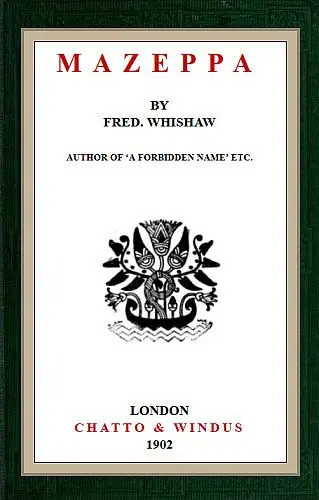
THE CLASSIC COLLECTION · 1902
"Mazeppa" by Frederick Whishaw is a historical novel set in the early 20th century. The narrative revolves around the life of Mazeppa, a Cossack noble, exploring themes of rivalry, ambition, and love against a backdrop of political intrigue and personal conflict during the tumultuous period of Cossack independence. The novel promises an engaging exploration of relationships and personal growth intertwined with historical events. At the start of the story, we are introduced to the protagonist, Chelminsky, who recounts his youth and first interactions with Mazeppa, his cousin. The two boys, both pages in the Polish court, are dismissed after a quarrel escalates into a fight, marking the beginning of their complex relationship filled with rivalry and competition for affections. Their tumultuous friendship deepens when they both become infatuated with Falbofsky's wife, leading to a series of events that shape their lives. The opening chapters set the stage for an adventure that combines personal growth with the historical landscape of Cossack society, suggesting that the reader can expect a rich blend of character development and dramatic, historical storytelling.
Introduction adapted from the source catalogue; source summaries may be automatically generated.
Free to read · English · 68,154 words · No account needed
MAKE TIME FOR A GOOD BOOK
On by default. Untick to stop anonymous reading totals. Each page counts after 10 seconds in view. How this works.
Anonymous counting is on unless you have switched it off.
Vera hung her head, abashed: she would have renounced all claim to the honour implied, but she durst not.
‘I see you are overcome by the thought of this greatness,’ continued Sophia, taking the girl’s hand and patting it within her own. ‘Take heart, child, for indeed you would make as fair a Tsaritsa as we could wish to see.’
‘Oh, I dare not, I cannot, Highness,’ murmured poor Vera. ‘I am not the stuff of which Tsaritsas should be made: I have no ambition.’
‘Then begin now to take a larger view of life. Listen, it has been whispered me that his Highness my brother looks kindlier upon you than upon any other maiden that he has yet seen: there, sweet one, does not that awaken thy slumbering fancy? He is a great king--remember this--though, to say truth, but an afflicted youth. Do not lose sight of the greater issue by foolishly magnifying the lesser. The Tsar is the Tsar, whether he be lusty or afflicted; a handsome youth or, by the will of God, a pale invalid. Tell me, are you great enough to love the Tsar for his greatness, which you would share as Tsaritsa?’
Vera hung her head and remained silent.
‘Speak, girl!’ said Sophia, a little less kindly than before.
‘Madam, having seen so little of the Tsar and--and oh, Madam, how should I love him? I revere him, as Tsar and head of the Boyars, but to love is different.’
‘Well, well, fool; in order to marry wisely it is not always necessary to love. Love yourself, that is the first thing; if you truly love yourself you should seek your own good: is not that fair logic? What better thing can a maiden have than to be chosen Tsaritsa? I say there is no better destiny for a maiden under Heaven!’
‘To love and to be loved is the best, Madam, for some,’ said Vera,
hesitating.
‘Tut, fool!--love does not wear for long. A high position and power--these are the lasting blessings, and they carry love with them--yes, and every other good thing besides. Moreover, if to love and to be loved is for you the be-all and end-all, let him love you, for his part, say I; and as for you--if you cannot love him, love whom you will!’
‘Madam!’ exclaimed Vera, and was about to say I know not what indiscreet thing, when the laughter of the two or three who were present, in which Sophia herself joined, interrupted her. Vera flushed deeply, but remained silent.
‘Well, child, speak,’ said the Regent; ‘why are you dumb?’
Your reading position is saved on this browser. Take it to another device with a library code. Reading pages adapt to text, rather than matching a printed edition.
Frederick Whishaw
Frederick Whishaw
Frederick Whishaw
Harold Avery & R. B. (Richard Baxter) Townshend & Frederick Whishaw
BEHIND THE BOOK
This eBook is for the use of anyone anywhere in the United States and most other parts of the world at no cost and with almost no restrictions whatsoever. You may copy it, give it away or re-use it under the terms of the Project Gutenberg License included with this eBook or online at www.gutenberg.org. If you are not located in the United States, you will have to check the laws of the country where you are located before using this eBook. Read the source licence.
The original source file, including credits and licence, is retained by this library. Request an original-format copy at no charge. Please include the book title and Project Gutenberg identifier #56522.
KEEP YOUR CURIOSITY GOING
Cécile Tormay

Moritz Busch
Coulson Kernahan
John L. Ransom

Maurice Baring
Frances Wright