THE CLASSIC COLLECTION✦Froth: A NovelCLASSIC FREE BOOKS
Froth: A Novel
Armando Palacio Valdés
THE CLASSIC COLLECTION · 1888
"Maximina" by Armando Palacio Valdés is a novel written in the late 19th century. It follows the story of Miguel Rivera and his fiancée, Maximina, as they prepare for their wedding and navigate the complexities of their budding relationship within a small village setting. The narrative unfolds amid themes of love, societal expectations, and personal insecurities, highlighting the innocence and emotional depth of the characters. At the start of the story, Miguel arrives in the village excited about his impending marriage to Maximina. He is greeted by the enthusiastic boat-woman, Ursula, who shares villagers' sentiments about the marriage. As he approaches her home, an array of emotions reflects his eagerness, anticipation, and love for Maximina, who appears shy and apprehensive about their union. The opening scene captures moments filled with playful banter, nervousness, and affection, as family members and friends gather to celebrate their love, setting the stage for the challenges and joys that await them in their new life together.
Introduction adapted from the source catalogue; source summaries may be automatically generated.
Free to read · English · 114,578 words · No account needed
MAKE TIME FOR A GOOD BOOK
On by default. Untick to stop anonymous reading totals. Each page counts after 10 seconds in view. How this works.
Anonymous counting is on unless you have switched it off.
This young man had greatly pleased Miguel, who always called him the priest (sacerdote), because he had many times in his articles made use of the expression "the priesthood of criticism."
Rosa de te, so bold and scornful in his treatment of poets and novelists, was a very Job in the patience with which he bore the raillery of Miguel and the other editors.
One day, however, he had the misfortune to write a biting review of a poet who was one of Rivera's friends. Rivera was angry, and called him an ignoramus and a stupid lout to his face, and the poor Rosa could not get up to defend himself. When Mendoza came, Miguel, still vexed, said to him:--
"Now, see here, Perico, why do you allow this stupid baby to write literary reviews, and all the time make the paper ridiculous?"
Mendoza, as usual, made no answer. But Miguel insisted.
"I want you to explain to me why it is...."
"We don't have to pay anything for his articles," replied the other, in
a low voice.
"Then they are very dear!"
Although Miguel did not care much for politics, he worked diligently on the paper. The revolutionary atmosphere had sufficiently condensed itself, and no young man could escape its feverish and disturbing influence.
The Conde de Rios was at last banished to the Balearic Islands. Mendoza suddenly disappeared from Madrid, leaving a letter to his friend Miguel, telling him that he had made his escape because he had been informed that the police were going to arrest him, and asking him to take charge of the paper.
Such a letter as that caused the brigadier's son no little amusement, because he was convinced that the administration had no thought of troubling the poor Brutandor.
Nevertheless, he actually took the chief editorship of La Independencia, the nominal direction of it being, as always in such calamitous times of persecution, under the name of a silent partner.
And, in order satisfactorily to fulfil his trust, he began to attend the so-called circulos politicos, and above all the committee-room of the Congress of Deputies, which was then, is now, and ever will be, probably, the workshop where the happiness of the country is devised. So when he went there for the first time, he could not overcome a feeling of respect and veneration.
At the sight of the stir and agitation which reigned there, our hero could not help comparing that chamber and the corridors around it to a great factory.
Your reading position is saved on this browser. Take it to another device with a library code. Reading pages adapt to text, rather than matching a printed edition.
Armando Palacio Valdés
Armando Palacio Valdés
Armando Palacio Valdés
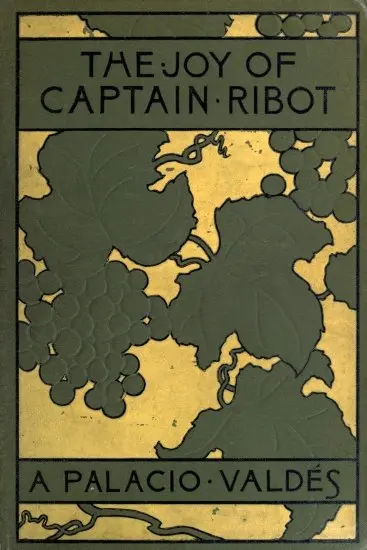
Armando Palacio Valdés
BEHIND THE BOOK
This eBook is for the use of anyone anywhere in the United States and most other parts of the world at no cost and with almost no restrictions whatsoever. You may copy it, give it away or re-use it under the terms of the Project Gutenberg License included with this eBook or online at www.gutenberg.org. If you are not located in the United States, you will have to check the laws of the country where you are located before using this eBook. Read the source licence.
The original source file, including credits and licence, is retained by this library. Request an original-format copy at no charge. Please include the book title and Project Gutenberg identifier #33244.
KEEP YOUR CURIOSITY GOING
Coulson Kernahan

Maurice Baring
Frances Wright
Cécile Tormay

Frederic Jesup Stimson

W. H. P. (William Henry Pope) Jarvis