THE CLASSIC COLLECTION✦An outlaw’s diary: the CommuneCLASSIC FREE BOOKS
An outlaw’s diary: the Commune
Cécile Tormay
THE CLASSIC COLLECTION · 1927
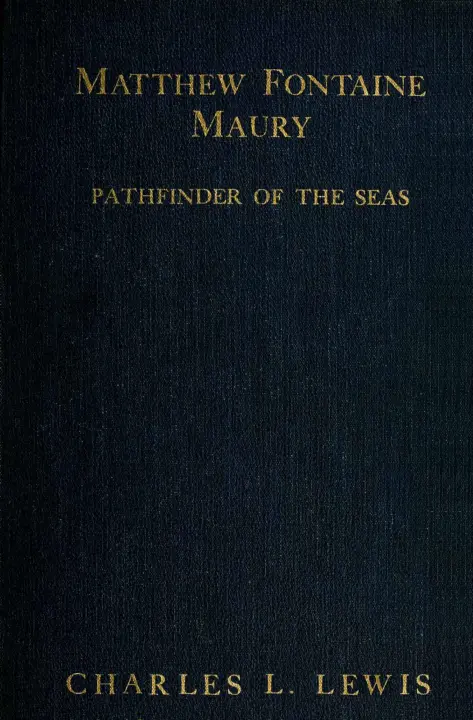
"Matthew Fontaine Maury, the Pathfinder of the Seas" by Charles Lee Lewis is a historical account written in the early 20th century. The book explores the life of Commodore Matthew Fontaine Maury, a significant figure in American naval history known for his pioneering efforts in oceanography and navigation. It delves into Maury's contributions to maritime science, focusing on his development of wind and current charts that improved sea travel and navigation. The opening of the book sets the tone for an in-depth biography, emphasizing Maury’s recognition abroad compared to the scant acknowledgment he received in his own country. It outlines his distinguished ancestry and childhood, highlighting the influences that shaped his character and intellectual pursuits. As a young boy in the early 19th century, Maury's formative experiences on the Tennessee frontier cultivated his industrious nature and creativity, which would later serve him well in his naval career and scientific endeavors. The narrative establishes a foundation for understanding Maury’s later achievements in the context of his upbringing, aspirations, and the challenges he faced throughout his life.
Introduction adapted from the source catalogue; source summaries may be automatically generated.
Free to read · English · 83,698 words · No account needed
MAKE TIME FOR A GOOD BOOK
On by default. Untick to stop anonymous reading totals. Each page counts after 10 seconds in view. How this works.
Anonymous counting is on unless you have switched it off.
Herndon, Ann Hull (See Maury, Mrs. M. F.).
Herndon, Dr. Brodie, 188, 237.
Herndon, Edward, 8.
Herndon, Ellen, 59.
Herndon, William Lewis, 82, 119.
Herschel, Sir John, 74, 75.
Hindman, General Thomas C., 197.
Hjort, Johan, 249.
Hollywood Cemetery, 241.
Holmes, Nathaniel J., 183, 204, 205.
Honolulu, 17.
Houston, Samuel, 7, 128.
Hubbard, Professor J. S., 47, 48.
Humboldt, Baron F. H. Alexander von, 59, 65, 68, 78, 128.
Ibanez, Vicente Blasco, 248.
Immortality, H. M. S., 170.
“Inca Papers” on the Amazon, 119–120.
Investigator, H. M. S., 82.
Irving, Washington, 18.
Irving, Midshipman William, 18.
Jackson, Andrew, 27, 29.
Jackson, “Stonewall”, 240, 245.
Jansen, Marin H., 128, 138, 181, 189, 190, 203, 208, 209, 232, 237,
244.
Japan, 171.
Jay, John, 245.
John Gilpin, 61.
Johnston, Senator John Warfield, 231.
Jomard, E. F., 74, 128.
Jones, John Paul, 245.
Jones, Thomas Ap Catesby, 29, 30, 41.
Juarez, Benito P., 214.
Kamehameha III, 17.
Kane, Dr. Elisha K., 82, 128.
Kearny, Captain Lawrence, 30.
Keith, Professor Ruel, 47.
Kennedy, Secretary of Navy, John P., 114.
Kennon, Beverly, 155.
Kilby, 62.
Lafayette, Marquis de, 10–12, 27.
Laird, John, 171, 209.
Lalande, Joseph de, 48, 49.
Land Meteorology, 85–89, 229–237.
Lee, General Robert Edward, 144, 146, 183, 187, 188, 191–193, 220,
239, 244.
Lee, S. P., 67.
Letcher, Governor John, 145, 150, 158, 159, 161, 220, 227.
Leverrier, W. J. J., 48, 128.
Lexington, Virginia, 220, 221, 227, 228, 239–241, 246.
Lieber, Hamilton, 132.
Liebig, Justus von, 128.
Lincoln, Abraham, 123, 125, 126, 157, 183.
Locke, John, 46.
Lomax, Judge John T., 41.
Longfellow, H. W., 216.
Lopez, Colonel Miguel, 214.
Lowell Institute, 103.
Lynch, William Francis, 81, 82.
Macdonough, Thomas, 7.
Macedonian, 13, 29.
Magruder, General John B., 197.
Mallory, Stephen R., 113–115, 146, 150, 160–162, 166, 174, 179, 215.
Manassas, Battle of, 161.
Manila, 18.
Manning, George, 68.
“Mare Nostrum”, 248.
Margolle, M., 232.
Markham, Clements, 200.
Marquesas Islands, 14.
Maupin (Mauphin?), Dr. Socrates, 153.
Maury, U. S. S. Destroyer, 247.
“Maury Testimonial”, 208, 209.
Maury, Abram, 2, 7.
Maury, Betty (Mrs. W. A. Maury), 139, 141, 146.
Maury, General Dabney H., 67, 90, 183.
Maury, Diana Fontaine (See “Corbin, Mrs. Diana Fontaine”).
Maury, Eliza, 141, 203.
Maury, Ellen, 59.
Maury, John Herndon, 132, 141, 183, 184.
Maury, John Minor, 7, 16, 26.
Maury, Lucy, 141, 185, 203, 215.
Maury, Mary (Mrs. James R. Werth), 126, 141, 203, 215, 247, 251.
Maury, Mrs. Matthew Fontaine, 9, 22, 26, 123, 126, 140, 142, 146, 163, 185, 191, 195, 196, 198, 200, 202, 203, 215, 237, 239, 243.
Maury, Matthew Fontaine, his birth, 2;
elementary education, 4–6;
entrance to the Navy, 7–9;
his first three cruises, 10–24;
his “A New Theoretical and Practical Treatise on Navigation”,
27–28;
promoted Lieutenant, 29;
South Sea Exploring Expedition, 29–30;
surveying Southern harbors, 31;
injury to his leg, 32;
“Scraps from the Lucky Bag”, 33–40, 43, 155;
journalistic work, 41–43;
astronomical work, 44–50;
“Wind and Current Charts”, 51–63, 83, 144, 249;
honors, 63–65, 112, 162, 163;
“Physical Geography of the Sea”, 66–75, 84, 102, 124, 243, 249,
250;
Atlantic Telegraph Cable, 75–80, 211–213;
interest in Arctic and Antarctic exploration, 81–83;
ocean lanes for steamers, 83;
land meteorology, 85–89, 229–237;
transportation routes, 90–93;
lectures and addresses, 93–106;
“Retiring Board”, 107–117, 146;
promoted Commander, 117;
“Inca Papers” on the Amazon, 119–120;
mediation between North and South, 120–125;
his resignation from the U. S. Navy, 126, 127, 143;
his character, 129, 130, 250, 251;
ideas about education, 131–134, 140, 141;
Maury and his family, 134–142;
his appearance, 135;
assistance in the defense of Virginia, 145–147;
a Commander in the Virginia State Navy and also a Commander in the
Navy of the Confederacy, 145;
as Chief of Bureau of Coast, Harbor, and River Defense invents
torpedoes (or mines), 148–155;
“Ben Bow” articles in the Richmond Enquirer, 155–158, 162;
construction of gunboats, 158–160;
invited to Russia, 162–165;
invited to France, 166, 204, 205;
ordered to England, 166–170;
fitting out Georgia and Rappahannock, 171–174;
as a propagandist for the Confederacy, 174–176;
international political intrigues, 176–177;
experiments with electric mines, 178–183;
leaves England, 183–188;
goes to Mexico, 189–192;
Mexican colonization scheme, 189, 193–201, 202, 203, 213;
in England again, 202;
his “Torpedo School”, 204–208;
“Maury Testimonial”, 208–209;
his Geography Series, 210–211, 222–225, 237;
enters the Church, 215;
Cambridge University confers on him the LL.D., 215–217;
his return to the United States, 218–220;
“Physical Survey of Virginia”, 219, 221, 222, 227, 233;
Maury at Virginia Military Institute, 220–239;
last illness and death, 237–239;
his burial in Hollywood Cemetery, 240–241;
estimates of his work, 242–244, 248–251;
monuments and other memorials, 149, 244–248.
Your reading position is saved on this browser. Take it to another device with a library code. Reading pages adapt to text, rather than matching a printed edition.
BEHIND THE BOOK
This eBook is for the use of anyone anywhere in the United States and most other parts of the world at no cost and with almost no restrictions whatsoever. You may copy it, give it away or re-use it under the terms of the Project Gutenberg License included with this eBook or online at www.gutenberg.org. If you are not located in the United States, you will have to check the laws of the country where you are located before using this eBook. Read the source licence.
The original source file, including credits and licence, is retained by this library. Request an original-format copy at no charge. Please include the book title and Project Gutenberg identifier #65071.
KEEP YOUR CURIOSITY GOING
Cécile Tormay

Moritz Busch
John L. Ransom
Frances Wright
Cécile Tormay

Mabel Potter Daggett