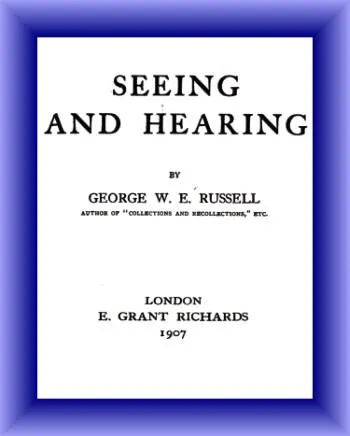
Seeing and Hearing
George William Erskine Russell
THE CLASSIC COLLECTION · 1904
"Matthew Arnold" by George William Erskine Russell is a literary biography written in the early 20th century. The book explores the life and work of Matthew Arnold, a prominent figure in Victorian literature, focusing on his influence as a critic, poet, and educator. It aims to offer insights into Arnold's character, writings, and the significant impact he had on the intellectual landscape of his time. The opening of the book presents a preface in which the author justifies his undertaking of Arnold's biography, acknowledging that Arnold himself desired to avoid a conventional biography. Instead, the text takes a critical approach, emphasizing Arnold's correspondence and the nuances of his character that have been overlooked in previous analyses. The author introduces Arnold's literary contributions and the complexity of his views on life, education, and literature, while also hinting at Arnold’s personal struggles and relationships, establishing a foundation for understanding the author's critique of sociopolitical and literary issues in the context of Victorian England.
Introduction adapted from the source catalogue; source summaries may be automatically generated.
Free to read · English · 59,850 words · No account needed
MAKE TIME FOR A GOOD BOOK
On by default. Untick to stop anonymous reading totals. Each page counts after 10 seconds in view. How this works.
Anonymous counting is on unless you have switched it off.
the best hope for the future, that light will return and banish the follies, sophistries, delusions, which have accumulated in the darkness. "Lucidity of soul" may be--nay, must be, "sad"; but it is not less imperative. And the truth which light reveals must not only be sought earnestly and cherished carefully, but even, when the cause demands it, championed strenuously. The voices of conflict, the joy of battle, the "garments rolled in blood," the "burning and fuel of fire" have little place in Arnold's poetry. But once at any rate he bursts into a strain so passionate, so combatant, that it is difficult for a disciple to recognize his voice; and then the motive is a summons to a last charge for Truth and Light--
They out-talk'd thee, hiss'd thee, tore thee?
Better men fared thus before thee;
Fired their ringing shot and pass'd,
Hotly charged--and sank at last.
Charge once more, then, and be dumb!
Let the victors, when they come,
When the forts of folly fall,
Find thy body by the wall!
But the note of battle, even for what he holds dearest and most sacred, is not a familiar note in his poetry. He had no natural love of
the throng'd field where winning comes by strife.
His criticism of life sets a higher value on work than on fighting. "Toil unsevered from tranquillity," "Labour, accomplish'd in repose"--is his ideal of happiness and duty.
Even the Duke of Wellington--surely an unpromising subject for poetic eulogy--is praised because he was a worker,
Laborious, persevering, serious, firm.
Nature, again, is called in to teach us the secret of successful labour. Her forces are incessantly at work, and in that work they are entirely concentrated--
Bounded by themselves, and unregardful
In what state God's other works may be,
In their own tasks all their powers pouring,
These attain the mighty life you see.
But those who had the happiness of knowing Arnold in the flesh will feel that they never so clearly recognize his natural voice as when, by his criticism of life, he is inculcating the great law of Love. Even in the swirl of Revolution he clings to his fixed idea of love as duty. After discussing the rise and fall of dynasties, the crimes of diplomacy, the characteristic defects of rival nations, and all the stirring topics of the time, he abruptly concludes his criticism with an appeal to Love. "Be kind to the neighbours--'this is all we can.'"
And as in his prose, so in his poetry. Love, even in arrest of formal justice, is the motive of The Sick King in Bokhara; love, that wipes out sin, of Saint Brandan--
Your reading position is saved on this browser. Take it to another device with a library code. Reading pages adapt to text, rather than matching a printed edition.
George William Erskine Russell
George William Erskine Russell
George William Erskine Russell
George William Erskine Russell
BEHIND THE BOOK
This eBook is for the use of anyone anywhere in the United States and most other parts of the world at no cost and with almost no restrictions whatsoever. You may copy it, give it away or re-use it under the terms of the Project Gutenberg License included with this eBook or online at www.gutenberg.org. If you are not located in the United States, you will have to check the laws of the country where you are located before using this eBook. Read the source licence.
The original source file, including credits and licence, is retained by this library. Request an original-format copy at no charge. Please include the book title and Project Gutenberg identifier #16745.
KEEP YOUR CURIOSITY GOING
John L. Ransom
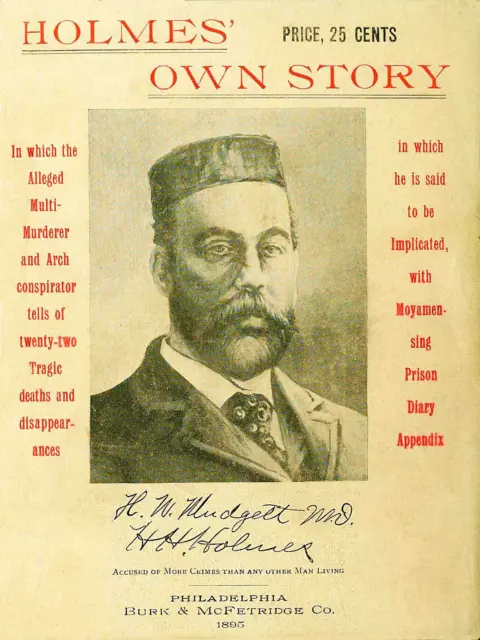
Herman W. Mudgett

Harriet Monroe
Daniel Dulany Addison
Charles Lanman
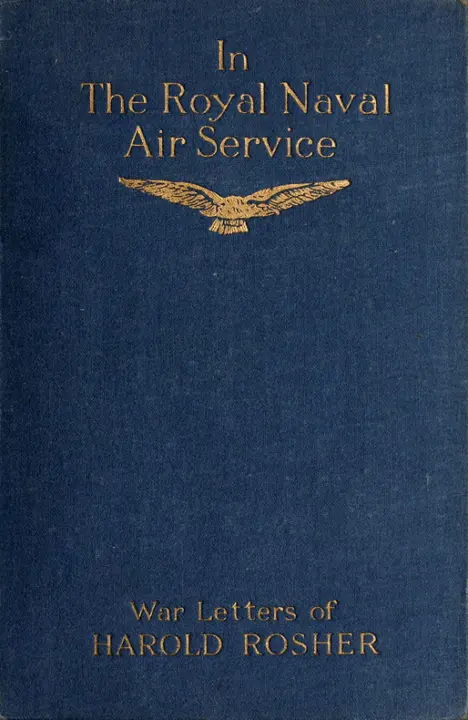
Harold Rosher