
List, Ye Landsmen! A Romance of Incident
William Clark Russell
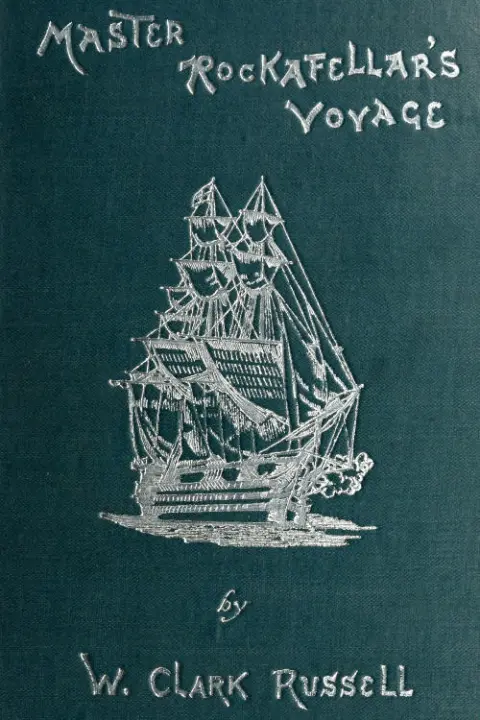
THE CLASSIC COLLECTION · 1890
"Master Rockafellar's Voyage" by W. Clark Russell is a novel written in the late 19th century. The story follows a young boy named Thomas "Tommy" Rockafellar who desires to become a sailor and is eventually sent on his first sea voyage aboard the merchant ship "Lady Violet". Through his journey, the novel explores themes of adventure, self-discovery, and the trials of maritime life as Tommy adjusts to life at sea and the challenges he faces. The opening of the narrative introduces us to Tommy Rockafellar, whose strong desire to go to sea is met with some resistance from his parents, particularly his mother, who finds the Merchant Service too vulgar for their esteemed family name. After much discussion, it is agreed that a single voyage could be beneficial for Tommy. The initial chapters detail his preparation, the excitement and apprehension of setting out from Gravesend, his experiences onboard the ship, the colorful crew, and the bustling activity at sea. As Tommy begins to adapt to his new environment, he faces the realities of ship life, including the confusion and camaraderie among the midshipmen and the various challenges of sailing, setting the stage for deeper experiences to come.
Introduction adapted from the source catalogue; source summaries may be automatically generated.
Free to read · English · 56,874 words · No account needed
MAKE TIME FOR A GOOD BOOK
On by default. Untick to stop anonymous reading totals. Each page counts after 10 seconds in view. How this works.
Anonymous counting is on unless you have switched it off.
I sent a glance with my naked eye, and then peered again through the
telescope.
“When shall we be able to see it without a glass?” I asked.
“That’ll depend upon the thtate of the weather,” answered Kennet.
“But do we sail under it?”
“Oh, hang it, Rockafellar!” cried Poole, “you’re not at school now, little boy! Who’s to answer such questions? Let’s down on deck, or the mate’ll be singing out.”
As I descended the shrouds I saw some sailors at work in the waist,
grinning very hard.
“Seen it, sir?” bawled one of them.
“Yes,” said I.
“No chance, I hope,” he sung out, “of its fouling our mast-heads, is there, sir? Otherwise it’ll sweep every spar overboard.”
“No, it looks to be too high up in the air to hurt us,” I answered, and trudged aft, followed by a half-smothered chorus of laughter.
The mate stood at the head of the poop ladder.
“Where have you been, sir?” he exclaimed.
“Up in the foretop, sir,” I answered.
“And what job carried you there, young gentleman?”
“I have been viewing the equator, sir,” I responded.
“Who showed it to you?” said he, with a twinkling eye.
“Mr. Kennet and Mr. Poole, sir,” said I.
He beckoned, with a solemn motion of his forefinger, to Kennet, who
approached.
“Have you the equator handy about you, young gentleman,” he inquired.
Kennet coloured up, and said he had left it in his telescope.
“Bring it here, sir,” said the mate, “and let Mr. Poole attend, that we may have the benefit of his learning.”
The midshipman disappeared, and shortly after returned, with the glass under his arm and Poole at his heels.
“Now then, young gentlemen,” said the mate, “be good enough to show Master Rockafellar the equator from the poop point of view.”
Poole looked very sheepish; Kennet hung his long nose over one of the middle lenses, which he unscrewed.
“Now, let’s have a good geographical explanation, if you please, Mr. Poole,” said the mate.
“There’s the line, Rockafellar,” said Poole, taking the lens, and pointing to a hair stretched across it, secured by a drop of gum at either extremity.
It was now my turn to colour up. I had been handsomely gulled, and the worst of it was the sailors forward knew it.
“Never mind, Master Rockafellar,” said the mate kindly; “older birds than you have been caught by that kind of chaff. You can take the equator below, Mr. Kennet,” and, smothering a laugh between his teeth, he walked aft.
Your reading position is saved on this browser. Take it to another device with a library code. Reading pages adapt to text, rather than matching a printed edition.
William Clark Russell

William Clark Russell
William Clark Russell

William Clark Russell
BEHIND THE BOOK
This eBook is for the use of anyone anywhere in the United States and most other parts of the world at no cost and with almost no restrictions whatsoever. You may copy it, give it away or re-use it under the terms of the Project Gutenberg License included with this eBook or online at www.gutenberg.org. If you are not located in the United States, you will have to check the laws of the country where you are located before using this eBook. Read the source licence.
The original source file, including credits and licence, is retained by this library. Request an original-format copy at no charge. Please include the book title and Project Gutenberg identifier #62336.
KEEP YOUR CURIOSITY GOING
Wilfrid Scawen Blunt
Wilfrid Scawen Blunt

E. W. (Edgar Watson) Howe
Coulson Kernahan

Maurice Baring
Frances Wright