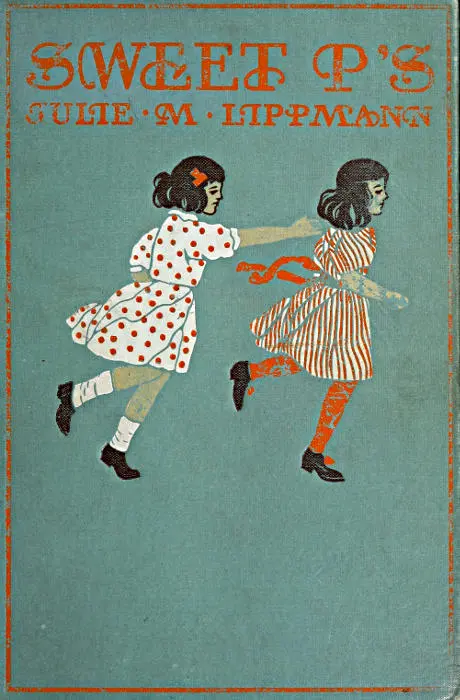
Sweet P’s
Julie M. Lippmann
THE CLASSIC COLLECTION · 1912
"Martha By-the-Day" by Julie M. Lippmann is a novel published in the early 20th century. The story is set in New York City and follows the intertwined lives of Claire Lang, a struggling young woman new to the city, and Martha Slawson, a working-class mother who becomes Claire's protector and mentor. The narrative delves into themes of resilience, compassion, and the challenges of urban life, emphasizing the support one can find in unexpected friendships. The opening of the book introduces Claire Lang, who is caught in the chaotic rush of Broadway during a storm as she tries to catch a streetcar. She is saved from being trampled by a robust woman, Martha Slawson, who not only helps her board but also offers her practical support and companionship. Through their conversation, Claire reveals her precarious situation—she is without means or friends in the city, having come to pursue her dreams after family tragedies. Martha, embodying a fierce maternal instinct, insists that Claire can rely on her for help, setting the stage for their growing bond and the challenges they will face together as the story unfolds.
Introduction adapted from the source catalogue; source summaries may be automatically generated.
Free to read · English · 42,623 words · No account needed
MAKE TIME FOR A GOOD BOOK
On by default. Untick to stop anonymous reading totals. Each page counts after 10 seconds in view. How this works.
Anonymous counting is on unless you have switched it off.
It was useless to protest.
The next morning when Claire started forth to beard the lioness in her den, she was tricked out in all the bravery of Martha's really beautiful "jabbow," and looked "as pretty as a picture, an' then some," as Mrs. Slawson confidentially assured Sam.
But the heart beneath the frilly lace and mull was anything but brave. It felt, in fact, quite as white and fluttery as the jabbow looked, and when Claire found herself being actually ushered into the boudoir of the august presence, and told to "wait please," she thought it would stop altogether for very abject fright.
Martha had tried, in a sort of casual, matter-of-course way, to prepare her little lady for the trial, by dropping hints every now and then, as to the best methods of dealing with employers--the proper way to carry oneself, when one "went to live out in private fam'lies."
"You see, you always been the private fam'ly yourself, Miss Claire, so it'll come kinder strange to you first-off, to look at things the other way. But it won't be so bad after you oncet get used to it. There's one thing it's good to remember. Them high-toned folks has somehow got it fixed in their minds that the rich must not be annoyed, so it'll be money in your pocket, as the sayin' is, if you can do your little stunt without makin' any fuss about it, or drawin' their attention. Just saw wood an' say nothin', as my husband says.
"Mrs. Sherman she told me, when I first went there, an' Radcliffe was a little baby, she 'strickly forbid anybody to touch'm.' It was on account o' what she called germs or somethin'. Well, I never had no particular yearnin' to inflect him with none o' my germs, but when she was off gallivantin', an' that poor little lonesome fella used to cry, an' put out his arms to be took, I'd take'm, an' give'm the only reel mother-huggin' he ever had in his life, an' no harm to any of us--to me that give it, or him that got it, or her that was no wiser. Then, later, when he was four or five, an' around that, she got a notion he was a angel-child, an' she'd useter go about tellin' the help, an' other folks, 'he must be guided by love alone.' I remember she said oncet he'd be 'as good as a kitten for hours at a time if you only give'm a ball of twine to play with.' Well, his nurse, she give'm the ball of twine one day when she had somethin' doin' that took up all her time an' attention on her own account, an' when she come back from her outin', you couldn't walk a step in the house without breakin' your leg (the nurse she did sprain her ankle), on account o' the cat's-cradle effect the young villain had strung acrost the halls, an' from one doorknob to the other, so there wasn't an inch o' the place free. An' he'd got the tooth-paste toobs, an' squoze out the insides, an' painted over every bit o' mahogany he could find--doors, an' furnitur', an' all. You can take it from me, that house was a sight after the angel-child got through with it. The girls an' me--the whole push--was workin' like mad clearin' up after'm before the madam'd come home, an' the nurse cryin' her eyes out for the pain, an' scared stiff 'less she'd be sent packin'. Also, 'if Radcliffe asked questions, we was to answer them truthful,' was another rule. An' the puzzles he'd put to you! One day, I remember, he got me cornered with a bunch that was such fierce propositions, Solomon in all his glory couldn't 'a' give him their truthful answers. Says he--Radcliffe, not Solomon--says he: 'I want another leg.'
Your reading position is saved on this browser. Take it to another device with a library code. Reading pages adapt to text, rather than matching a printed edition.
Julie M. Lippmann
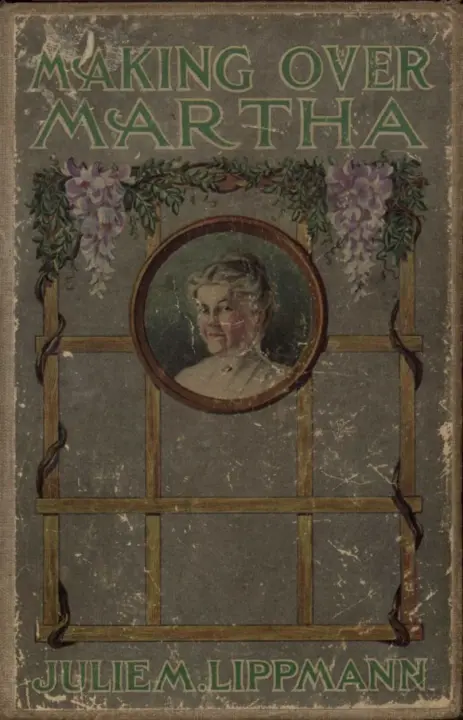
Julie M. Lippmann
BEHIND THE BOOK
This eBook is for the use of anyone anywhere in the United States and most other parts of the world at no cost and with almost no restrictions whatsoever. You may copy it, give it away or re-use it under the terms of the Project Gutenberg License included with this eBook or online at www.gutenberg.org. If you are not located in the United States, you will have to check the laws of the country where you are located before using this eBook. Read the source licence.
The original source file, including credits and licence, is retained by this library. Request an original-format copy at no charge. Please include the book title and Project Gutenberg identifier #14854.
KEEP YOUR CURIOSITY GOING
Coulson Kernahan

Maurice Baring
Frances Wright
Cécile Tormay

Frederic Jesup Stimson

W. H. P. (William Henry Pope) Jarvis