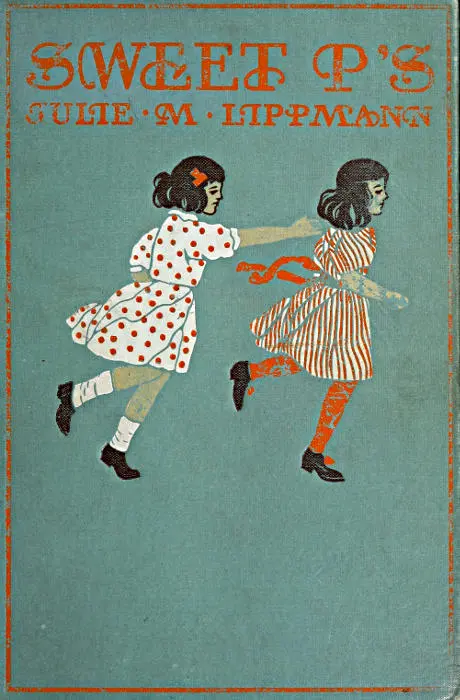
Sweet P’s
Julie M. Lippmann
THE CLASSIC COLLECTION · 1912
"Martha By-the-Day" by Julie M. Lippmann is a novel published in the early 20th century. The story is set in New York City and follows the intertwined lives of Claire Lang, a struggling young woman new to the city, and Martha Slawson, a working-class mother who becomes Claire's protector and mentor. The narrative delves into themes of resilience, compassion, and the challenges of urban life, emphasizing the support one can find in unexpected friendships. The opening of the book introduces Claire Lang, who is caught in the chaotic rush of Broadway during a storm as she tries to catch a streetcar. She is saved from being trampled by a robust woman, Martha Slawson, who not only helps her board but also offers her practical support and companionship. Through their conversation, Claire reveals her precarious situation—she is without means or friends in the city, having come to pursue her dreams after family tragedies. Martha, embodying a fierce maternal instinct, insists that Claire can rely on her for help, setting the stage for their growing bond and the challenges they will face together as the story unfolds.
Introduction adapted from the source catalogue; source summaries may be automatically generated.
Free to read · English · 42,623 words · No account needed
MAKE TIME FOR A GOOD BOOK
On by default. Untick to stop anonymous reading totals. Each page counts after 10 seconds in view. How this works.
Anonymous counting is on unless you have switched it off.
Ma paled visibly. "No, miss. I don't never have the rheumatiz now--not so you'd notice it," she said plaintively. "Oncet I'd it thurrbl, an' me son Sammy had it, too, loikewoise, fierce. I'd uster lay in bed moanin' an' cryin' till you'd be surprised, an' me son Sammy, he was a'most as bad. Well, for a week or two, Martha, she done for us the best she cud, I s'pose, but she didn't make for to stop the pain, an' at last one night, when me son Sammy was gruntin', an' I was groanin' to beat the band, Martha, she up, all of a suddint, an' says she, she was goin' for to cure us of the rheumatiz, or know the reason why. An' she went, an' got the karrysene-can, an' she poured out two thurrbl big doses, an' she stood over me son Sammy an' I, till we swalleyed it down, an' since ever we tuk it, me an' Sammy ain't never had a retur-rn. Sometimes I have a sharp twinge o' somethin' in me leg or me arrm, but it ain't rheumatiz, an' I wouldn't like for me son Sammy's wife to be knowin' it, for the very sight of her startin' for the karrysene--if it's only to fill the lamp, is enough to make me gullup, an' I know it's the same wit' me son Sammy, though we never mention the subjeck between us."
"But if your son didn't want to take the stuff," Claire said, trying to hide her amusement, "why didn't he stand up and say so? He's a man. He's much bigger and stronger than his wife. How could she make him do what he didn't want to?"
The question was evidently not a new one to Ma.
"That's what annywan'd naturrly think," she returned promptly. "But that's because they wouldn't be knowin' me son Sammy's wife. It ain't size, an' it ain't stren'th--it's just, well, Martha. There's that about her you wouldn't like to take any chances wit'. Perhaps it's the thing manny does be talkin' of these days. Perhaps it's that got a holt of her. Annyhow, she says she's in for't. They does be callin' it Woman Sufferrich, I'm told. In my day a dacint body'd have thought shame to be discoursin' in public to the men. They held their tongues, an' let their betthers do the colloguein', but Martha says some of the ladies she works for says, if they talk about it enough the men will give them their rights, an' let 'em vote. I'm an old woman, an' I never had much book-learnin', but I'm thinkin' one like me son Sammy's wife has all the rights she needs wit'out the votin'. She goes out worrkin', same's me son Sammy, day in, day out. She says Sammy could support her good enough, but she won't raise her childern in a teniment, along wit' th' low companions. Me son Sammy, he has it harrd these days. He'd not be able to pay for such a grrand flat as this, in a dacint, quiet neighborhood, an' so Martha turrns to, an' lends a hand. An' wance, when me son Sammy was sick, an' out av a job entirely, Martha, she run the whole concern herself. She wouldn't let me son Sammy give up, or get down-hearted, like he mighta done. She said it was her right to care for us all, an' him, too, bein' he was down an' out, like he was. It seems to me that's fairrly all the rights anny woman'd want--to look out for four childern, an' a man, an' a mother-in-law. But if Martha wants to vote, too, why, I'm thinkin' she will."
Your reading position is saved on this browser. Take it to another device with a library code. Reading pages adapt to text, rather than matching a printed edition.
Julie M. Lippmann
Julie M. Lippmann
BEHIND THE BOOK
This eBook is for the use of anyone anywhere in the United States and most other parts of the world at no cost and with almost no restrictions whatsoever. You may copy it, give it away or re-use it under the terms of the Project Gutenberg License included with this eBook or online at www.gutenberg.org. If you are not located in the United States, you will have to check the laws of the country where you are located before using this eBook. Read the source licence.
The original source file, including credits and licence, is retained by this library. Request an original-format copy at no charge. Please include the book title and Project Gutenberg identifier #14854.
KEEP YOUR CURIOSITY GOING
Coulson Kernahan

Maurice Baring
Frances Wright
Cécile Tormay

Frederic Jesup Stimson

W. H. P. (William Henry Pope) Jarvis