
The Diary of a Goose Girl
Kate Douglas Smith Wiggin
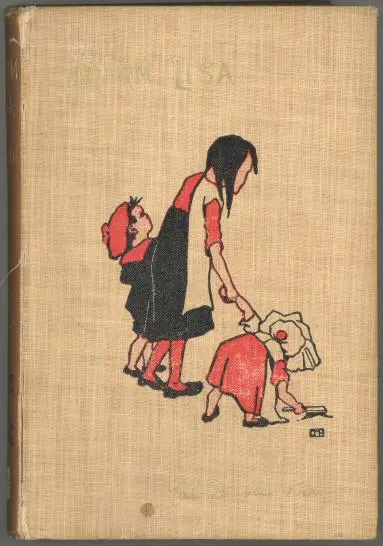
THE CLASSIC COLLECTION · 1896
"Marm Lisa" by Kate Douglas Smith Wiggin is a novel written in the early 20th century. The story introduces us to the characters that inhabit a challenging urban neighborhood, particularly focusing on the troubled young girl known as Marm Lisa, who seems to embody the trials of childhood in a difficult environment. The book likely explores themes of maternal responsibility, kindness, and the struggle for personal growth amidst adversity, highlighting the interactions between Marm Lisa and those around her, especially those trying to help her. The opening of the novel paints a vivid picture of Eden Place, a less-than-idyllic urban setting primarily inhabited by children and marginalized adults. We are introduced to the residents, particularly Mrs. Grubb, a woman with unconventional ideas who finds herself responsible for Marm Lisa and her twin charges, Atlantic and Pacific. Marm Lisa is depicted as a forlorn and neglected child, caring for the twins with a sense of duty that belies her own struggles. As the narrative unfolds, Mistress Mary, another key character, becomes involved in Marm Lisa’s life, seeking to uplift her and provide opportunities for growth and learning, establishing a core relationship that hints at the transformative journey that lies ahead for Marm Lisa.
Introduction adapted from the source catalogue; source summaries may be automatically generated.
Free to read · English · 38,585 words · No account needed
MAKE TIME FOR A GOOD BOOK
On by default. Untick to stop anonymous reading totals. Each page counts after 10 seconds in view. How this works.
Anonymous counting is on unless you have switched it off.
Her cape had long since dropped from her shoulders, her hat was trampled under foot, the fair coil of hair had loosened and was falling on her neck, and the steel fillet blazed in the firelight. She stepped to the quilt and made a despairing movement to attract Lisa’s attention.
‘Li-sa!’ she called, in that sweet, carrying woman’s voice that goes so much further than a man’s.
The child started, and, pushing back the shawl, looked out from under its cover, her head raised, her eyes brightening.
Mary chanced all on that one electrical moment of recognition, and, with a mien half commanding and half appealing, she stretched out both her arms and called again, while the crowd held its breath:
‘Come to me, darling! Jump, little sister! now!’
Not one second did Marm Lisa hesitate. She would have sprung into the fire at that dear mandate, and, closing her eyes, she leaped into the air as the roof above her head fell in with a crash.
Just then the beating of hoofs and jangling of bells in the distance announced the coming of the belated firemen; not so long belated actually, for all the emotions, heart-beats, terrors, and despairs that go to make up tragedy can be lived through in a few brief moments.
In that sudden plunge from window to earth Marm Lisa seemed to die consciously. The grey world, the sad world, vanished, ‘and the immortal light, all young and joyful, million-orbed, million-coloured,’ beamed on her darkness. She kept on falling, falling, falling, till she reached the abysmal depths of space—then she knew no more: and Mary, though prone on the earth, kept falling, falling, falling with her into so deep a swoon that she woke only to find herself on a friendly bed, with Rhoda and Lisa herself, weeping over her.
At five o’clock, Mrs. Grubb, forcibly torn from a meeting and acquainted with the afternoon’s proceedings, hurried into a lower room in the tenement house, where Mary, Rhoda, and the three children were gathered for a time. There were still a hundred people in the street, but they showed their respect by keeping four or five feet away from the windows.
The twins sat on a sofa, more quiet than anything save death itself. They had been rocked to the very centre of their being, and looked like nothing so much as a couple of faded photographs of themselves. Lisa lay on a cot, sleeping restlessly; Mary looked pale and wan, and there were dark circles under her eyes.
As Mrs. Grubb opened the door softly, Mary rose to meet her.
‘Have you heard all?’ she asked.
Your reading position is saved on this browser. Take it to another device with a library code. Reading pages adapt to text, rather than matching a printed edition.
Kate Douglas Smith Wiggin
Kate Douglas Smith Wiggin
Kate Douglas Smith Wiggin
Kate Douglas Smith Wiggin & Nora Archibald Smith
BEHIND THE BOOK
This eBook is for the use of anyone anywhere in the United States and most other parts of the world at no cost and with almost no restrictions whatsoever. You may copy it, give it away or re-use it under the terms of the Project Gutenberg License included with this eBook or online at www.gutenberg.org. If you are not located in the United States, you will have to check the laws of the country where you are located before using this eBook. Read the source licence.
The original source file, including credits and licence, is retained by this library. Request an original-format copy at no charge. Please include the book title and Project Gutenberg identifier #3149.
KEEP YOUR CURIOSITY GOING
Coulson Kernahan

Maurice Baring
Frances Wright
Cécile Tormay

Frederic Jesup Stimson

W. H. P. (William Henry Pope) Jarvis