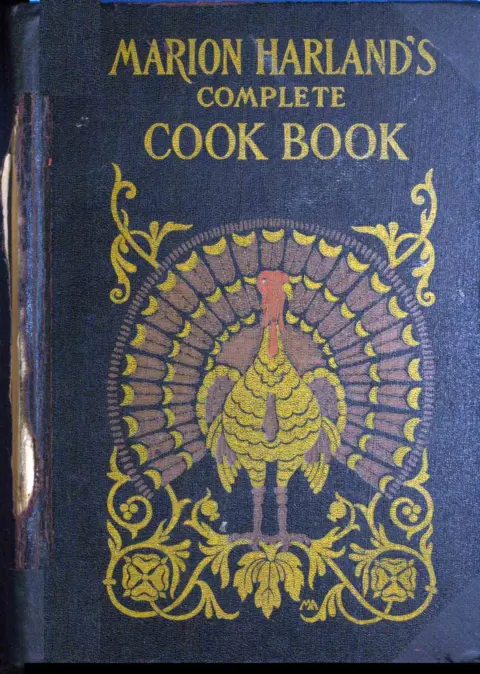
Marion Harland’s Complete Cook Book A Practical and Exhaustive Manual of Cookery and Housekeeping
Marion Harland
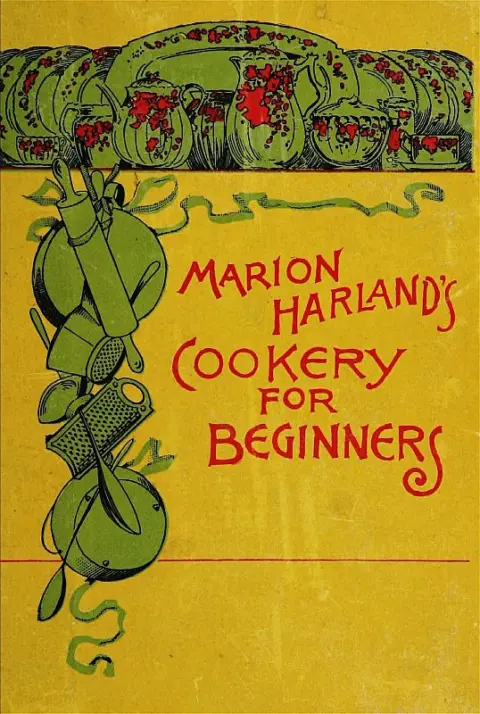
THE CLASSIC COLLECTION · 1884
"Marion Harland's Cookery for Beginners" by Marion Harland is a practical cookery guide written in the late 19th century. This work serves as a comprehensive introduction to cooking for novice housekeepers, focusing on basic culinary techniques and recipes essential for daily meal preparation. The book emphasizes the importance of mastering fundamental cooking skills, particularly bread-making, to ensure healthful and satisfying dining experiences. The opening of the guide begins with a discussion on the significance of good bread in culinary practices, positing it as a fundamental skill for any cook. Harland introduces her readers to the process of making homemade yeast and the first loaf of bread, providing detailed instructions and practical tips to ensure success. She stresses the importance of ingredient quality and the proper technique, assuring beginners that even with less-than-perfect materials, practice will lead to satisfactory results. Overall, the initial section sets a foundational tone for the subsequent lessons in the book, aiming to encourage confidence and competence in kitchen endeavors.
Introduction adapted from the source catalogue; source summaries may be automatically generated.
Free to read · English · 26,591 words · No account needed
MAKE TIME FOR A GOOD BOOK
On by default. Untick to stop anonymous reading totals. Each page counts after 10 seconds in view. How this works.
Anonymous counting is on unless you have switched it off.
Boil as directed in last receipt, and when the potatoes have been dried off, remove the pot to the sink, or table, break and whip them into powder with a four-tined fork, or a split spoon. When fine, add a great spoonful of butter, whipped in thoroughly, salting to taste as you go on.
Have ready a cup of milk almost boiling, and beat in until the potato
is soft and smooth.
Heap in a deep dish for the table.
Onions (boiled).
Remove the outer layers until you reach the sleek, silvery, crisp skins. Cook in plenty of boiling, salted water, until tender. Forty minutes should be sufficient, unless the onions are very old and large. Turn off all the water; add a cupful from the tea-kettle with one of warm milk and stew gently ten minutes.
Heat, meanwhile, in a saucepan, half a cupful of milk with a large
tablespoonful of butter.
Drain the onions in a hot clean colander, turn them into a heated deep dish, salt and pepper lightly, and pour the boiling milk and butter over them.
Onions cooked thus are not nearly so rank of flavor as when boiled in
but one water.
Tomatoes (stewed).
Put ripe tomatoes into a pan, pour boiling water directly from the kettle, upon them, and cover closely for five minutes. The skins will then come off easily.
When all are peeled, cut them up, throwing away the unripe parts and the cores, and put them into a clean saucepan with half a teaspoonful of salt.
Stew twenty minutes before adding a heaping tablespoonful of butter, one teaspoonful of white sugar (for a dozen large tomatoes) and a little pepper. Stew gently fifteen minutes, and serve.
Scalloped Tomatoes.
Scald, skin, and cut each crosswise, into two or three pieces. Just melt a teaspoonful of butter in a pie-plate, or pudding-dish, and put into this a layer of tomatoes. Lay a bit of butter on each slice, sprinkle lightly with salt, pepper, and white sugar, and cover with fine dry cracker, or bread crumbs. Fill the dish with alternate layers of tomato crumbs, having a thick coating of crumbs on the top, and sticking tiny “dabs” of butter all over it.
Bake, covered, half an hour. Take off the tin pan, or whatever you have used to keep in the steam, and brown nicely before sending to table.
Beets.
Wash well, taking care not to scratch the skin, as they will “bleed” while in cooking if this is cut or broken.
Cook in boiling water an hour and a half if young, three, four or five hours as their age increases.
Your reading position is saved on this browser. Take it to another device with a library code. Reading pages adapt to text, rather than matching a printed edition.
Marion Harland
Marion Harland
Marion Harland
Marion Harland
BEHIND THE BOOK
This eBook is for the use of anyone anywhere in the United States and most other parts of the world at no cost and with almost no restrictions whatsoever. You may copy it, give it away or re-use it under the terms of the Project Gutenberg License included with this eBook or online at www.gutenberg.org. If you are not located in the United States, you will have to check the laws of the country where you are located before using this eBook. Read the source licence.
The original source file, including credits and licence, is retained by this library. Request an original-format copy at no charge. Please include the book title and Project Gutenberg identifier #49155.
KEEP YOUR CURIOSITY GOING

Charles G. (Charles Griffith) Ross
Hannah Webster Foster

Emily Lawless
Edwin Hamlin Carr

Charles De Lano Hine
Andrew Ure