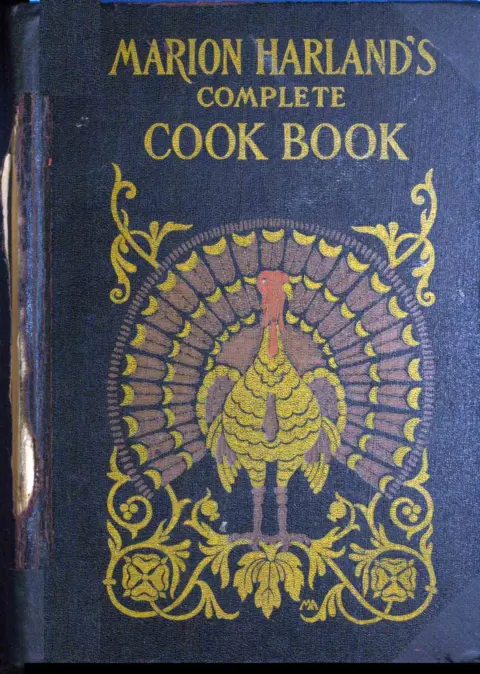
Marion Harland’s Complete Cook Book A Practical and Exhaustive Manual of Cookery and Housekeeping
Marion Harland

THE CLASSIC COLLECTION · 1905
"Marion Harland's Complete Etiquette" by Marion Harland and Virginia Van de Water is a guidebook on social manners and etiquette written in the early 20th century. This comprehensive volume serves as a young people's guide to navigating social occasions, covering a wide range of topics from sending invitations to proper dining behavior. The book aims to equip readers with the knowledge of expected conduct in various social situations to foster grace and confidence. The opening of the guide introduces the importance of invitations in social gatherings, outlining the etiquette surrounding sending, receiving, and responding to them. It emphasizes the necessity for both senders and recipients to adhere to proper forms and manners, addressing several types of invitations, such as formal teas and evening receptions. The chapter lays a strong foundation for understanding social obligations and proper responses, illustrating how good etiquette can enhance social interactions and reflect personal character.
Introduction adapted from the source catalogue; source summaries may be automatically generated.
Free to read · English · 96,415 words · No account needed
MAKE TIME FOR A GOOD BOOK
On by default. Untick to stop anonymous reading totals. Each page counts after 10 seconds in view. How this works.
Anonymous counting is on unless you have switched it off.
“Croutons”—Small bits of crusted bread used in soups or
as garnishes.
“Croutons”—Bread dice fried.
“Crumpet”—Raised muffins baked on a griddle.
“Curries”—Stews of meat or fish, seasoned with curry
powder and served with rice.
“De Brie”—A brand of fancy cheese.
“Demi-tasse”—A small cup; term usually applied to
after-dinner coffee.
“Deviled”—Seasoned hotly.
“Eclair”—Pastry or cake filled with cream.
“En Coquille”—Served in shells.
“Endive”—A plant of the composite family used as a
salad.
“Entrées”—Small made dishes served between courses at
dinner.
“Entrements”—Second course side-dishes, including
vegetables, eggs and sweets.
“Farcie”—Stuffed.
“Fillets”—Long thin pieces of meat or fish, generally
rolled and tied.
“Fines herbes”—Minced parsley, etc.
“Finnan Haddock”—Haddock smoked and dried.
“Fondant”—Melting. Boiled sugar, the basis of French
candy.
“Fondue—A preparation of melted cheese.
“French dressing”—A simple salad dressing of oil, vinegar, salt, pepper, and sometimes mustard.
“Galantine”—Meat, boned, stuffed, rolled and boiled,
always served cold.
“Glacé”—Iced.
“Glaze”—Stock boiled down to a thin paste.
“Grilled”—Broiled.
“Gruyére”—A brand of fancy cheese.
“Hors d’œuvres”—Relishes.
“Jardinière”—A mixed preparation of vegetables stewed in their own sauce; a garnish of vegetables.
“Julienne”—A clear soup with shredded vegetables.
“Koumiss”—Milk fermented with yeast.
“Lardoon”—The piece of salt pork used in larding.
“Lentils”—A variety of the bean tribe used in soups,
etc.
“Marrons”—Chestnuts.
“Mayonnaise”—A salad dressing made of oil, the yolks of eggs, vinegar or lemon juice, salt and cayenne.
“Meringue”—The white of eggs whipped to a standing
froth with powdered sugar.
“Mousse”—Ice-cream made from whipped cream.
“Noodles”—Dough, cut into strips or other shapes, dried
and then dropped into soup.
“Nougat”—Almond candy.
“Paprika”—Hungarian sweet red pepper.
“Pâté”—Some preparation of pastry, usually a small pie.
Hence “patty-pans.”
“Pâté de foie gras”—Small pie filled with fat goose
liver.
“Pièce de résistance”—Principal dish at a meal.
“Pilau”—East Indian or Turkish dish of meat and rice.
“Pimento”—Jamaica pepper.
“Pimolas”—Small olives stuffed with pimento—i. e.,
sweet red pepper.
“Piquant”—Sharply flavored, as “sauce piquant,” a
highly seasoned sauce.
“Pistachio”—A pale greenish nut resembling the almond.
“Polenta”—An Italian mush made of Indian meal, or of
ground chestnuts.
“Potage”—A family soup.
“Potpourri”—A highly seasoned stew of divers
materials—meat, spices, vegetables and the like; a
Spanish dish.
“Purée”—Vegetables or cereals cooked and rubbed through
a sieve to make a thick soup.
“Ragout”—Stewed meat in rich gravy.
“Ramakins”—A preparation of cheese and puff paste or
toast, baked or browned.
“Rechauffé”—Anything warmed over.
Your reading position is saved on this browser. Take it to another device with a library code. Reading pages adapt to text, rather than matching a printed edition.
Marion Harland

Marion Harland
Marion Harland
Marion Harland
BEHIND THE BOOK
This eBook is for the use of anyone anywhere in the United States and most other parts of the world at no cost and with almost no restrictions whatsoever. You may copy it, give it away or re-use it under the terms of the Project Gutenberg License included with this eBook or online at www.gutenberg.org. If you are not located in the United States, you will have to check the laws of the country where you are located before using this eBook. Read the source licence.
The original source file, including credits and licence, is retained by this library. Request an original-format copy at no charge. Please include the book title and Project Gutenberg identifier #50058.
KEEP YOUR CURIOSITY GOING

Charles G. (Charles Griffith) Ross
Hannah Webster Foster

Emily Lawless
Edwin Hamlin Carr

Charles De Lano Hine
Andrew Ure