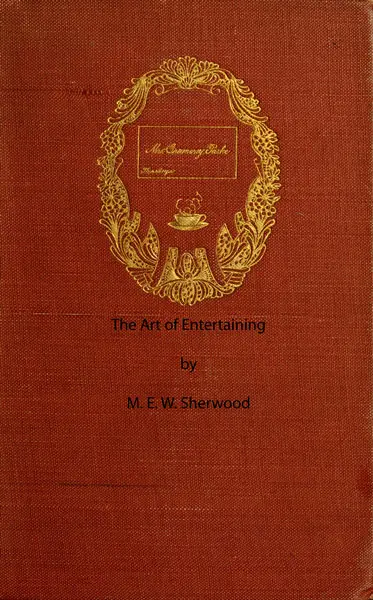
The Art of Entertaining
M. E. W. (Mary Elizabeth Wilson) Sherwood
THE CLASSIC COLLECTION · 1884
"Manners and Social Usages" by M. E. W. Sherwood is an etiquette manual likely written in the late 19th century. The book explores the principles of social conduct, aiming to provide guidance on proper manners pertinent to various aspects of life in American society, particularly as it contrasts with European customs. The opening of the manual establishes the context for its creation, highlighting the unique nature of American society, which was evolving rapidly in the absence of a structured aristocracy. Sherwood elaborates on how etiquette is influenced by both tradition and contemporary social changes, leading to the necessity of creating a distinct American etiquette that balances respectability and accessibility. Prominent themes in the introduction revolve around addressing common questions regarding manners in social situations, the role of women in shaping social gatherings, and the challenges of navigating these evolving customs. The text invites readers to approach the nuances of etiquette with both respect and adaptability, highlighting the significance of good manners as a reflection of one’s character and societal contributions.
Introduction adapted from the source catalogue; source summaries may be automatically generated.
Free to read · English · 123,901 words · No account needed
MAKE TIME FOR A GOOD BOOK
On by default. Untick to stop anonymous reading totals. Each page counts after 10 seconds in view. How this works.
Anonymous counting is on unless you have switched it off.
The Romans made much of this meal, and among their delicacies were the ass, the dog, and the snail, sea-hedgehogs, oysters, asparagus, venison, wild boar, sea-nettles, fish, fowl, game, and cakes. The Germans to-day eat wild boar, head-cheese, pickles, goose's flesh dried, sausages, cheese, and salads for supper, and wash down with beer. The French, under Louis XIV., began to make the supper their most finished meal. They used gold and silver dishes, crystal cups and goblets, exquisite grapes crowned the pergne, and choicest fruits were served in golden dishes. The cooks sent up piquant sauces for the delicately cooked meats, the wines were drunk hot and spiced. The latter are taken iced now. Many old house-keepers, however, serve a rich, hot-mulled port for a winter supper. It is a delicious and not unhealthy beverage, and can be easily prepared.
The doctors, as we have said, condemn a late supper, but the pros and cons of this subject admit of discussion. Every one, indeed, must decide for himself.
Few people can undergo excitement of an evening--an opera or play or concert, or even the pleasant conversation of an evening party-- without feeling hungry. With many, if such an appetite is not appeased it will cause sleeplessness. To eat lightly and to drink lightly at supper is a natural instinct with people if they expect to go to bed at once; but excitement is a great aid to digestion, and a heavy supper sometimes gives no inconvenience.
Keats seems to have had a vision of a modern supper-table when he
wrote:
"soft he set A table, and ...threw thereon A cloth of woven crimson, gold, and jet; ...from forth the closet brought a heap Of candied apple, quince, and plum, and gourd, With jellies soother than the creamy curd, And lucent syrops, tinct with cinnamon, Manna and dates: ...spiced dainties every one."
The supper being a meal purely of luxury should be very dainty. Everything should be tasteful and appetizing; the wines should be excellent, the claret not too cool, the champagne frapp, or almost so, the Madeira and the port the temperature of the room, and the sherry cool. If punch is served, it should be at the end of the supper.
Many indulgent hostesses now allow young gentlemen to smoke a cigarette at the supper-table, after the eating and drinking is at an end, rather than break up the delicious flow of conversation which at the close of a supper seems to be at its best. This, however, should not be done unless every lady at the table acquiesces, as the smell of tobacco-smoke sometimes gives women an unpleasant sensation.
Your reading position is saved on this browser. Take it to another device with a library code. Reading pages adapt to text, rather than matching a printed edition.
M. E. W. (Mary Elizabeth Wilson) Sherwood
BEHIND THE BOOK
This eBook is for the use of anyone anywhere in the United States and most other parts of the world at no cost and with almost no restrictions whatsoever. You may copy it, give it away or re-use it under the terms of the Project Gutenberg License included with this eBook or online at www.gutenberg.org. If you are not located in the United States, you will have to check the laws of the country where you are located before using this eBook. Read the source licence.
The original source file, including credits and licence, is retained by this library. Request an original-format copy at no charge. Please include the book title and Project Gutenberg identifier #8399.
KEEP YOUR CURIOSITY GOING

Charles G. (Charles Griffith) Ross
Hannah Webster Foster

Emily Lawless
Edwin Hamlin Carr

Charles De Lano Hine
Andrew Ure