THE CLASSIC COLLECTION✦A Book of Strife in the Form of The Diary of an Old SoulCLASSIC FREE BOOKS
A Book of Strife in the Form of The Diary of an Old Soul
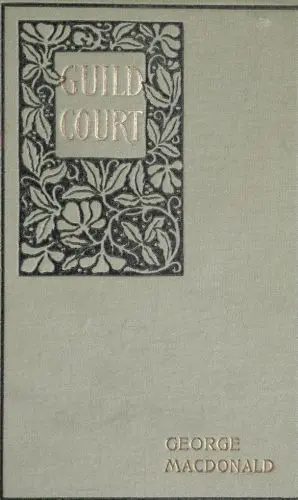
George MacDonald
THE CLASSIC COLLECTION · 1850
"Malcolm" by George MacDonald is a novel written during the late 19th century. The story is set in a small fishing village and unfolds around the central character, Malcolm, who navigates a world filled with unique personalities, such as Miss Horn and the Mad Laird, while dealing with themes of love, loss, and personal growth. At the start of the book, the narrative introduces readers to Miss Horn, who is preparing for the funeral of her cousin Griselda Campbell. The conversations surrounding the death reveal the small-town dynamics, mingled with gossip and personal judgments, particularly as Miss Horn reacts to her visitor, Mrs. Mellis. The tone is sharply filled with both humor and sorrow, encapsulating the peculiarities of the characters. Shortly after, Barbara Catanach enters the scene, hinting at deeper intrigues and motivations woven throughout the community. Through this opening, the novel begins to paint a poignant picture of life in a close-knit village, rich with vibrant characters and emotional depth.
Introduction adapted from the source catalogue; source summaries may be automatically generated.
Free to read · English · 194,744 words · No account needed
MAKE TIME FOR A GOOD BOOK
On by default. Untick to stop anonymous reading totals. Each page counts after 10 seconds in view. How this works.
Anonymous counting is on unless you have switched it off.
“By Jove, you are right, sir!--Then you really and positively believe in the place they call heaven?”
“My lord, I believe that those who open their hearts to the truth, shall see the light on their friends’ faces again, and be able to set right what was wrong between them.”
“It’s a week too late to talk of setting right!”
“Go and tell her you are sorry, my lord,--that will be enough to
her.”
“Ah! but there’s more than her concerned.”
“You are right, my lord. There is another--one who cannot be satisfied that the fairest works of his hands, or rather the loveliest children of his heart, should be treated as you have treated women.”
“But the Deity you talk of----”
“I beg your pardon, my lord: I talked of no deity; I talked of a living Love that gave us birth and calls us his children. Your deity I know nothing of.”
“Call him what you please:--he won’t be put off so easily!”
“He won’t be put off one jot or one tittle. He will forgive anything, but he will pass nothing--Will your wife forgive you?”
“She will--when I explain.”
“Then why should you think the forgiveness of God, which created her forgiveness, should be less?”
Whether the marquis could grasp the reasoning, may be doubtful.
“Do you really suppose God cares whether a man comes to good or
ill?”
“If he did not, he could not be good himself.”
“Then you don’t think a good God would care to punish poor wretches
like us?”
“Your lordship has not been in the habit of regarding himself as a poor wretch. And, remember, you can’t call a child a poor wretch without insulting the father of it.”
“That’s quite another thing.”
“But on the wrong side for your argument--seeing the relation between God and the poorest creature is infinitely closer than that between any father and his child.”
“Then he can’t be so hard on him as the parsons say.”
“He will give him absolute justice, which is the only good thing. He will spare nothing to bring his children back to himself-- their sole well-being. What would you do, my lord, if you saw your son strike a woman?”
“Knock him down and horsewhip him.”
It was Mr Graham who broke the silence that followed.
“Are you satisfied with yourself, my lord?”
“No, by God!”
“You would like to be better?”
“I would.”
“Then you are of the same mind with God.”
Your reading position is saved on this browser. Take it to another device with a library code. Reading pages adapt to text, rather than matching a printed edition.
George MacDonald
George MacDonald
George MacDonald
George MacDonald
BEHIND THE BOOK
This eBook is for the use of anyone anywhere in the United States and most other parts of the world at no cost and with almost no restrictions whatsoever. You may copy it, give it away or re-use it under the terms of the Project Gutenberg License included with this eBook or online at www.gutenberg.org. If you are not located in the United States, you will have to check the laws of the country where you are located before using this eBook. Read the source licence.
The original source file, including credits and licence, is retained by this library. Request an original-format copy at no charge. Please include the book title and Project Gutenberg identifier #7127.
KEEP YOUR CURIOSITY GOING
Coulson Kernahan

Maurice Baring
Frances Wright
Cécile Tormay

Frederic Jesup Stimson

W. H. P. (William Henry Pope) Jarvis