THE CLASSIC COLLECTION✦A Book of Strife in the Form of The Diary of an Old SoulCLASSIC FREE BOOKS
A Book of Strife in the Form of The Diary of an Old Soul
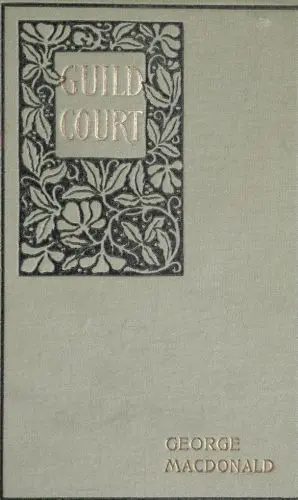
George MacDonald
THE CLASSIC COLLECTION · 1850
"Malcolm" by George MacDonald is a novel written during the late 19th century. The story is set in a small fishing village and unfolds around the central character, Malcolm, who navigates a world filled with unique personalities, such as Miss Horn and the Mad Laird, while dealing with themes of love, loss, and personal growth. At the start of the book, the narrative introduces readers to Miss Horn, who is preparing for the funeral of her cousin Griselda Campbell. The conversations surrounding the death reveal the small-town dynamics, mingled with gossip and personal judgments, particularly as Miss Horn reacts to her visitor, Mrs. Mellis. The tone is sharply filled with both humor and sorrow, encapsulating the peculiarities of the characters. Shortly after, Barbara Catanach enters the scene, hinting at deeper intrigues and motivations woven throughout the community. Through this opening, the novel begins to paint a poignant picture of life in a close-knit village, rich with vibrant characters and emotional depth.
Introduction adapted from the source catalogue; source summaries may be automatically generated.
Free to read · English · 194,744 words · No account needed
MAKE TIME FOR A GOOD BOOK
On by default. Untick to stop anonymous reading totals. Each page counts after 10 seconds in view. How this works.
Anonymous counting is on unless you have switched it off.
“Oh, I dare say!” muttered the marquis.
“But ye’ll hearken to the doctors, my lord,” Malcolm went on, “an’ no dee wantin’ time to consider o’ ’t.”
“Yes, yes; to-morrow I’ll have another talk with them. We’ll see about it. There’s time enough yet. They’re all cox-combs--every one of them. They never give a patient the least credit for common sense.”
“I dinna ken, my lord,” said Malcolm doubtfully.
After a few minutes’ silence, during which Malcolm thought he had fallen asleep, the marquis resumed abruptly.
“What do you mean by giving you a legal right?” he said.
“There’s some w’y o’ makin’ ae body guairdian till anither, sae ’at the law ’ill uphaud him--isna there, my lord?”
“Yes, surely.----Well!--Rather odd--wouldn’t it be?--A young fisher-lad guardian to a marchioness!--Eh? They say there’s nothing new under the sun; but that sounds rather like it, I think.”
Malcolm was overjoyed to hear him speak with something like his old manner. He felt he could stand any amount of chaff from him now, and so the proposition he had made in seriousness, he went on to defend in the hope of giving amusement, yet with a secret wild delight in the dream of such full devotion to the service of Lady Florimel.
“It wad soon’ queer eneuch, my lord, nae doobt; but fowk maunna min’ the soon’ o’ a thing gien ’t be a’ straucht an’ fair, an’ strong eneuch to stan’. They cudna lauch me oot o’ my richts, be they ’at they likit--Lady Bellair, or ony o’ them--na, nor jaw me oot o’ them aither!”
“They might do a good deal to render those rights of little use,”
said the marquis.
“That wad come till a trial o’ brains, my lord,” returned Malcolm; “an’ ye dinna think I wadna hae the wit to speir advice--an’ what’s mair, to ken whan it was guid, an’ tak it! There’s lawyers, my lord.”
“And their expenses?”
“Ye cud lea’ sae muckle to be waured (spent) upo’ the cairryin’ oot o’ yer lordship’s wull.”
“Who would see that you applied it properly?”
“My ain conscience, my lord--or Mr Graham, gien ye likit.”
“And how would you live yourself?”
“Ow! lea’ ye that to me, my lord. Only dinna imaigine I wad be behauden to yer lordship. I houp I hae mair pride nor that. Ilka poun’-not’, shillin’, an’ baubee sud be laid oot for her, an’ what was left, hainet (saved) for her.”
Your reading position is saved on this browser. Take it to another device with a library code. Reading pages adapt to text, rather than matching a printed edition.
George MacDonald
George MacDonald
George MacDonald
George MacDonald
BEHIND THE BOOK
This eBook is for the use of anyone anywhere in the United States and most other parts of the world at no cost and with almost no restrictions whatsoever. You may copy it, give it away or re-use it under the terms of the Project Gutenberg License included with this eBook or online at www.gutenberg.org. If you are not located in the United States, you will have to check the laws of the country where you are located before using this eBook. Read the source licence.
The original source file, including credits and licence, is retained by this library. Request an original-format copy at no charge. Please include the book title and Project Gutenberg identifier #7127.
KEEP YOUR CURIOSITY GOING
Coulson Kernahan

Maurice Baring
Frances Wright
Cécile Tormay

Frederic Jesup Stimson

W. H. P. (William Henry Pope) Jarvis