THE CLASSIC COLLECTION✦A Book of Strife in the Form of The Diary of an Old SoulCLASSIC FREE BOOKS
A Book of Strife in the Form of The Diary of an Old Soul
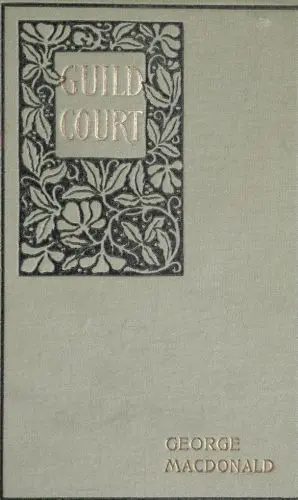
George MacDonald
THE CLASSIC COLLECTION · 1850
"Malcolm" by George MacDonald is a novel written during the late 19th century. The story is set in a small fishing village and unfolds around the central character, Malcolm, who navigates a world filled with unique personalities, such as Miss Horn and the Mad Laird, while dealing with themes of love, loss, and personal growth. At the start of the book, the narrative introduces readers to Miss Horn, who is preparing for the funeral of her cousin Griselda Campbell. The conversations surrounding the death reveal the small-town dynamics, mingled with gossip and personal judgments, particularly as Miss Horn reacts to her visitor, Mrs. Mellis. The tone is sharply filled with both humor and sorrow, encapsulating the peculiarities of the characters. Shortly after, Barbara Catanach enters the scene, hinting at deeper intrigues and motivations woven throughout the community. Through this opening, the novel begins to paint a poignant picture of life in a close-knit village, rich with vibrant characters and emotional depth.
Introduction adapted from the source catalogue; source summaries may be automatically generated.
Free to read · English · 194,744 words · No account needed
MAKE TIME FOR A GOOD BOOK
On by default. Untick to stop anonymous reading totals. Each page counts after 10 seconds in view. How this works.
Anonymous counting is on unless you have switched it off.
“I beg yer lordship’s pardon,” returned Malcolm. “I said it ’or I kent. It was nane o’ my business wha my leddy was wi’.”
“Certainly not. But I don’t mind confessing that Lady Bellair is not one I should choose to give authority over Lady Florimel. You have some regard for your young mistress, I know, Malcolm.”
“I wad dee for her, my lord.”
“That’s a common assertion,” said the marquis.
“No wi’ fisher-fowk. I kenna hoo it may be wi’ your fowk, my lord.”
“Well, even with us it means something. It implies at least that he who uses it would risk his life for her whom he wishes to believe it. But perhaps it may mean more than that in the mouth of a fisherman? Do you fancy there is such a thing as devotion--real devotion, I mean--self-sacrifice, you know?”
“I daurna doobt it, my lord.”
“Without fee or hope of reward?”
“There maun be some cawpable o’ ’t, my lord, or what for sud the warl’ be? What ither sud haud it ohn been destroyt as Sodom was for the want o’ the ten richteous? There maun be saut whaur corruption hasna the thing a’ its ain gait.”
“You certainly have pretty high notions of things, MacPhail. For my part, I can easily enough imagine a man risking his life; but devoting it!--that’s another thing altogether.”
“There maun be ’at wad du a’ ’at cud be dune, my lord.”
“What, for instance, would you do for Lady Florimel, now? You say you would die for her: what does dying mean on a fisherman’s tongue?”
“It means a’ thing, my lord--short o’ ill. I wad sterve for her, but I wadna steal. I wad fecht for her, but I wadna lee.”
“Would ye be her servant all your days? Come, now.”
“Mair nor willin’ly, my lord--gien she wad only hae me, an’ keep
me.”
“But supposing you came to inherit the Kirkbyres property?”
“My lord,” said Malcolm solemnly, “that’s a puir test to put me till. It gangs for naething. I wad raither clean my leddie’s butes frae mornin’ to nicht, nor be the son o’ that wuman, gien she war a born duchess. Try me wi’ something worth yer lordship’s mou’.”
But the marquis seemed to think he had gone far enough for the present. With gleaming eyes he rose, took his withered love letter from the table, put it in his waistcoat pocket, and saying--
“Well, find out for me what this is they’re about with the schoolmaster,” walked to the door.
“I ken a’ aboot that, my lord,” answered Malcolm, “ohn speirt at
onybody.”
Your reading position is saved on this browser. Take it to another device with a library code. Reading pages adapt to text, rather than matching a printed edition.
George MacDonald
George MacDonald
George MacDonald
George MacDonald
BEHIND THE BOOK
This eBook is for the use of anyone anywhere in the United States and most other parts of the world at no cost and with almost no restrictions whatsoever. You may copy it, give it away or re-use it under the terms of the Project Gutenberg License included with this eBook or online at www.gutenberg.org. If you are not located in the United States, you will have to check the laws of the country where you are located before using this eBook. Read the source licence.
The original source file, including credits and licence, is retained by this library. Request an original-format copy at no charge. Please include the book title and Project Gutenberg identifier #7127.
KEEP YOUR CURIOSITY GOING
Coulson Kernahan

Maurice Baring
Frances Wright
Cécile Tormay

Frederic Jesup Stimson

W. H. P. (William Henry Pope) Jarvis