THE CLASSIC COLLECTION✦A Book of Strife in the Form of The Diary of an Old SoulCLASSIC FREE BOOKS
A Book of Strife in the Form of The Diary of an Old Soul
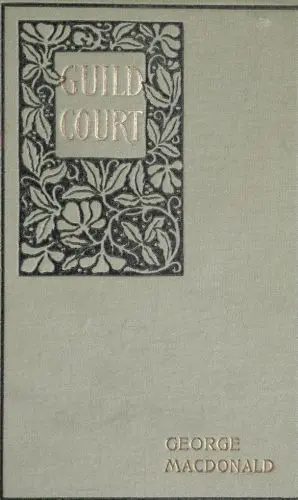
George MacDonald
THE CLASSIC COLLECTION · 1850
"Malcolm" by George MacDonald is a novel written during the late 19th century. The story is set in a small fishing village and unfolds around the central character, Malcolm, who navigates a world filled with unique personalities, such as Miss Horn and the Mad Laird, while dealing with themes of love, loss, and personal growth. At the start of the book, the narrative introduces readers to Miss Horn, who is preparing for the funeral of her cousin Griselda Campbell. The conversations surrounding the death reveal the small-town dynamics, mingled with gossip and personal judgments, particularly as Miss Horn reacts to her visitor, Mrs. Mellis. The tone is sharply filled with both humor and sorrow, encapsulating the peculiarities of the characters. Shortly after, Barbara Catanach enters the scene, hinting at deeper intrigues and motivations woven throughout the community. Through this opening, the novel begins to paint a poignant picture of life in a close-knit village, rich with vibrant characters and emotional depth.
Introduction adapted from the source catalogue; source summaries may be automatically generated.
Free to read · English · 194,744 words · No account needed
MAKE TIME FOR A GOOD BOOK
On by default. Untick to stop anonymous reading totals. Each page counts after 10 seconds in view. How this works.
Anonymous counting is on unless you have switched it off.
His lordship once more began to walk up and down the room, every now and then taking a stolen glance at Miss Horn, a glance of uneasy anxious questioning. She stood rigid--a very Lot’s wife of immobility, her eyes on the ground, waiting what he would say next.
“I wish I knew whether I could trust her,” he said at length, as if talking aloud to himself.
Miss Horn took no notice.
“Why don’t you speak, woman?” cried the marquis with irritation.
How he hated perplexity!
“Ye speired nae queston, my lord; an’ gien ye had, my word has ower little weicht to answer wi’.”
“Can I trust you, woman--I want to know,” said his lordship
angrily.
“No far’er, my lord, nor to du what I think’s richt.”
“I want to be certain that you will do nothing with those letters until you hear from me?” said the marquis, heedless of her reply.
“I’ll du naething afore the morn. Far’er nor that I winna pledge mysel’,” answered Miss Horn, and with the words moved towards the door.
“Hadn’t you better take this with you?” said the marquis, offering the little note, which he had carried all the time between his finger and thumb.
“There’s nae occasion. I hae plenty wantin’ that. Only dinna lea’
’t lyin’ aboot.”
“There’s small danger of that,” said the marquis, and rang the
bell.
The moment she was out of the way, he went up to his own room, and, flinging the door to, sat down at the table, and laid his arms and head upon it. The acrid vapour of tears that should have been wept long since, rose to his eyes: he dashed his hand across them, as if ashamed that he was not even yet out of sight of the kingdom of heaven. His own handwriting, of a period when all former sins and defilements seemed about to be burned clean from his soul by the fire of an honest and virtuous love, had moved him; for genuine had been his affection for the girl who had risked and lost so much for him. It was with no evil intent, for her influence had rendered him for the time incapable of playing her false, but in part from reasons of prudence, as he persuaded himself, for both their sakes, and in part led astray by the zest which minds of a certain cast derive from the secrecy of pleasure, that he had persuaded her to the unequal yoking of honesty and secrecy. But, suddenly called away and sent by the Prince on a private mission, soon after their marriage, and before there was any special reason to apprehend consequences that must lead to discovery, he had, in the difficulties of the case and the hope of a speedy return, left her without any arrangement for correspondence, and all he had ever heard of her more was from his brother, then the marquis--a cynical account of the discovery of her condition, followed almost immediately by a circumstantial one of her death and that of her infant. He was deeply stung and the thought of her sufferings in the false position where his selfishness had placed her, haunted him for a time beyond his endurance--for of all things he hated suffering, and of all sufferings remorse is the worst. Hence, where a wiser man might have repented, he rushed into dissipation, whose scorching wind swept away not only the healing dews of his sorrow, but the tender buds of new life that had begun to mottle the withering tree of his nature. The desire after better things which had, under his wife’s genial influence, begun to pass into effort, not only vanished utterly in the shameless round of evil distraction, but its memory became a mockery to the cynical spirit that arose behind the vanishing angel of repentance; and he was soon in the condition of the man from whom the exorcised demon had gone but to find his seven worse companions.
Your reading position is saved on this browser. Take it to another device with a library code. Reading pages adapt to text, rather than matching a printed edition.
George MacDonald
George MacDonald
George MacDonald
George MacDonald
BEHIND THE BOOK
This eBook is for the use of anyone anywhere in the United States and most other parts of the world at no cost and with almost no restrictions whatsoever. You may copy it, give it away or re-use it under the terms of the Project Gutenberg License included with this eBook or online at www.gutenberg.org. If you are not located in the United States, you will have to check the laws of the country where you are located before using this eBook. Read the source licence.
The original source file, including credits and licence, is retained by this library. Request an original-format copy at no charge. Please include the book title and Project Gutenberg identifier #7127.
KEEP YOUR CURIOSITY GOING
Coulson Kernahan

Maurice Baring
Frances Wright
Cécile Tormay

Frederic Jesup Stimson

W. H. P. (William Henry Pope) Jarvis