THE CLASSIC COLLECTION✦A Book of Strife in the Form of The Diary of an Old SoulCLASSIC FREE BOOKS
A Book of Strife in the Form of The Diary of an Old Soul
George MacDonald
THE CLASSIC COLLECTION · 1850
"Malcolm" by George MacDonald is a novel written during the late 19th century. The story is set in a small fishing village and unfolds around the central character, Malcolm, who navigates a world filled with unique personalities, such as Miss Horn and the Mad Laird, while dealing with themes of love, loss, and personal growth. At the start of the book, the narrative introduces readers to Miss Horn, who is preparing for the funeral of her cousin Griselda Campbell. The conversations surrounding the death reveal the small-town dynamics, mingled with gossip and personal judgments, particularly as Miss Horn reacts to her visitor, Mrs. Mellis. The tone is sharply filled with both humor and sorrow, encapsulating the peculiarities of the characters. Shortly after, Barbara Catanach enters the scene, hinting at deeper intrigues and motivations woven throughout the community. Through this opening, the novel begins to paint a poignant picture of life in a close-knit village, rich with vibrant characters and emotional depth.
Introduction adapted from the source catalogue; source summaries may be automatically generated.
Free to read · English · 194,744 words · No account needed
MAKE TIME FOR A GOOD BOOK
On by default. Untick to stop anonymous reading totals. Each page counts after 10 seconds in view. How this works.
Anonymous counting is on unless you have switched it off.
“Ken ye that han’ o’ wreet, my lord?” she inquired, sternly advancing a step, and holding out a scrap of paper at arm’s length, as if presenting a pistol.
The marquis took it. In his countenance curiosity had mingled with the expectation. He glanced at it. A shadow swept over his face but vanished instantly: the mask of impervious non-expression which a man of his breeding always knows how to assume, was already on his visage.
“Where did you get this?” he said quietly, with just the slightest
catch in his voice.
“I got it, my lord, whaur there’s mair like it.”
“Show me them.”
“I hae shawn ye plenty for a swatch (pattern), my lord.”
“You refuse?” said the marquis; and the tone of the question was like the first cold puff that indicates a change of weather.
“I div, my lord,” she answered imperturbably.
“If they are not my property, why do you bring me this?”
“Are they your property, my lord?”
“This is my handwriting.”
“Ye alloo that?”
“Certainly, my good woman. You did not expect me to deny it?”
“God forbid, my lord! But will ye uphaud yersel’ the lawfu’ heir to the deceased? It lies ’atween yer lordship an’ mysel’----i’ the meantime.”
He sat down, holding the scrap of paper between his finger and
thumb.
“I will buy them of you,” he said coolly, after a moment’s thought, and as he spoke he looked keenly at her.
The form of reply which first arose in Miss Horn’s indignant soul
never reached her lips.
“It’s no my trade,” she answered, with the coldness of suppressed wrath. “I dinna deal in sic waurs.”
“What do you deal in then?” asked the marquis.
“In trowth an’ fair play, my lord,” she answered, and was again
silent.
So was the marquis for some moments, but was the first to resume.
“If you think the papers to which you refer of the least value, allow me to tell you it is an entire mistake.”
“There was ane thoucht them o’ vailue,” replied Miss Horn--and her voice trembled a little, but she hemmed away her emotion-- “--for a time at least, my lord; an’ for her sake they’re o’ vailue to me, be they what they may to yer lordship. But wha can tell? Scots law may put life intill them yet, an’ gie them a vailue to somebody forbye me.”
“What I mean, my good woman, is, that if you think the possession of those papers gives you any hold over me which you can turn to your advantage, you are mistaken.”
Your reading position is saved on this browser. Take it to another device with a library code. Reading pages adapt to text, rather than matching a printed edition.
George MacDonald
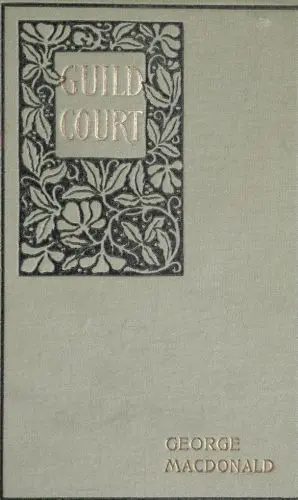
George MacDonald
George MacDonald
George MacDonald
BEHIND THE BOOK
This eBook is for the use of anyone anywhere in the United States and most other parts of the world at no cost and with almost no restrictions whatsoever. You may copy it, give it away or re-use it under the terms of the Project Gutenberg License included with this eBook or online at www.gutenberg.org. If you are not located in the United States, you will have to check the laws of the country where you are located before using this eBook. Read the source licence.
The original source file, including credits and licence, is retained by this library. Request an original-format copy at no charge. Please include the book title and Project Gutenberg identifier #7127.
KEEP YOUR CURIOSITY GOING
Coulson Kernahan

Maurice Baring
Frances Wright
Cécile Tormay

Frederic Jesup Stimson

W. H. P. (William Henry Pope) Jarvis