THE CLASSIC COLLECTION✦A Book of Strife in the Form of The Diary of an Old SoulCLASSIC FREE BOOKS
A Book of Strife in the Form of The Diary of an Old Soul
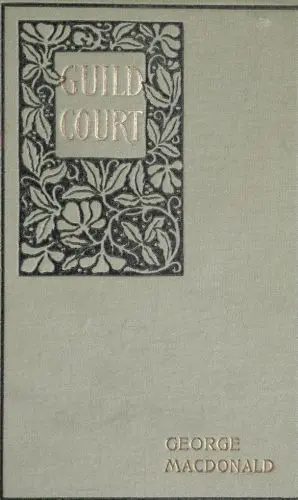
George MacDonald
THE CLASSIC COLLECTION · 1850
"Malcolm" by George MacDonald is a novel written during the late 19th century. The story is set in a small fishing village and unfolds around the central character, Malcolm, who navigates a world filled with unique personalities, such as Miss Horn and the Mad Laird, while dealing with themes of love, loss, and personal growth. At the start of the book, the narrative introduces readers to Miss Horn, who is preparing for the funeral of her cousin Griselda Campbell. The conversations surrounding the death reveal the small-town dynamics, mingled with gossip and personal judgments, particularly as Miss Horn reacts to her visitor, Mrs. Mellis. The tone is sharply filled with both humor and sorrow, encapsulating the peculiarities of the characters. Shortly after, Barbara Catanach enters the scene, hinting at deeper intrigues and motivations woven throughout the community. Through this opening, the novel begins to paint a poignant picture of life in a close-knit village, rich with vibrant characters and emotional depth.
Introduction adapted from the source catalogue; source summaries may be automatically generated.
Free to read · English · 194,744 words · No account needed
MAKE TIME FOR A GOOD BOOK
On by default. Untick to stop anonymous reading totals. Each page counts after 10 seconds in view. How this works.
Anonymous counting is on unless you have switched it off.
Twa wee bit miles frae the heich hope-heid,
Wi’ a Rin, burnie, rin,
Doon creepit a cowerin’ streakie o’ reid,
An’ meltit awa’ within,
Wi’ a Rin, burnie, rin.
Frae the hert o’ a youth cam the tricklin’ reid,
Wi’ a Rin, burnie, rin;
It ran an’ ran till it left him deid,
An’ syne it dried up i’ the win’,
An’ that burnie nae mair did rin.
Whan the wimplin’ burn that frae three herts gaed
Wi’ a Rin, burnie, rin,
Cam to the lip o’ the sea sae braid,
It curled an’ grued wi’ pain o’ sin--
But it took that burnie in.
“It’s a bonny, bonny sang,” said Malcolm; “but I canna say I
a’thegither like it.”
“Why not?” asked Mr Graham, with an inquiring smile.
“Because the ocean sudna mak a mou’ at the puir earth-burnie that cudna help what ran intill ’t.”
“It took it in though, and made it clean, for all the pain it
couldn’t help either.”
“Weel, gien ye luik at it that gait!” said Malcolm.
In the evening his grandfather came to see him, and sat down by his bedside, full of a tender anxiety which he was soon able to alleviate.
“Wownded in ta hand and in ta foot!” said the seer: “what can it mean? It must mean something, Malcolm, my son.”
“Weel, daddy, we maun jist bide till we see,” said Malcolm cheerfully.
A little talk followed, in the course of which it came into Malcolm’s head to tell his grandfather the dream he had had so much of the first night he had slept in that room--but more for the sake of something to talk about that would interest one who believed in all kinds of prefigurations, than for any other reason.
Duncan sat moodily silent for some time, and then, with a great heave of his broad chest, lifted up his head, like one who had formed a resolution, and said:
“The hour has come. She has long peen afrait to meet it, put it has come, and Allister will meet it.--She’ll not pe your cran’father, my son.”
He spoke the words with perfect composure, but as soon as they were uttered, burst into a wail, and sobbed like a child.
“Ye’ll be my ain father than?” said Malcolm.
“No, no, my son. She’ll not pe anything that’s your own at aal!”
And the tears flowed down his channelled cheeks.
For one moment Malcolm was silent, utterly bewildered. But he
must comfort the old man first, and think about what he had said
afterwards.
Your reading position is saved on this browser. Take it to another device with a library code. Reading pages adapt to text, rather than matching a printed edition.
George MacDonald
George MacDonald
George MacDonald
George MacDonald
BEHIND THE BOOK
This eBook is for the use of anyone anywhere in the United States and most other parts of the world at no cost and with almost no restrictions whatsoever. You may copy it, give it away or re-use it under the terms of the Project Gutenberg License included with this eBook or online at www.gutenberg.org. If you are not located in the United States, you will have to check the laws of the country where you are located before using this eBook. Read the source licence.
The original source file, including credits and licence, is retained by this library. Request an original-format copy at no charge. Please include the book title and Project Gutenberg identifier #7127.
KEEP YOUR CURIOSITY GOING
Coulson Kernahan

Maurice Baring
Frances Wright
Cécile Tormay

Frederic Jesup Stimson

W. H. P. (William Henry Pope) Jarvis