THE CLASSIC COLLECTION✦A Book of Strife in the Form of The Diary of an Old SoulCLASSIC FREE BOOKS
A Book of Strife in the Form of The Diary of an Old Soul
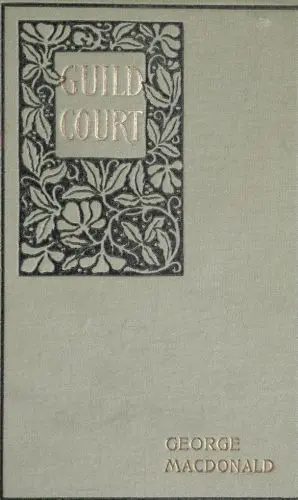
George MacDonald
THE CLASSIC COLLECTION · 1850
"Malcolm" by George MacDonald is a novel written during the late 19th century. The story is set in a small fishing village and unfolds around the central character, Malcolm, who navigates a world filled with unique personalities, such as Miss Horn and the Mad Laird, while dealing with themes of love, loss, and personal growth. At the start of the book, the narrative introduces readers to Miss Horn, who is preparing for the funeral of her cousin Griselda Campbell. The conversations surrounding the death reveal the small-town dynamics, mingled with gossip and personal judgments, particularly as Miss Horn reacts to her visitor, Mrs. Mellis. The tone is sharply filled with both humor and sorrow, encapsulating the peculiarities of the characters. Shortly after, Barbara Catanach enters the scene, hinting at deeper intrigues and motivations woven throughout the community. Through this opening, the novel begins to paint a poignant picture of life in a close-knit village, rich with vibrant characters and emotional depth.
Introduction adapted from the source catalogue; source summaries may be automatically generated.
Free to read · English · 194,744 words · No account needed
MAKE TIME FOR A GOOD BOOK
On by default. Untick to stop anonymous reading totals. Each page counts after 10 seconds in view. How this works.
Anonymous counting is on unless you have switched it off.
Weary at length--for the forlorn man continued movelessly sunk in his own thoughts, or what he had for such--the eyes of the child began to wander about the darkness, to which they had already got so far accustomed as to make the most of the scanty light. Presently she fancied she saw something glitter, away in the darkness--two things: they must be eyes!--the eyes of an otter or of a pole-cat, in which creatures the caves along the shore abounded. Seized with sudden fright, she ran to the laird and laid her hand on his shoulder, crying,
“Leuk, laird, leuk!”
He started to his feet and gazed bewildered at the child, rubbing his eyes once and again. She stood between the well and the entrance, so that all the light there was, gathered upon her pale face.
“Whaur do ye come frae?” he cried.
“I cam frae the auld boat,” she answered.
“What do ye want wi’ me?”
“Naething, sir; I only cam to see hoo ye was gettin’ on. I wadna hae disturbit ye, sir, but I saw the twa een o’ a wullcat, or sic like, glowerin’ awa yonner i’ the mirk, an’ they fleyt me ’at I grippit ye.”
“Weel, weel; sit ye doon, bairnie,” said the mad laird in a soothing voice; “the wullcat sanna touch ye. Ye’re no fleyt at me, are ye?”
“Na!” answered the child. “What for sud I be fleyt at you, sir?
I’m Phemy Mair.”
“Eh, bairnie! it’s you, is ’t?” he returned in tones of satisfaction, for he had not hitherto recognised her. “Sit ye doon, sit ye doon, an’ we’ll see aboot it a’.”
Phemy obeyed, and seated herself on the nearest projection.
The laird placed himself beside her, and once more buried his face, but not his ears, in his hands. Nothing entered them, however, but the sound of the rising tide, for Phemy sat by him in the faintly glimmering dusk, as without fear felt, so without word spoken.
The evening crept on, and the night came down, but all the effect of the growing darkness was that the child drew gradually nearer to her uncouth companion, until at length her hand stole into his, her head sank upon his shoulder, his arm went round her to hold her safe, and thus she fell fast asleep. After a while, the laird gently roused her and took her home, on their way warning her, in strange yet to her comprehensible utterance, to say nothing of where she had found him, for if she exposed his place of refuge, wicked people would take him, and he should never see her again.
Your reading position is saved on this browser. Take it to another device with a library code. Reading pages adapt to text, rather than matching a printed edition.
George MacDonald
George MacDonald
George MacDonald
George MacDonald
BEHIND THE BOOK
This eBook is for the use of anyone anywhere in the United States and most other parts of the world at no cost and with almost no restrictions whatsoever. You may copy it, give it away or re-use it under the terms of the Project Gutenberg License included with this eBook or online at www.gutenberg.org. If you are not located in the United States, you will have to check the laws of the country where you are located before using this eBook. Read the source licence.
The original source file, including credits and licence, is retained by this library. Request an original-format copy at no charge. Please include the book title and Project Gutenberg identifier #7127.
KEEP YOUR CURIOSITY GOING
Coulson Kernahan

Maurice Baring
Frances Wright
Cécile Tormay

Frederic Jesup Stimson

W. H. P. (William Henry Pope) Jarvis