THE CLASSIC COLLECTION✦A Book of Strife in the Form of The Diary of an Old SoulCLASSIC FREE BOOKS
A Book of Strife in the Form of The Diary of an Old Soul
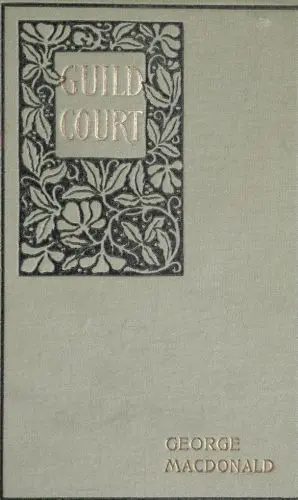
George MacDonald
THE CLASSIC COLLECTION · 1850
"Malcolm" by George MacDonald is a novel written during the late 19th century. The story is set in a small fishing village and unfolds around the central character, Malcolm, who navigates a world filled with unique personalities, such as Miss Horn and the Mad Laird, while dealing with themes of love, loss, and personal growth. At the start of the book, the narrative introduces readers to Miss Horn, who is preparing for the funeral of her cousin Griselda Campbell. The conversations surrounding the death reveal the small-town dynamics, mingled with gossip and personal judgments, particularly as Miss Horn reacts to her visitor, Mrs. Mellis. The tone is sharply filled with both humor and sorrow, encapsulating the peculiarities of the characters. Shortly after, Barbara Catanach enters the scene, hinting at deeper intrigues and motivations woven throughout the community. Through this opening, the novel begins to paint a poignant picture of life in a close-knit village, rich with vibrant characters and emotional depth.
Introduction adapted from the source catalogue; source summaries may be automatically generated.
Free to read · English · 194,744 words · No account needed
MAKE TIME FOR A GOOD BOOK
On by default. Untick to stop anonymous reading totals. Each page counts after 10 seconds in view. How this works.
Anonymous counting is on unless you have switched it off.
“It would be too great a condescension,” said Mr Cavins; “and your lordship will permit me to doubt the wisdom of it. These fishermen form a class by themselves; they are a rough set of men, and only too ready to despise authority. You will not only injure the prestige of your rank, my lord, but expose yourself to endless imposition.”
“The spirit moves me, and we are commanded not to quench the spirit,” rejoined the marquis with a merry laugh, little thinking that he was actually describing what was going on in him--that the spirit of good concerning which he jested, was indeed not working in him, but gaining on him, in his resolution of that moment.
“Come, Flory,” said the marquis, to whom it gave a distinct pleasure to fly in the face of advice, “we’ll go at once, and have it over.”
So they set out together for the Seaton, followed by the bagpipes, carried by the same servant as before, and were received by the overjoyed Malcolm, and ushered into his grandfather’s presence.
Whatever may have been the projected attitude of the marquis, the moment he stood on the piper’s floor, the generosus, that is the gentleman, in him, got the upper hand, and his behaviour to the old man was not polite merely, but respectful. At no period in the last twenty years had he been so nigh the kingdom of heaven as he was now when making his peace with the blind piper.
When Duncan heard his voice, he rose with dignity and made a stride or two towards the door, stretching forth his long arm to its full length, and spreading wide his great hand with the brown palm upwards:
“Her nainsel will pe proud to see my lord ta marquis under her
roof,” he said.
The visit itself had already sufficed to banish all resentment from
his soul.
The marquis took the proffered hand kindly:
“I have come to apologise,” he said.
“Not one vord more, my lort, I peg,” interrupted Duncan. “My lort is come, out of his cootness, to pring her a creat kift; for he’ll pe hearing of ta sad accident which pefell her poor pipes one efening lately. Tey was ferry old, my lort, and easily hurt.”
“I am sorry--” said the marquis--but again Duncan interrupted
him.
“I am clad, my lort,” he said, “for it prings me ta creat choy. If my lady and your lordship will honour her poor house py sitting town, she will haf ta pleasure of pe offering tem a little music.”
Your reading position is saved on this browser. Take it to another device with a library code. Reading pages adapt to text, rather than matching a printed edition.
George MacDonald
George MacDonald
George MacDonald
George MacDonald
BEHIND THE BOOK
This eBook is for the use of anyone anywhere in the United States and most other parts of the world at no cost and with almost no restrictions whatsoever. You may copy it, give it away or re-use it under the terms of the Project Gutenberg License included with this eBook or online at www.gutenberg.org. If you are not located in the United States, you will have to check the laws of the country where you are located before using this eBook. Read the source licence.
The original source file, including credits and licence, is retained by this library. Request an original-format copy at no charge. Please include the book title and Project Gutenberg identifier #7127.
KEEP YOUR CURIOSITY GOING
Coulson Kernahan

Maurice Baring
Frances Wright
Cécile Tormay

Frederic Jesup Stimson

W. H. P. (William Henry Pope) Jarvis