THE CLASSIC COLLECTION✦A Book of Strife in the Form of The Diary of an Old SoulCLASSIC FREE BOOKS
A Book of Strife in the Form of The Diary of an Old Soul
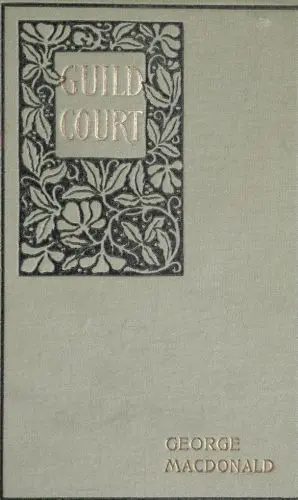
George MacDonald
THE CLASSIC COLLECTION · 1850
"Malcolm" by George MacDonald is a novel written during the late 19th century. The story is set in a small fishing village and unfolds around the central character, Malcolm, who navigates a world filled with unique personalities, such as Miss Horn and the Mad Laird, while dealing with themes of love, loss, and personal growth. At the start of the book, the narrative introduces readers to Miss Horn, who is preparing for the funeral of her cousin Griselda Campbell. The conversations surrounding the death reveal the small-town dynamics, mingled with gossip and personal judgments, particularly as Miss Horn reacts to her visitor, Mrs. Mellis. The tone is sharply filled with both humor and sorrow, encapsulating the peculiarities of the characters. Shortly after, Barbara Catanach enters the scene, hinting at deeper intrigues and motivations woven throughout the community. Through this opening, the novel begins to paint a poignant picture of life in a close-knit village, rich with vibrant characters and emotional depth.
Introduction adapted from the source catalogue; source summaries may be automatically generated.
Free to read · English · 194,744 words · No account needed
MAKE TIME FOR A GOOD BOOK
On by default. Untick to stop anonymous reading totals. Each page counts after 10 seconds in view. How this works.
Anonymous counting is on unless you have switched it off.
“Ye leein’ rascal!” cried Bykes; “--me feared at an auld spidder, ’at hasna breath eneuch to fill the bag o’ ’s pipes!”
“Caw canny, Johnny Bykes. Gien ye say an ill word o’ my gran’father, I s’ gie your neck a thraw--an’ that the meenute we’re oot o’ ’s lordship’s presence.”
“Threits! my lord,” said the gatekeeper, appealing.
“And well merited,” returned his lordship. “--Well, then,” he went on, again addressing Malcolm, “What have you to say for yourself in regard of stealing my brood pheasants?”
“Maister MacPherson,” said Malcolm, with an inclination of his head towards the gamekeeper, “micht ha’ fun’ a fitter neuk to fling that dirt intill. ’Deed, my lord, it’s sae ridic’lous, it hardly angers me. A man ’at can hae a’ the fish i’ the haill ocean for the takin’ o’ them, to be sic a sneck-drawin’ contemptible vratch as tak yer lordship’s bonny hen-craturs frae their chuckies--no to mention the sin o ’t!--it’s past an honest man’s denyin’, my lord. An’ Maister MacPherson kens better, for luik at him lauchin’ in ’s ain sleeve.”
“Well, we’ve no proof of it,” said the marquis; “but what do you say to the charge of trespass?”
“The policies hae aye been open to honest fowk, my lord.”
“Then where was the necessity for getting in over the wall!”
“I beg yer pardon, my lord: ye hae nae proof agen me o’ that aither.”
“Daur ye tell me,” cried Bykes, recovering himself, “’at I didna see ye wi’ my twa een, loup the dyke aneth the temple--ay, an something flutterin’ unco like bird-wings i’ yer han’?”
“Oot or in, Johnny Bykes?”
“Ow! oot.”
“I did loup the dyke my lord; but it was oot, no in.”
“How did you get in then?” asked the marquis.
“I gat in, my lord,” began Malcolm, and ceased.
“How did you get in?” repeated the marquis.
“Ow! there’s mony w’ys o’ winnin’ in, my lord. The last time I cam in but ane, it was ’maist ower the carcass o’ Johnny there, wha wad fain hae hauden me oot, only he hadna my blin’ daddy ahint him to ile ’s jints.”
“An’ dinna ye ca’ that brakin’ in?” said Bykes.
“Na; there was naething to brak, ’cep it had been your banes, Johnny; an’ that wad hae been a peety--they’re sae guid for rinnin wi’.”
“You had no right to enter against the will of my gatekeeper,” said his lordship. “What is a gatekeeper for?”
“I had a richt, my lord, sae lang ’s I was upo’ my leddy’s business.”
Your reading position is saved on this browser. Take it to another device with a library code. Reading pages adapt to text, rather than matching a printed edition.
George MacDonald
George MacDonald
George MacDonald
George MacDonald
BEHIND THE BOOK
This eBook is for the use of anyone anywhere in the United States and most other parts of the world at no cost and with almost no restrictions whatsoever. You may copy it, give it away or re-use it under the terms of the Project Gutenberg License included with this eBook or online at www.gutenberg.org. If you are not located in the United States, you will have to check the laws of the country where you are located before using this eBook. Read the source licence.
The original source file, including credits and licence, is retained by this library. Request an original-format copy at no charge. Please include the book title and Project Gutenberg identifier #7127.
KEEP YOUR CURIOSITY GOING
Coulson Kernahan

Maurice Baring
Frances Wright
Cécile Tormay

Frederic Jesup Stimson

W. H. P. (William Henry Pope) Jarvis