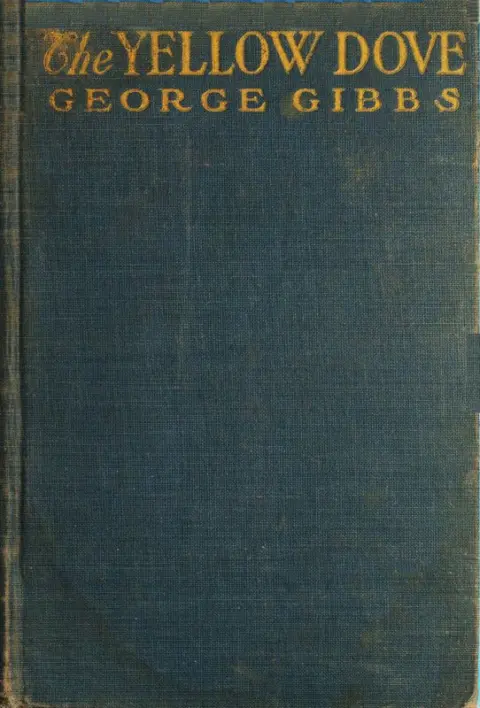
The Yellow Dove
George Gibbs
THE CLASSIC COLLECTION · 1913
"Madcap" by George Gibbs is a novel likely written in the early 20th century. The story revolves around Hermia Challoner, a spirited heiress with a penchant for adventure who frequently clashes with the expectations of high society. As she navigates her way through various social interactions—including encounters with the enigmatic artist John Markham—Hermia’s character unfolds against a backdrop of wealth, individuality, and the tension between societal norms and personal desires. The opening of the novel introduces us to Hermia and her maid, Titine, as Hermia energetically prepares for her day after a late-night escapade and an exhilarating ride on a "violent horse." Hermia's carefree and slightly reckless attitude showcases her spirited nature, while her dialogue with Titine presents a comedic yet revealing take on her character. When she later meets her friends, including the Countess Olga Tcherny, their conversation delves into themes of beauty, independence, and the social expectations placed on wealthy women. The narrative highlights Hermia's struggle between embracing her desires and conforming to societal pressures, making it clear that her dynamic with Markham will play a significant role in her journey of self-discovery and challenge the conventions of her world.
Introduction adapted from the source catalogue; source summaries may be automatically generated.
Free to read · English · 89,595 words · No account needed
MAKE TIME FOR A GOOD BOOK
On by default. Untick to stop anonymous reading totals. Each page counts after 10 seconds in view. How this works.
Anonymous counting is on unless you have switched it off.
She obeyed and found it difficult because every time her elbows struck the drum her fingers flew from the mandolin. But she managed it at last, and in the end made shift to use the harmonica, too.
Then followed "The Marseillaise." That was easier. The air had a swing to it, and she managed both the drum and the cymbals. But it was warm work and she stopped for a while, rosy and breathless.
"What do you think?"
"Oh, magnificent. Yvonne Deschamps--Femme Orchestre, Messieurs et Dames, queen of the lyrical world, the musical marvel of the century, artist by appointment to the President of the Réplublique Française and all the crowned heads of Europe. How will that do?"
"Beautifully. And you--what will you do?"
"I-- Oh, I will pass the hat."
She laughed. "So! You intend to live in luxury at my expense. No, thank you, Monsieur Philidor. I'm doing my share. You shall do yours. I'll trouble you to keep your word. You shall paint portraits at two francs a head."
"I didn't really intend--"
"You shall keep your promise," she insisted.
"But, Hermia, I--"
"There are no 'buts'!" she broke in. "A moment ago you indulged in some fine phrases at the expense of my sincerity. Now look to yours. We'll have an honest partnership--an equal partnership, or we'll have no partnership."
He rubbed his head reflectively.
"Oh, I'll do it, I suppose," he said at last.
She laughed at him and resumed her practicing, making some notable improvements on her first attempts and adding "Mère Michel" and "Au Claire de la Lune," "Le Roi Dagobert" to her répertoire.
"Where on earth did you learn that?" he asked in an entr'acte.
"At school--in Paris."
"And the mandolin?"
"A parlor trick. You see, I'm not so useless, after all."
Presently, when she sat beside him to rest, he brought out a pad and crayon and made a drawing of her in her cap and bells. He began a little uncertainly, a little carelessly, but his interest growing, in a moment he was absorbed.
Whatever knowledge of her had been hidden from him as a man, it seemed suddenly revealed to the painter now. The broad, smooth brow which meant intelligence, the short nose, which meant amiability, the nostrils well arched, which meant pride, the first rounded lips, which meant sensibility, the sharp little declivity beneath them and the squarish chin, which meant either willfulness or determination (he chose the former), and the eyes, gray blue, set ever so slightly at an angle, which could mean much or nothing at all.
Your reading position is saved on this browser. Take it to another device with a library code. Reading pages adapt to text, rather than matching a printed edition.
George Gibbs
George Gibbs
George Gibbs
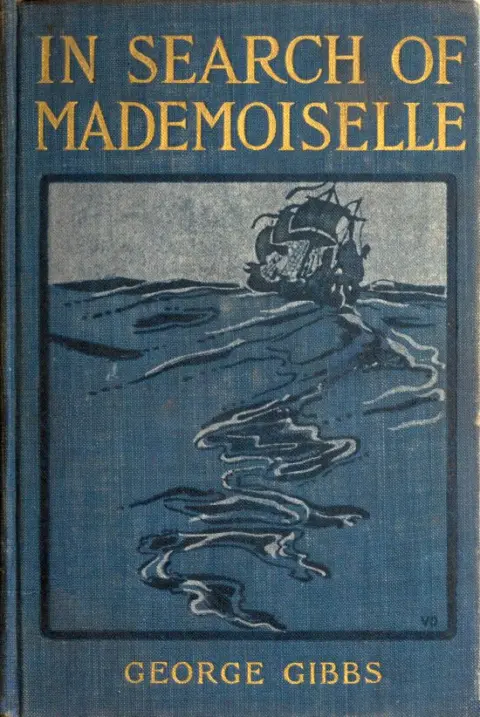
George Gibbs
BEHIND THE BOOK
This eBook is for the use of anyone anywhere in the United States and most other parts of the world at no cost and with almost no restrictions whatsoever. You may copy it, give it away or re-use it under the terms of the Project Gutenberg License included with this eBook or online at www.gutenberg.org. If you are not located in the United States, you will have to check the laws of the country where you are located before using this eBook. Read the source licence.
The original source file, including credits and licence, is retained by this library. Request an original-format copy at no charge. Please include the book title and Project Gutenberg identifier #11584.
KEEP YOUR CURIOSITY GOING
Coulson Kernahan

Maurice Baring
Frances Wright
Cécile Tormay

Frederic Jesup Stimson

W. H. P. (William Henry Pope) Jarvis