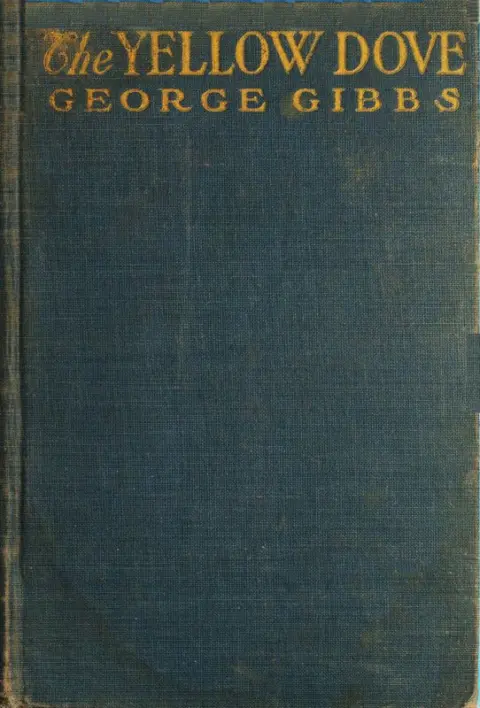
The Yellow Dove
George Gibbs
THE CLASSIC COLLECTION · 1913
"Madcap" by George Gibbs is a novel likely written in the early 20th century. The story revolves around Hermia Challoner, a spirited heiress with a penchant for adventure who frequently clashes with the expectations of high society. As she navigates her way through various social interactions—including encounters with the enigmatic artist John Markham—Hermia’s character unfolds against a backdrop of wealth, individuality, and the tension between societal norms and personal desires. The opening of the novel introduces us to Hermia and her maid, Titine, as Hermia energetically prepares for her day after a late-night escapade and an exhilarating ride on a "violent horse." Hermia's carefree and slightly reckless attitude showcases her spirited nature, while her dialogue with Titine presents a comedic yet revealing take on her character. When she later meets her friends, including the Countess Olga Tcherny, their conversation delves into themes of beauty, independence, and the social expectations placed on wealthy women. The narrative highlights Hermia's struggle between embracing her desires and conforming to societal pressures, making it clear that her dynamic with Markham will play a significant role in her journey of self-discovery and challenge the conventions of her world.
Introduction adapted from the source catalogue; source summaries may be automatically generated.
Free to read · English · 89,595 words · No account needed
MAKE TIME FOR A GOOD BOOK
On by default. Untick to stop anonymous reading totals. Each page counts after 10 seconds in view. How this works.
Anonymous counting is on unless you have switched it off.
Of Hermia's companions, Olga Tcherny alone said nothing. She had no humor to waste her breath. And Markham stood beside the group, his arms folded, his head bowed, listening. But when Hermia went into the cottage for her things he followed her.
"You're resolved?" he asked, helping her into her blouse.
"Well, rather."
"I wish I might persuade you--your nerves were--a little shaken this
morning."
She paused in the act of putting on her gauntlets and held one small bare hand under his nose that he might see how steady it was. He grasped it in both of his own and then, with an impulse that he couldn't explain, kissed it again and again.
"Don't go, child," he whispered gently. "Not today."
She struggled to withdraw her hand, a warm flush stealing up her neck
and temples.
"Let me go, Mr. Markham. Let me go."
He relinquished her and stood aside.
"As you please," he muttered. "I'm sorry--"
She turned, halfway to the door and examined his face.
"Sorry? For what?"
"That I haven't the authority to forbid you."
"You?" she laughed. "That is amusing."
"I would teach you some truths that you have never learned," he persisted, "the fatuity of mere bravado, the uses of life. You couldn't play with it if you knew something of its value--"
"The only value of life is in what you can get from it--"
"Or in what you can give from it--"
"Good-bye, Mr. Markham. I will join your school of philosophy another day. Meanwhile--" and she pointed her gauntleted hand toward the open doorway, "life shall pay me one more sensation."
He shrugged his shoulders and followed.
The machine was already on the lawn surrounded by Hermia's guests and preliminary experiments had proven that all was ready. Hermia climbed into the seat unaided, while Markham stood at one side and watched the propellers started. Faster and faster they flew, the machine held by Armistead and the Frenchman, while Hermia sat looking straight before her down the lawn through the opening between the rocks which led to open water.
"Au revoir, my friends," she cried and gave the word, at which the men sprang clear, and amid cries of encouragement and congratulation the machine moved down the lawn, gathering momentum with every second, rising gracefully with its small burden just before it reached the water and soaring into the air. The people on the lawn watched for a moment and then with one accord rushed for the launch.
Olga Tcherny paused a moment, her hand on Markham's arm.
"You will come to 'Wake-Robin'?" she asked.
"I think not," he replied.
"Then I shall come to Thimble Island," she finished.
Your reading position is saved on this browser. Take it to another device with a library code. Reading pages adapt to text, rather than matching a printed edition.
George Gibbs
George Gibbs
George Gibbs
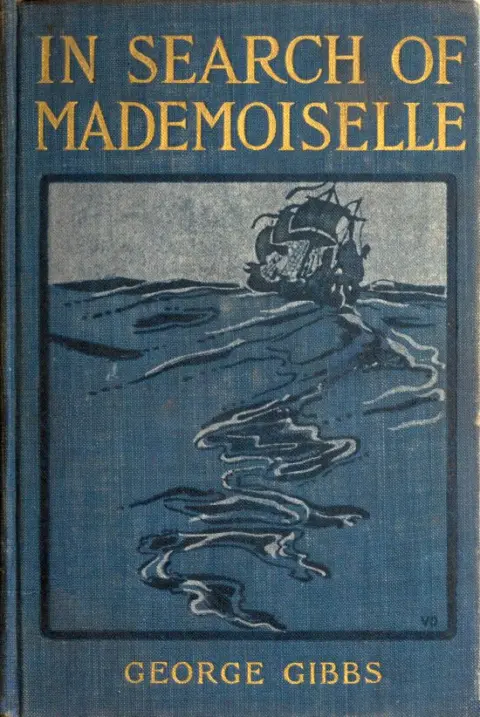
George Gibbs
BEHIND THE BOOK
This eBook is for the use of anyone anywhere in the United States and most other parts of the world at no cost and with almost no restrictions whatsoever. You may copy it, give it away or re-use it under the terms of the Project Gutenberg License included with this eBook or online at www.gutenberg.org. If you are not located in the United States, you will have to check the laws of the country where you are located before using this eBook. Read the source licence.
The original source file, including credits and licence, is retained by this library. Request an original-format copy at no charge. Please include the book title and Project Gutenberg identifier #11584.
KEEP YOUR CURIOSITY GOING
Coulson Kernahan

Maurice Baring
Frances Wright
Cécile Tormay

Frederic Jesup Stimson

W. H. P. (William Henry Pope) Jarvis