THE CLASSIC COLLECTION✦The childrenCLASSIC FREE BOOKS
The children
Edith Wharton
THE CLASSIC COLLECTION · 1907
"Madame de Treymes" by Edith Wharton is a novel written in the early 20th century. The story revolves around John Durham, a young American man who becomes entangled in the complex social world of Paris, particularly with Madame de Malrive, a woman navigating the challenges of French society after her separation from her husband. As Durham and Madame de Malrive explore their feelings for each other, themes of cultural clash, societal expectations, and personal sacrifice emerge. The opening of the novel introduces John Durham as he marvels at the beauty of Paris while waiting for Madame de Malrive at a hotel. Their ensuing conversation reveals Madame de Malrive's conflicting emotions about her life in France and her deep yearning for her American roots. The dialogue explores her complicated relationship with her son, her societal obligations, and her deep desire to maintain a connection to her past. As they walk through the Tuileries, their chemistry is palpable, but the shadows of her past linger, creating a tension that foreshadows the complexities of their potential relationship. This introduction sets the stage for the unfolding drama that interrogates the sacrifice of personal happiness in the face of social norms and familial loyalty.
Introduction adapted from the source catalogue; source summaries may be automatically generated.
Free to read · English · 19,042 words · No account needed
MAKE TIME FOR A GOOD BOOK
On by default. Untick to stop anonymous reading totals. Each page counts after 10 seconds in view. How this works.
Anonymous counting is on unless you have switched it off.
"Not consciously, perhaps; but silences and reserves can teach so much. His mother has another point of view--"
"Thank heaven!" Durham interjected.
"Thank heaven for her--yes--perhaps; but it would not have done
for the boy."
Durham squared his shoulders with the sudden resolve of a man breaking through a throng of ugly phantoms.
"You haven't yet convinced me that it won't have to do for him. At the time of Madame de Malrive's separation, the court made no difficulty about giving her the custody of her son; and you must pardon me for reminding you that the father's unfitness was the reason alleged."
Madame de Treymes shrugged her shoulders. "And my poor brother, you would add, has not changed; but the circumstances have, and that proves precisely what I have been trying to show you: that, in such cases, the general course of events is considered, rather than the action of any one person."
"Then why is Madame de Malrive's action to be considered?"
"Because it breaks up the unity of the family."
"Unity--!" broke from Durham; and Madame de Treymes gently
suffered his smile.
"Of the family tradition, I mean: it introduces new elements. You
are a new element."
"Thank heaven!" said Durham again.
She looked at him singularly. "Yes--you may thank heaven. Why isn't
it enough to satisfy Fanny?"
"Why isn't what enough?"
"Your being, as I say, a new element; taking her so completely into a better air. Why shouldn't she be content to begin a new life with you, without wanting to keep the boy too?"
Durham stared at her dumbly. "I don't know what you mean," he said
at length.
"I mean that in her place--" she broke off, dropping her eyes. "She may have another son--the son of the man she adores."
Durham rose from his seat and took a quick turn through the room. She sat motionless, following his steps through her lowered lashes, which she raised again slowly as he stood before her.
"Your idea, then, is that I should tell her nothing?" he said.
"Tell her now? But, my poor friend, you would be ruined!"
"Exactly." He paused. "Then why have you told me?"
Under her dark skin he saw the faint colour stealing. "We see things so differently--but can't you conceive that, after all that has passed, I felt it a kind of loyalty not to leave you in ignorance?"
"And you feel no such loyalty to her?"
"Ah, I leave her to you," she murmured, looking down again.
Durham continued to stand before her, grappling slowly with his perplexity, which loomed larger and darker as it closed in on him.
Your reading position is saved on this browser. Take it to another device with a library code. Reading pages adapt to text, rather than matching a printed edition.
Edith Wharton
Edith Wharton
Annie Eliot Trumbull & George A. (George Abiah) Hibbard & Bliss Perry & Edith Wharton & John Seymour Wood
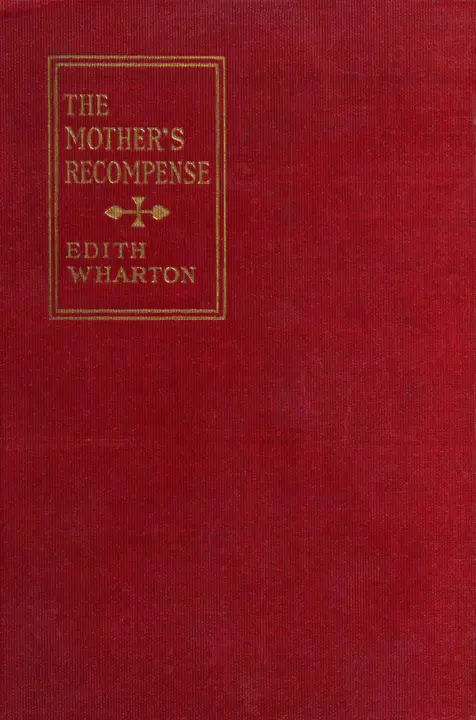
Edith Wharton
BEHIND THE BOOK
This eBook is for the use of anyone anywhere in the United States and most other parts of the world at no cost and with almost no restrictions whatsoever. You may copy it, give it away or re-use it under the terms of the Project Gutenberg License included with this eBook or online at www.gutenberg.org. If you are not located in the United States, you will have to check the laws of the country where you are located before using this eBook. Read the source licence.
The original source file, including credits and licence, is retained by this library. Request an original-format copy at no charge. Please include the book title and Project Gutenberg identifier #4518.
KEEP YOUR CURIOSITY GOING
Coulson Kernahan

Maurice Baring
Frances Wright
Cécile Tormay

Frederic Jesup Stimson

W. H. P. (William Henry Pope) Jarvis