THE CLASSIC COLLECTION✦Rocky ForkCLASSIC FREE BOOKS
Rocky Fork
Mary Hartwell Catherwood
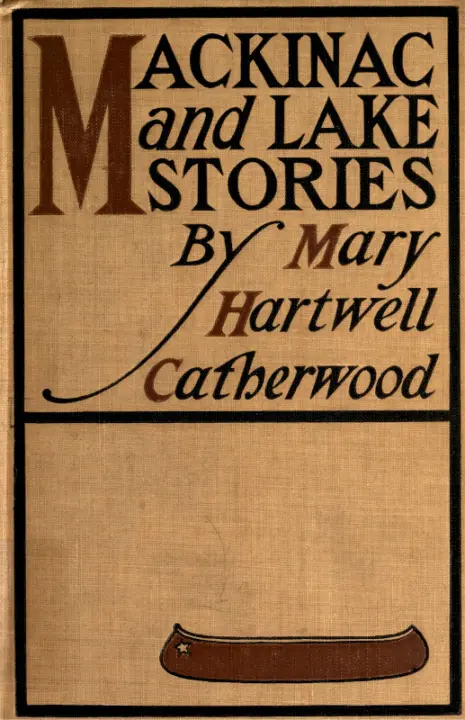
THE CLASSIC COLLECTION · 1899
"Mackinac and Lake Stories" by Mary Hartwell Catherwood is a collection of short stories written in the late 19th century. The narrative is set primarily in the region of Mackinac Island, exploring themes of nature, conflict, and interpersonal relationships against the backdrop of the early American frontier. The stories likely include various characters from different cultural backgrounds, including Canadians, Indians, and settlers, as they navigate love, war, and personal trials in a rapidly changing world. The opening of the first story, titled "Marianson," introduces readers to a tense historical moment during the early 19th century when British forces land on Mackinac Island amid the War of 1812. The story follows a young voyageur who struggles with his allegiance and personal convictions, ultimately leading him to a hidden cave where he encounters Marianson, a widow who is both resilient and filled with a sense of freedom. Their precarious situation allows Catherwood to explore themes of bravery, camaraderie, and the complexities of human connection during tumultuous times. The young voyageur's protective instincts and Marianson's innate sense of survival create a captivating dynamic as they confront their reality in the midst of chaos.
Introduction adapted from the source catalogue; source summaries may be automatically generated.
Free to read · English · 54,003 words · No account needed
MAKE TIME FOR A GOOD BOOK
On by default. Untick to stop anonymous reading totals. Each page counts after 10 seconds in view. How this works.
Anonymous counting is on unless you have switched it off.
Yes, there was Lavelotte's widow, the worst of all. She whipped little Jules unmercifully, and if Honoré had not taken his part and stood before him, she might have ended by being Jules's widow. She stripped him of his whole fortune, four hundred dollars, when he finally obtained a separation from her. But instead of curing him, this experience only whetted his zest for another wife.
“And there is Therese.” Honoré did not say, “Last, Therese.” While Jules lived and his wives died, or were traded off or divorced, there would be no last.
“It is four,” declared Clethera; and the count was true. Honoré had taken Jules in hand like a father, after the adventure with Lavelotte's widow. He made his parent work hard at the boat, and in winter walked him to and from mass literally with hand on collar. He encouraged the little man, moreover, with a half interest in their house on the beach, which long-accumulated earnings of the boat paid for. But all this care was thrown away; though after Jules brought Therese home, and saw that Honoré was not appeased by a woman's cooking, he had qualms about the homestead, and secretly carried the deed back to the original owner.
“I want you keep my part of de deed,” he explained. “I not let some more women rob Honoré. My wife, if she get de deed in her han', she might sell de whole t'ing!”
“Why, no, Jules, she couldn't sell your real estate!” the former owner declared. “She would only have a life interest in your share.”
“You say she couldn't sell it?”
“No. She would have nothing but a life interest.”
“She have only life interest? By gar! I t'ink I pay somebody twenty
dollar to kill her!”
But lacking both twenty dollars and determination, he lived peaceably with Therese until she died a natural death, on that occasion proudly doing his whole duty as a man and a mourner.
Remembering these affairs, which had not been kept secret from anybody on the island, Clethera spoke out under conviction.
“Honoré, it a scandal' t'ing, to get marry.”
“Me, I t'ink so too,” assented Honoré.
“Jules McCarty have disgrace' his son!”
“Melinda Cree,” retorted Honoré, obliged to defend his own, “she take a little 'usban' honly nineteen.”
“She 'ave no chance like Jules; she is oblige' to wait and take what
invite her.”
The voices of children from other quarter-breed cottages, playing along the beach, added cheer to the sweet darkness. Clethera and Honoré sat silently enjoying each other's company, unconscious that their aboriginal forefathers had courted in that manner, sitting under arbors of branches.
Your reading position is saved on this browser. Take it to another device with a library code. Reading pages adapt to text, rather than matching a printed edition.
Mary Hartwell Catherwood
Mary Hartwell Catherwood

Mary Hartwell Catherwood
Mary Hartwell Catherwood
BEHIND THE BOOK
This eBook is for the use of anyone anywhere in the United States and most other parts of the world at no cost and with almost no restrictions whatsoever. You may copy it, give it away or re-use it under the terms of the Project Gutenberg License included with this eBook or online at www.gutenberg.org. If you are not located in the United States, you will have to check the laws of the country where you are located before using this eBook. Read the source licence.
The original source file, including credits and licence, is retained by this library. Request an original-format copy at no charge. Please include the book title and Project Gutenberg identifier #55392.
KEEP YOUR CURIOSITY GOING
Cécile Tormay

Moritz Busch
Coulson Kernahan
John L. Ransom

Maurice Baring
Frances Wright