THE CLASSIC COLLECTION✦Andivius Hedulio: Adventures of a Roman Nobleman in the Days of the EmpireCLASSIC FREE BOOKS
Andivius Hedulio: Adventures of a Roman Nobleman in the Days of the Empire
Edward Lucas White
THE CLASSIC COLLECTION · 1906
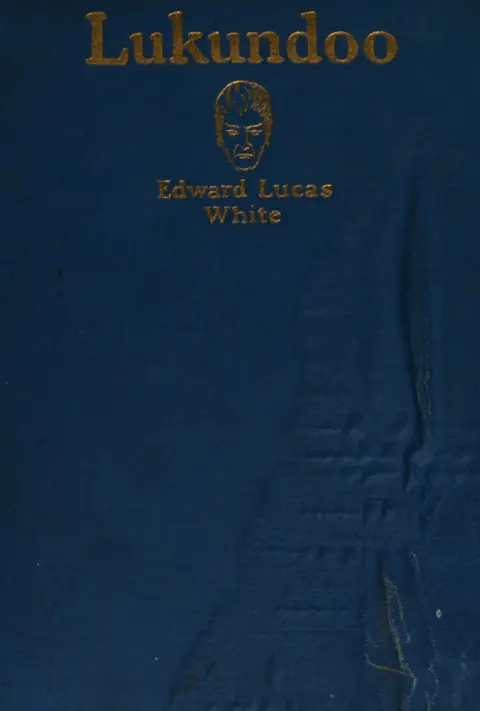
“Lukundoo, and other stories” by Edward Lucas White is a collection of short fiction written in the early 20th century. The volume brings together tales spanning the supernatural, the uncanny, and adventure, often blending horror and psychological suspense. The opening stories suggest a mix of exotic locales, mysterious diseases, dark folklore, and the testing of human character under extraordinary duress, introducing characters like Singleton, Etcham, Van Rieten, and Thorkell Vilgerdson as they confront bizarre and sometimes terrifying events. The opening of the collection begins with "Lukundoo," where a group of men is drawn into a chilling tale recounting Singleton’s harrowing African experience. The narrative quickly introduces an atmosphere of mystery and dread: Singleton, typically reticent about his time in Africa, describes the plight of Stone, an extraordinary explorer afflicted by a grotesque and inexplicable malady that bewilders and terrifies his companions. As Singleton and his party seek to aid the suffering man, they encounter eerie manifestations—including strange voices, sinister swellings, and unnatural growths that blur the boundaries between folklore, sorcery, and disease—culminating in a climactic confrontation with the unknown. The subsequent opening of "Floki’s Blade" shifts to saga-like adventure, following Thorkell Vilgerdson as he is betrayed and cast adrift, only to begin a new chapter of trials and alliances in Iceland. Through these beginnings, the collection establishes its tone of suspenseful, character-driven tales steeped in the supernatural and the extraordinary.
Introduction adapted from the source catalogue; source summaries may be automatically generated.
Free to read · English · 78,276 words · No account needed
MAKE TIME FOR A GOOD BOOK
On by default. Untick to stop anonymous reading totals. Each page counts after 10 seconds in view. How this works.
Anonymous counting is on unless you have switched it off.
“What does it mean?” she pleaded, “oh! what does it mean?”
“It doesn’t mean anything,” said Vargas, roughly.
“How can that be,” she moaned. “It must mean something. It does mean something. I feel it does.”
“That is just the point,” he said, “that is what I feared before, and warned you of. Here are some chance words. They mean nothing, except that you or I or both of us have been intensely strung up with emotion. But if you cannot see that or be made to see that, you are lost. If you feel that they mean something, then they do mean that something to you, that that is your danger. Do not yield to it.”
“Do you mean to tell me, to try to convince me that those words, twice written, in the same handwriting, in my husband’s hand of all hands, formed upon those slates while I held them myself, came there by accident?”
“Not by accident,” he argued. “By some operation of unguessed forces set in motion by your excitement or mine or both; but blind forces, meaningless as the voices in dreams.”
“Am I to believe meaningless,” she demanded, “the voices in my dreams that sent me to that advertisement and to you and told me expect an answer from the slates, a true answer?”
“Madame,” he reasoned, “the series of coincidences is startling, but it is nothing but a series of coincidences. Try to rise superior to it.”
“And you won’t help me,” she wailed. “You won’t tell me what this
message means?”
“I have told you my belief as to how it originated,” he said, “I have told you that I do not attach any other significance to it.”
“Oh,” she groaned, “I must go home.”
“Your carriage is at the door,” he said.
“My carriage!” she exclaimed. “How did it get there?”
“Not your own carriage,” he explained, “but one for you. I telephoned
for it.”
“You have not left me an instant,” she asserted incredulously.
“When I brought you a glass of water I told the maid to telephone for a carriage and tell it to wait. It will be there.”
“I thank you,” she said, “and now, what do I owe you? What is your fee?”
Vargas flushed all over his face and neck, a deep brownish-red.
Your reading position is saved on this browser. Take it to another device with a library code. Reading pages adapt to text, rather than matching a printed edition.
Edward Lucas White
Edward Lucas White
BEHIND THE BOOK
This eBook is for the use of anyone anywhere in the United States and most other parts of the world at no cost and with almost no restrictions whatsoever. You may copy it, give it away or re-use it under the terms of the Project Gutenberg License included with this eBook or online at www.gutenberg.org. If you are not located in the United States, you will have to check the laws of the country where you are located before using this eBook. Read the source licence.
The original source file, including credits and licence, is retained by this library. Request an original-format copy at no charge. Please include the book title and Project Gutenberg identifier #75827.
KEEP YOUR CURIOSITY GOING
Coulson Kernahan

Maurice Baring
Frances Wright
Cécile Tormay
Francis Greenleaf Allinson & Anne C. E. (Anne Crosby Emery) Allinson

Frederic Jesup Stimson