THE CLASSIC COLLECTION✦Andivius Hedulio: Adventures of a Roman Nobleman in the Days of the EmpireCLASSIC FREE BOOKS
Andivius Hedulio: Adventures of a Roman Nobleman in the Days of the Empire
Edward Lucas White
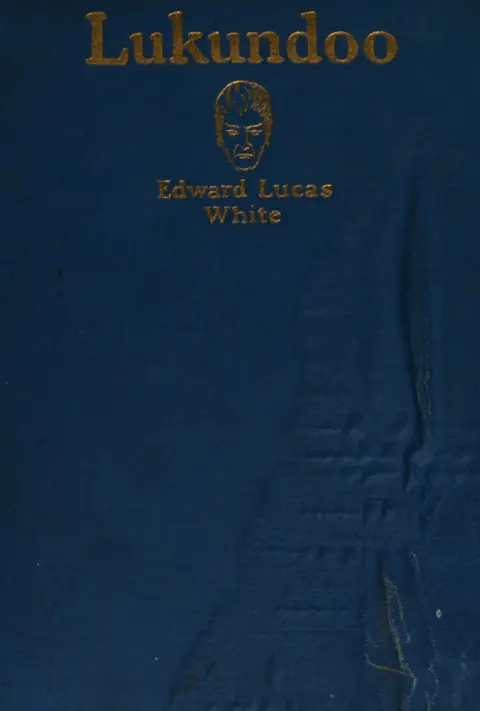
THE CLASSIC COLLECTION · 1906
“Lukundoo, and other stories” by Edward Lucas White is a collection of short fiction written in the early 20th century. The volume brings together tales spanning the supernatural, the uncanny, and adventure, often blending horror and psychological suspense. The opening stories suggest a mix of exotic locales, mysterious diseases, dark folklore, and the testing of human character under extraordinary duress, introducing characters like Singleton, Etcham, Van Rieten, and Thorkell Vilgerdson as they confront bizarre and sometimes terrifying events. The opening of the collection begins with "Lukundoo," where a group of men is drawn into a chilling tale recounting Singleton’s harrowing African experience. The narrative quickly introduces an atmosphere of mystery and dread: Singleton, typically reticent about his time in Africa, describes the plight of Stone, an extraordinary explorer afflicted by a grotesque and inexplicable malady that bewilders and terrifies his companions. As Singleton and his party seek to aid the suffering man, they encounter eerie manifestations—including strange voices, sinister swellings, and unnatural growths that blur the boundaries between folklore, sorcery, and disease—culminating in a climactic confrontation with the unknown. The subsequent opening of "Floki’s Blade" shifts to saga-like adventure, following Thorkell Vilgerdson as he is betrayed and cast adrift, only to begin a new chapter of trials and alliances in Iceland. Through these beginnings, the collection establishes its tone of suspenseful, character-driven tales steeped in the supernatural and the extraordinary.
Introduction adapted from the source catalogue; source summaries may be automatically generated.
Free to read · English · 78,276 words · No account needed
MAKE TIME FOR A GOOD BOOK
On by default. Untick to stop anonymous reading totals. Each page counts after 10 seconds in view. How this works.
Anonymous counting is on unless you have switched it off.
Mrs. Llewellyn had borne his torrent of verbiage with a look of intolerant toleration, of haughty displeasure curbed by astonishment. When he paused for breath she said, in a voice half angry, half repressed:
“I quite understand you, I have heard enough, I have heard altogether too much of this; we will change the subject, if you please.”
“I spoke at your command,” Vargas apologized, abashed, “and only to convince you of my sincerity in telling you that I am not worthy of being consulted by you.”
“But,” she protested, carried away by her surprise, “you are called the greatest clairvoyant on earth.”
“And I have schemed, advertised lavishly, spent money like water, bribed reporters, bought editors, cajoled managers, hoodwinked owners and won over their wives and daughters through laborious years to produce that impression. It is no growth of accident, no spontaneous recognition of self-evident merit.”
“But,” she argued, “are you a fiend doing all this for the delight of deceiving for deception’s sake? Are you a man wealthy by inheritance and choosing this form of activity for the pleasure it gives you?”
“By no means Madame,” he denied, “I live by my wits.”
“Your surroundings tell me that you live well,” she suggested.
“Better than my surroundings reveal,” he rejoined.
“Then your wits are good wits,” she ventured.
“None better of their kind on earth,” he naïvely admitted, wholly off
his guard.
“And they are not overtaxed?” she asked.
“Deception is not hard,” he told her, “the world is full of fools and even the sensible are easy to deceive.”
“From what I have read,” she continued, “you do not deceive. Your advice is good. Your precepts guide your clients right. Your suggestions lead to success. Your predictions come to pass, your conjectures are verified.”
“All that is true enough,” he allowed.
“Then how can you call your clients dupes, your methods mummeries, your answers lies?” She wound up triumphantly.
“I did not call my answers lies,” he disclaimed. “Mummeries I deal in and to dupes. Dupes they are all. They pour gold into my lap to tell them what they already knew if they but reasoned it out calmly with themselves. They babble to me all they need to know and pay me insensately for it when I fling back to them a patchwork of the fragments I have extracted from their stories of expectations, apprehensions and memories.”
“But if you do all that you must be a real judge of human nature, a genuine reader of hearts, a keen-brained counsellor.”
Your reading position is saved on this browser. Take it to another device with a library code. Reading pages adapt to text, rather than matching a printed edition.
Edward Lucas White
Edward Lucas White
BEHIND THE BOOK
This eBook is for the use of anyone anywhere in the United States and most other parts of the world at no cost and with almost no restrictions whatsoever. You may copy it, give it away or re-use it under the terms of the Project Gutenberg License included with this eBook or online at www.gutenberg.org. If you are not located in the United States, you will have to check the laws of the country where you are located before using this eBook. Read the source licence.
The original source file, including credits and licence, is retained by this library. Request an original-format copy at no charge. Please include the book title and Project Gutenberg identifier #75827.
KEEP YOUR CURIOSITY GOING
Coulson Kernahan

Maurice Baring
Frances Wright
Cécile Tormay
Francis Greenleaf Allinson & Anne C. E. (Anne Crosby Emery) Allinson

Frederic Jesup Stimson