THE CLASSIC COLLECTION✦Paul RalstonCLASSIC FREE BOOKS
Paul Ralston
Mary Jane Holmes
THE CLASSIC COLLECTION · 1905
"Lucy Harding: A Romance of Russia" by Mary J. Holmes is a historical romance novel written in the early 20th century. The story follows Lucy Harding, a determined American woman from Massachusetts, who embarks on a journey to St. Petersburg amidst her fascination with Russian culture and her memories of a captivating language teacher named Nicol Patoff. As she navigates the complexities of Russian society and potential political unrest, Lucy becomes entangled in personal and larger societal conflicts, creating a rich tapestry of romance and adventure. The opening of the novel introduces Lucy as part of a group of American female tourists on their way to St. Petersburg, highlighting her character as independent and resourceful. She reflects on her educational background with Nicol Patoff, her charismatic teacher whose enigmatic past ignites her curiosity. As she arrives in Russia, Lucy's experiences with local customs and her encounters with various characters, including a stern gendarme and the vibrant streets, foreshadow the challenges she will face in this foreign land. Within these initial pages, the tension builds around Nicol's mysterious circumstances and the potential dangers of living in a politically charged environment, setting the stage for Lucy's adventures and growing emotions.
Introduction adapted from the source catalogue; source summaries may be automatically generated.
Free to read · English · 57,418 words · No account needed
MAKE TIME FOR A GOOD BOOK
On by default. Untick to stop anonymous reading totals. Each page counts after 10 seconds in view. How this works.
Anonymous counting is on unless you have switched it off.
The gendarme laughed, and replied: “I have little need of a dog, except in case of murder. If the czar were killed, for instance, and the assassin were hiding, I might call in Chance’s help; and he would find him, too, if he had ever seen him before, or anything belonging to him. You are not afraid of him?”
“No,” I answered, and, before I could say more, the officer continued, to the dog: “Salute the lady!”
In an instant two great paws were on my shoulders, and Chance was looking into my face, with an expression so human that I began to feel cold and sick, and tried to free myself from him, and in my effort dropped my handkerchief.
“Down, Chance! That will do,” his master said, and then to us: “He will know you now wherever he meets you, especially after I have shown him this.”
He had picked up my handkerchief, a soiled and torn one, I saw, with a pang, and, handing it to the dog, bade him give it to Miss Harding. He mastered the “H,” and I was not a “Garden” to him. Obediently, Chance brought it to me, shaking his head and holding it a while in his teeth, as if loath to let it go.
“It is all right,” the gendarme said, taking it from the dog, but not returning it to me. “Chance has looked on your face,” he continued, “and smelled an article of your wardrobe. I could track you now to Siberia, if necessary, if I had this handkerchief to show him.”
I shuddered, and put out my hand to take my property, but, with a kind of authoritative air I had never seen in him before, he put it in his pocket, saying, quietly: “Allow me to keep it as a means of safety to you and your party. I have met many Americans; they are all alike; they wish to see everything, and go everywhere, and never think of danger, or, if they do, it does not deter them. That Dutch guide of yours, lounging on a settee and smoking cigarettes, is no good. He will take to vodka next, and be more stupid than ever. Madame, with her knowledge of Russian, is a better guide than he. May as well give him up, and run your own canoe. You see, I am up in Yankee slang. I have heard a good deal of it. But don’t risk too much. St. Petersburg is as safe as most cities, but be a little cautious where you go and when you go. As a rule, our women are not often seen in the streets unattended. But we expect different things from tourists, particularly Americans, who dare anything to satisfy their curiosity. You are intending to go out this evening, and the sun is nearly down. Wait till to-morrow, and, if Chance happens to join you, don’t think it strange, either to-morrow or next day. In the summer, when the city is full of sightseers and the court and nobility are away, there is frequently a set of impostors and marauders from the country, who come into town for theft and spoil, thinking to find the visitors an easy prey. Chance knows them by instinct, and will keep them at a distance. If he growls, you will know there is danger, and the beggar a fraud.”
Your reading position is saved on this browser. Take it to another device with a library code. Reading pages adapt to text, rather than matching a printed edition.
Mary Jane Holmes
Mary Jane Holmes
Mary Jane Holmes
Mary Jane Holmes
BEHIND THE BOOK
This eBook is for the use of anyone anywhere in the United States and most other parts of the world at no cost and with almost no restrictions whatsoever. You may copy it, give it away or re-use it under the terms of the Project Gutenberg License included with this eBook or online at www.gutenberg.org. If you are not located in the United States, you will have to check the laws of the country where you are located before using this eBook. Read the source licence.
The original source file, including credits and licence, is retained by this library. Request an original-format copy at no charge. Please include the book title and Project Gutenberg identifier #74921.
KEEP YOUR CURIOSITY GOING
Wilfrid Scawen Blunt
Wilfrid Scawen Blunt
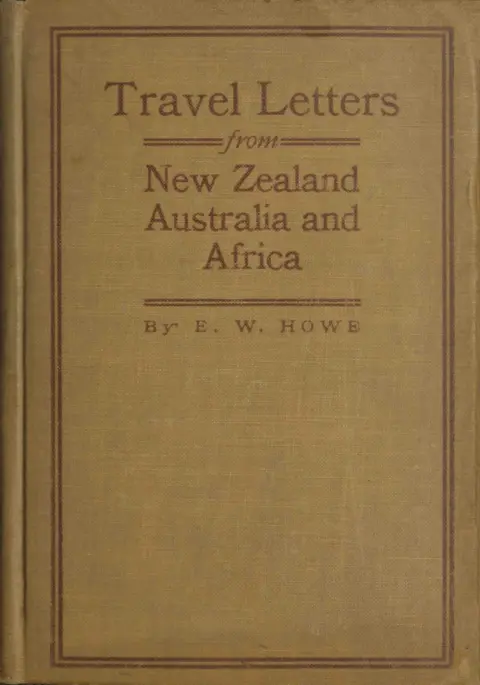
E. W. (Edgar Watson) Howe
Cécile Tormay

Moritz Busch
Coulson Kernahan