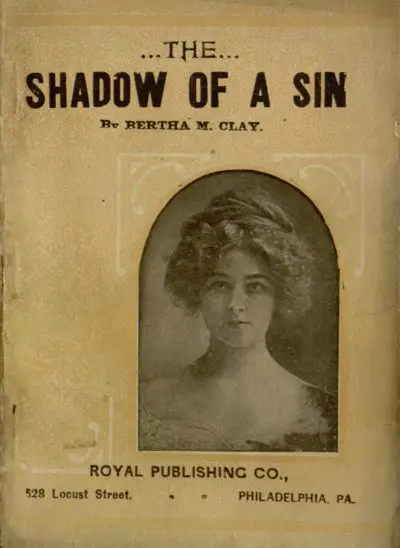
The Shadow of a Sin
Charlotte M. Brame
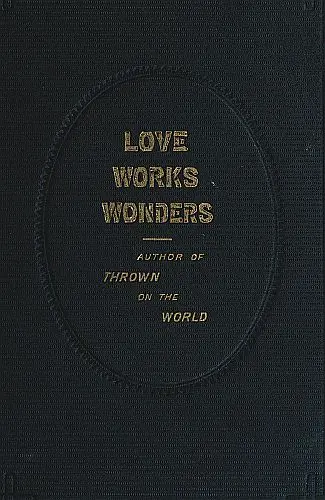
THE CLASSIC COLLECTION · 1878
"Love Works Wonders: A Novel" by Charlotte M. Brame is a romantic novel written in the late 19th century. The story centers around Miss Pauline Darrell, a beautiful and spirited young woman raised by her father among Bohemian artists, who is now thrust into the aristocratic world of her uncle, Sir Oswald Darrell. As Pauline navigates her new life, she struggles with the constraints of society and the expectations placed upon her while demonstrating a fierce independence and a passion for truth. The opening portion of the novel introduces us to the characters, particularly Sir Oswald Darrell, who is determined to refine his niece's untamed nature and prepare her for a respectable position in society. Sir Oswald engages Miss Agnes Hastings to serve as Pauline's governess, tasked with the difficult challenge of transforming Pauline from a wild, unpolished girl into a lady suitable for Darrell Court. Throughout their interactions, Pauline's strong personality shines through, revealing her disdain for societal norms and her virulent desire for freedom. As they venture into the complex social dynamics of the aristocracy, we see the historical significance of class and the personal struggles of the young heiress at the intersection of upbringing, expectation, and identity.
Introduction adapted from the source catalogue; source summaries may be automatically generated.
Free to read · English · 75,114 words · No account needed
MAKE TIME FOR A GOOD BOOK
On by default. Untick to stop anonymous reading totals. Each page counts after 10 seconds in view. How this works.
Anonymous counting is on unless you have switched it off.
Would Pauline ever submit to such control? Her pale, grand face rose before him, the haughty lips, the proud, calm eyes--the man who mastered her, who brought her mind into subjection, would indeed be a superior being. For the first time a doubt crossed Sir Oswald's mind as to whether she would ever recognize that superior being in Captain Langton. He knew that there were depths in the girl's nature beyond his own reach. It was not all pride, all defiance--there were genius, poetry, originality, grandeur of intellect, and greatness of heart before which the baronet knew that he stood in hopeless, helpless awe.
Lady Hampton laid her hand on his arm.
"Do not despond, old friend," she said. "I understand you. I should feel like you. I should dread to leave the inheritance of my fathers in such dangerous hands. But, Sir Oswald, why despond? Why not marry?"
The baronet started.
"Marry!" he repeated. "Why, I have never thought of such a thing."
"Think of it now," counseled the lady, laughingly; "you will find the advice most excellent. Instead of tormenting yourself about an ill-conditioned girl, who delights in defying you, you can have an amiable, accomplished, elegant, and gentle wife to rule your household and attend to your comfort--you might have a son of your own to succeed you, and Darrell Court might yet remain in the hands of the Darrells."
"But, my dear Lady Hampton, where should I find such a wife? I am no longer young--who would marry me?"
"Any sensible girl in England. Take my advice, Sir Oswald. Let us have a Lady Darrell, and not an ill-trained girl who will delight in setting the world at defiance. Indeed, I consider that marriage is a duty which you owe to society and to your race."
"I have never thought of it. I have always considered myself as having, so to speak, finished with life."
"You have made a great mistake, but it is one that fortunately can be
remedied."
Lady Hampton rose from her seat, and walked a few steps forward.
"I have put his thoughts in the right groove," she mused; "but I ought to say a word about Elinor."
She turned to him again.
"You ask me who would marry you. Why, Sir Oswald, in England there are hundreds of girls, well-bred, elegant, graceful, gentle, like my niece, who would ask nothing better from fortune than a husband like yourself."
She saw her words take effect. She had turned his thoughts and ideas in the right direction at last.
"Shall we go and look after our truants?" she asked, suavely.
Your reading position is saved on this browser. Take it to another device with a library code. Reading pages adapt to text, rather than matching a printed edition.
Charlotte M. Brame
BEHIND THE BOOK
This eBook is for the use of anyone anywhere in the United States and most other parts of the world at no cost and with almost no restrictions whatsoever. You may copy it, give it away or re-use it under the terms of the Project Gutenberg License included with this eBook or online at www.gutenberg.org. If you are not located in the United States, you will have to check the laws of the country where you are located before using this eBook. Read the source licence.
The original source file, including credits and licence, is retained by this library. Request an original-format copy at no charge. Please include the book title and Project Gutenberg identifier #33989.
KEEP YOUR CURIOSITY GOING
Coulson Kernahan

Maurice Baring
Frances Wright
Cécile Tormay

Frederic Jesup Stimson

W. H. P. (William Henry Pope) Jarvis