
The Diary of a Saint
Arlo Bates
THE CLASSIC COLLECTION · 1900
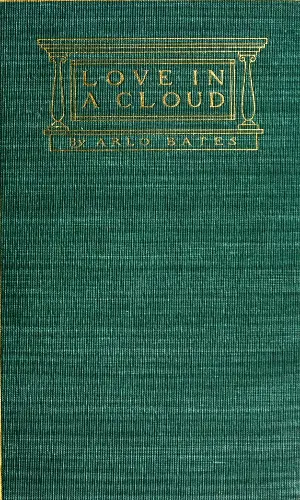
"Love in a Cloud: A Comedy in Filigree" by Arlo Bates is a novel written in the late 19th century. The story revolves around the complexities of love and social interactions among a group of characters in high society, particularly focusing on young May Calthorpe and her secret correspondence with the mysterious author Christopher Calumus, who is linked to the popular book "Love in a Cloud." Other characters, like Mrs. Harbinger and Tom Harbinger, also navigate their romantic entanglements, revealing a comedic yet poignant exploration of relationships. At the start of the novel, we find May Calthorpe enthusiastically defending the merits of the book "Love in a Cloud" to her friend Mrs. Harbinger, who is tired of its incessant mention in their social circle. As the conversation unfolds, it is revealed that May has taken a bold step by writing to the author using a pseudonym, Christopher Calumus, expressing her admiration for his work. May eagerly anticipates meeting the author that afternoon at tea, setting the stage for an exciting blend of romance, misunderstandings, and intriguing social dynamics to come. The opening serves as an engaging introduction to the themes of love, secrecy, and societal norms that will play a significant role throughout the story.
Introduction adapted from the source catalogue; source summaries may be automatically generated.
Free to read · English · 66,579 words · No account needed
MAKE TIME FOR A GOOD BOOK
On by default. Untick to stop anonymous reading totals. Each page counts after 10 seconds in view. How this works.
Anonymous counting is on unless you have switched it off.
"Do you de handwrite know?" he demanded eagerly.
"And if I do?"
"You do know," he broke out in French. "I can see it in your face. Tell
me who wrote it."
She shook her head, smiling teasingly. Then she rose, and moved toward the window by which she had come from the house.
"No, Count," was her answer. "It doesn't suit my plan to tell you. I didn't think quickly enough yesterday, or I wouldn't have given it to you. It was in your hands before I thought whose writing it was."
The Count, who had risen, bowed profoundly.
"After all," he said, "I need not trouble you. Mrs. Harbinger
acknowledged that she wrote it."
Mrs. Neligage flashed back at him a mocking grimace as she withdrew by
the window.
"I never expected to live to see you believe a thing because a woman said it," she laughed. "You must have been in strange hands since I used to know you!"
Left alone, the Count thoughtfully regarded the letter for a moment, then with a shrug he restored it to his pocket, and turned to go around the corner of the house to the front piazza. Sounds of wheels, of voices, of talking, and of laughter told of the gathering of pleasure-seekers; and scarcely had the Count passed the corner than he met Mr. Bradish face to face. There were groups of men and women on the piazza and on the lawn, with the horses and dogs in sight which are the natural features in such a picture at an out-of-town club. The Count heeded none of these things, but stepped forward eagerly.
"Ah, Count, you have come out to the games like everybody else, I see,"
Bradish said pleasantly.
"Eet ees extreme glad to see me, Mr. Bradeesh," the Count returned, shaking him by the hand. "Do you weelleengly come wid us a leettle, for dat I say to you ver' particle?"
Bradish, with his usual kindly courtesy, followed the Count around the corner of the house, out of sight of the arriving company.
"Something particular to say to me, Count?" he observed. "You do me too
much honor."
"Eet weell be of honor dat I weell to you speak," the Count responded. "Weell you for myself de condescension to have dat you weell be one friend to one affaire d'honneur?"
Bradish stared at him in undisguised amazement.
"An affaire d'honneur?" he echoed. "Surely you don't mean that you are going to fight? You can't mean a duel?"
"Oh, oui, oui; eet weell be a duel dat eet calls you."
Bradish stared harder than ever, and then sat down as if overcome.
Your reading position is saved on this browser. Take it to another device with a library code. Reading pages adapt to text, rather than matching a printed edition.
Arlo Bates

Arlo Bates

Arlo Bates

Arlo Bates
BEHIND THE BOOK
This eBook is for the use of anyone anywhere in the United States and most other parts of the world at no cost and with almost no restrictions whatsoever. You may copy it, give it away or re-use it under the terms of the Project Gutenberg License included with this eBook or online at www.gutenberg.org. If you are not located in the United States, you will have to check the laws of the country where you are located before using this eBook. Read the source licence.
The original source file, including credits and licence, is retained by this library. Request an original-format copy at no charge. Please include the book title and Project Gutenberg identifier #42831.
KEEP YOUR CURIOSITY GOING
Coulson Kernahan

Maurice Baring
Frances Wright
Cécile Tormay

Frederic Jesup Stimson

W. H. P. (William Henry Pope) Jarvis