THE CLASSIC COLLECTION✦Helen and Arthur; or, Miss Thusa’s Spinning WheelCLASSIC FREE BOOKS
Helen and Arthur; or, Miss Thusa’s Spinning Wheel
Caroline Lee Hentz
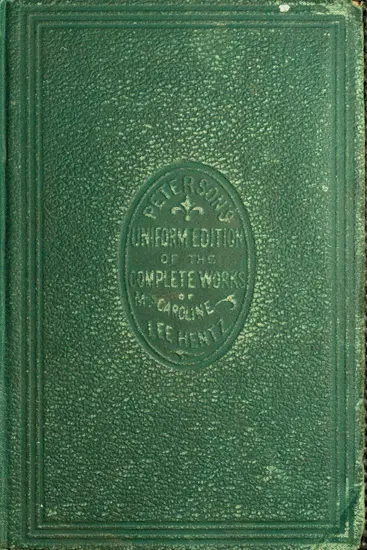
THE CLASSIC COLLECTION · 1857
"Love After Marriage; and Other Stories of the Heart" by Caroline Lee Hentz is a collection of short stories written in the late 19th century. The anthology appears to delve into themes related to love, relationships, and societal expectations, particularly focusing on the emotional intricacies surrounding marriage. The opening story introduces us to key characters whose fates become intertwined, setting the stage for the exploration of affection and social perceptions. At the start of the opening portion, readers are introduced to Augusta Temple, who is anxiously awaiting the arrival of her betrothed, Sydney Allison. However, their first encounter unfolds humorously, as Augusta reacts with dismay to Sydney's changed appearance, a result of illness, leading to feelings of disappointment and disdain. As Sydney, unaware of her reaction, contemplates his own acceptance of their union, both characters grapple with the emotional nuance of their situation. The narrative foreshadows a complex dynamic as they navigate their obligations, expectations, and personal feelings, ultimately hinting at deeper themes of love and emotional growth amidst societal pressures and personal struggles.
Introduction adapted from the source catalogue; source summaries may be automatically generated.
Free to read · English · 100,134 words · No account needed
MAKE TIME FOR A GOOD BOOK
On by default. Untick to stop anonymous reading totals. Each page counts after 10 seconds in view. How this works.
Anonymous counting is on unless you have switched it off.
Our mansion was transformed. My father gathered all his friends around him to participate in his joy. My brother was summoned home. There seemed one continual jubilee. I turned coldly, however, from all these festivities, occupied almost exclusively with one feeling. I could not feign an interest in others I did not feel. I began even at this early period to experience the first symptoms of that passion, which has since consumed me. Clinton, though still, as ever, the kind, devoted, and watchful guardian, hovering round my steps, as if to shield me from every danger, Clinton, I saw, shared in the pleasures of sociality, and returned the smiles that kindled wherever he moved. He was a universal favourite in society, and knew how to adapt himself to others, not from a vague desire of popularity, but from a benevolence, a sunny glow of feeling, shedding light and warmth all around. Even then there were moments when I regretted my blindness, and wished I had never seen those smiles and glances, which I would fain rivet for ever on myself. Henry, my brother, once whispered to me, as I was turning, in a languid manner, the leaves of a music book, not caring to play because Clinton was not bending over my chair, "My dear Cecilia, do not let Clinton see too glaringly his power over you. There is scarcely a man in the world who can be trusted with unlimited power. We are ungrateful creatures, my sweet sister, and you do not know us half as well as we know each other. You ought to love Clinton, for he merits it, but be mistress of yourself. Do not love him too well for his peace and your own." Alas! poor Henry--how little have I heeded your brotherly admonitions? But when did passion ever listen to the counsels of reason--when will it? When the cygnet's down proves a barrier to the tempest's breath. We were married. I became the inmate of a home, fashioned after the model of my own taste. Everything was arranged with a view to my happiness. The curtains and decorations of the house were all of the softest green, for the repose of my still feeble eyes. Oh! thou benefactor of my life--friend, lover, husband, would that I could go back to the hour when we plighted our wedded vows, and live over the past, convinced, though too late, how deeply I have wronged thee--confiding implicitly in thy love and truth, we might live together the life of angels! And we were happy for a while. We withdrew as much as possible from the gay world. He saw that I loved retirement, and he consulted my feelings as far as was consistent with the duties of his profession. I might have been convinced by this of the injustice of my suspicions. I might have known that he loved me better than all the world beside. During the day he was but seldom with me, as his practice was extensive, and often called him to a distance from home, but the evening was mine, and it seemed my peculiar province, for I shrunk from the full blaze of sunlight. The brightness was too intense, but when the moon was gliding over the firmament, in her sweet, approachable loveliness, and the soft glitter of the stars was around, I could lift my undazzled eyes, and marvel at the wonderful works of God. Clinton was a devout astronomer--he taught me the name of every planet that burned--of every star known to science. He was rich in the wisdom of ancient days, and his lips distilled instruction as naturally and constantly as the girl in the fairy tale dropped the gems of the Orient. I have made mention of a female friend--she was the daughter of a deceased friend of my father, and, as such, came under his especial guardianship. Since my marriage she had remained with him, to cheer his loneliness, but her health becoming very delicate, he sent her to be my guest, that she might receive medical aid from my husband. She was not a decided invalid, but her mother had died of a consumption, and it was feared she had a hereditary tendency to that disease. Alice was a pale, delicate-looking girl, with sometimes a hectic flush on her cheek, a frail, drooping form, and extremely pensive cast of countenance. The dread of this constitutional malady hung over her like a death-cloud, and aggravated symptoms slight in themselves. Though there was nothing very attractive in the appearance of this poor girl, she was calculated to excite pity and sympathy, and surely she had every claim to mine. I did pity her, and sought, by every attention and kindness, to enliven her despondency, and rouse her to hope and vivacity. But I soon found that my father had encroached sadly on my domestic happiness by giving this charge to my husband. Air, exercise, and gentle recreation, were the remedies prescribed by the physician, and it was his duty to promote these by every means in his power. She often accompanied him on horseback in his rides, a pleasure from which I was completely debarred, for, in my blindness, I was incapacitated, and the timidity which originated from my situation remained after the cause was removed. It was some time before I was willing to acknowledge to myself the pain which this arrangement gave me. I felt as if my dearest privileges were invaded. I had been so accustomed, from infancy, to be the sole object of every attention, these daily offices bestowed upon another, though dictated by kindness and humanity, were intolerable to me. Had I seen the congregated world around her, offering every homage, it would not have given me one envious pang--but Clinton, my husband, he was more precious to me than ten thousand worlds. She leaned too exclusively on his guardian care. I tried to subdue my feelings--I tried to assume an appearance of indifference. My manners gradually became cold and constrained, and instead of greeting my husband with the joyous smile of welcome, on his return, I would avert from his the eyes which had received from him their living rays. Frank and unsuspicious himself, he did not seem to divine the cause of my altered demeanour. When he asked me why I was so silent, or so sad, I pleaded indisposition, lassitude--anything but the truth. I blamed him for his want of penetration, for I felt as if my soul were bare, and that the eye of affection could read the tidings revealed by my changing cheek and troubled brow. In justice to myself, let me say, that Alice, by her manner, justified my emotions.
Your reading position is saved on this browser. Take it to another device with a library code. Reading pages adapt to text, rather than matching a printed edition.
Caroline Lee Hentz
Caroline Lee Hentz
BEHIND THE BOOK
This eBook is for the use of anyone anywhere in the United States and most other parts of the world at no cost and with almost no restrictions whatsoever. You may copy it, give it away or re-use it under the terms of the Project Gutenberg License included with this eBook or online at www.gutenberg.org. If you are not located in the United States, you will have to check the laws of the country where you are located before using this eBook. Read the source licence.
The original source file, including credits and licence, is retained by this library. Request an original-format copy at no charge. Please include the book title and Project Gutenberg identifier #43019.
KEEP YOUR CURIOSITY GOING
Coulson Kernahan

Maurice Baring
Frances Wright
Cécile Tormay

Frederic Jesup Stimson

W. H. P. (William Henry Pope) Jarvis