THE CLASSIC COLLECTION✦Helen and Arthur; or, Miss Thusa’s Spinning WheelCLASSIC FREE BOOKS
Helen and Arthur; or, Miss Thusa’s Spinning Wheel
Caroline Lee Hentz
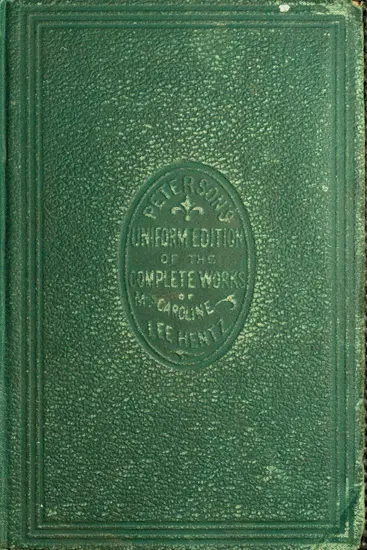
THE CLASSIC COLLECTION · 1857
"Love After Marriage; and Other Stories of the Heart" by Caroline Lee Hentz is a collection of short stories written in the late 19th century. The anthology appears to delve into themes related to love, relationships, and societal expectations, particularly focusing on the emotional intricacies surrounding marriage. The opening story introduces us to key characters whose fates become intertwined, setting the stage for the exploration of affection and social perceptions. At the start of the opening portion, readers are introduced to Augusta Temple, who is anxiously awaiting the arrival of her betrothed, Sydney Allison. However, their first encounter unfolds humorously, as Augusta reacts with dismay to Sydney's changed appearance, a result of illness, leading to feelings of disappointment and disdain. As Sydney, unaware of her reaction, contemplates his own acceptance of their union, both characters grapple with the emotional nuance of their situation. The narrative foreshadows a complex dynamic as they navigate their obligations, expectations, and personal feelings, ultimately hinting at deeper themes of love and emotional growth amidst societal pressures and personal struggles.
Introduction adapted from the source catalogue; source summaries may be automatically generated.
Free to read · English · 100,134 words · No account needed
MAKE TIME FOR A GOOD BOOK
On by default. Untick to stop anonymous reading totals. Each page counts after 10 seconds in view. How this works.
Anonymous counting is on unless you have switched it off.
It was at this crisis Emily Spencer arrived. Her travelling dress, and the fatigue of a journey, were sufficient excuses for her declining to appear in the drawing-room; but the moment she saw Mrs. Manly, her eye, too well experienced, perceived the backsliding of Anne, and hope died within her bosom. Sick at heart, wounded, and indignant, she sat down in the chamber where the children slept--those innocent beings, doomed to an orphanage more sad than death even makes. Anne's conscious spirit quailed before the deep reproach of Emily's silent glances. She stammered out an explanation of the bloody bandage that was bound around the infant's, head, assured her there was no cause of alarm, and hurried down to the friends who had passed the period of her absence in covert sarcasm, and open animadversion on her conduct.
Emily sat down on the side of the bed, and leaned over the sleeping infant. Though Mrs. Manly had assured her there was no cause of alarm, she felt there was no reliance on her judgment; and the excessive paleness and languor of its countenance, excited an anxiety its peaceful slumbers could not entirely relieve. "It is all over," thought she, "a relapse in sin is always a thousand times more dangerous than the first yielding. She is at this moment blazoning her disgrace, and there will be no restraining influence left. Oh! unfortunate Manly! was it for this you sacrificed home, friends, and splendid prospects, and came a stranger to a strange land!" Absorbed in the contemplation of Manly's unhappy destiny, she remained till the company dispersed, and Mrs. Manly dragged her weary footsteps to her chamber. Completely exhausted by her efforts to command her bewildered faculties, she threw herself on the bed, and sunk into a lethargy; the natural consequence of inebriation. The infant, disturbed by the sudden motion, awakened, with a languid cry, expressive of feebleness and pain. Emily raised it in her arms, endeavoured to soothe its complaining; but it continued restless and wailing, till the blood gushed afresh through the bandage. Greatly alarmed, she shook Mrs. Manly's arm, and called upon her to awake. It was in vain; she could not rouse her from her torpor. Instantly ringing the bell, she summoned the nurse, who was revelling, with the other servants, over the relics of the feast, and told her to send immediately for a physician. Fortunately there was one in the neighbourhood, and he came speedily. He shook his head mournfully when he examined the condition of the child, and pronounced its case beyond the reach of human skill. The injury produced by the fall had reached the brain. The very depth of its slumbers was but a fatal symptom of approaching dissolution. The tears of Emily fell fast and thick on the pallid face of the innocent victim. She looked upon its mother--thought upon its father, and pressed the child in agony to her bosom. The kind physician was summoned to another chamber of sickness. He had done all he could to mitigate, where he could not heal. Emily felt that this dispensation was sent in mercy. She could not pray for the child's life, but she prayed that it might die in the arms of its father; and it seemed that her prayer was heard. It was a singular providence that brought him that very night--a week sooner than he anticipated--urged on by a restless presentiment of evil; a dread that all was not well. Imagination, however, had not pictured the scene that awaited him. His wife, clothed in her richest raiments, and glittering with jewels, lying in the deep torpor of inebriation. Emily, seated by the side of the bed, bathed in tears, holding in her lap the dying infant, her dress stained with the blood with which the fair locks of the child were matted. What a spectacle! He stood for a moment on the threshold of the apartment, as if a bolt had transfixed him. Emily was not roused from her grief by the sound of his footsteps, but she saw the shadow that darkened the wall, and at once recognised his lineaments. The startling cry she uttered brought him to her side, where, kneeling down over his expiring infant, he gazed on its altering features and quivering frame with a countenance so pale and stern, Emily's blood ran cold. Silently and fixedly he knelt, while the deepening shades of dissolution gathered over the beautiful waxen features and the dark film grew over the eyes, so lately bright with that heavenly blue, which is alone seen in the eyes of infancy. He inhaled its last, cold, struggling breath; saw it stretched in the awful immobility of death; then slowly rising, he turned towards the gaudy figure that lay as if in mockery of the desolation it had created. Then Manly's imprisoned spirit burst its bonds. He grasped his wife's arm, with a strength that might have been felt, even were her limbs of steel, and calling forth her name in a voice deep and thrilling as the trumpet's blast, he commanded her to rise. With a faint foretaste of the feeling with which the guilty soul shall meet the awakening summons of the archangel, the wretched woman raised herself on her elbow, and gazed around her with a wild and glassy stare. "Woman," cried he, still retaining his desperate grasp, and pointing to the dead child, extended on the lap of the weeping Emily, "woman! is this your work? Is this the welcome you have prepared for my return? Oh! most perjured wife and most abandoned mother! You have filled, to overflowing, the vials of indignation; on your own head shall they be poured, blasting and destroying. You have broken the last tie that bound me--it withers like flax in the flame. Was it not enough to bring down the gray hairs of your father to the grave? to steep your own soul in perjury and shame, but that fair innocent must be a sacrifice to your drunken revels? One other victim remains. Your husband--who lives to curse the hour he ever yielded to a syren, who lured him to the brink of hell!"
Your reading position is saved on this browser. Take it to another device with a library code. Reading pages adapt to text, rather than matching a printed edition.
Caroline Lee Hentz
Caroline Lee Hentz
BEHIND THE BOOK
This eBook is for the use of anyone anywhere in the United States and most other parts of the world at no cost and with almost no restrictions whatsoever. You may copy it, give it away or re-use it under the terms of the Project Gutenberg License included with this eBook or online at www.gutenberg.org. If you are not located in the United States, you will have to check the laws of the country where you are located before using this eBook. Read the source licence.
The original source file, including credits and licence, is retained by this library. Request an original-format copy at no charge. Please include the book title and Project Gutenberg identifier #43019.
KEEP YOUR CURIOSITY GOING
Coulson Kernahan

Maurice Baring
Frances Wright
Cécile Tormay

Frederic Jesup Stimson

W. H. P. (William Henry Pope) Jarvis