THE CLASSIC COLLECTION✦Helen and Arthur; or, Miss Thusa’s Spinning WheelCLASSIC FREE BOOKS
Helen and Arthur; or, Miss Thusa’s Spinning Wheel
Caroline Lee Hentz
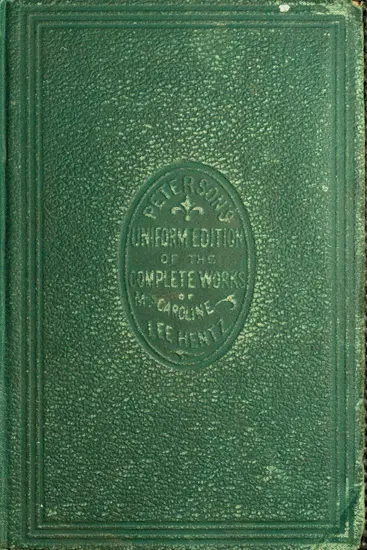
THE CLASSIC COLLECTION · 1857
"Love After Marriage; and Other Stories of the Heart" by Caroline Lee Hentz is a collection of short stories written in the late 19th century. The anthology appears to delve into themes related to love, relationships, and societal expectations, particularly focusing on the emotional intricacies surrounding marriage. The opening story introduces us to key characters whose fates become intertwined, setting the stage for the exploration of affection and social perceptions. At the start of the opening portion, readers are introduced to Augusta Temple, who is anxiously awaiting the arrival of her betrothed, Sydney Allison. However, their first encounter unfolds humorously, as Augusta reacts with dismay to Sydney's changed appearance, a result of illness, leading to feelings of disappointment and disdain. As Sydney, unaware of her reaction, contemplates his own acceptance of their union, both characters grapple with the emotional nuance of their situation. The narrative foreshadows a complex dynamic as they navigate their obligations, expectations, and personal feelings, ultimately hinting at deeper themes of love and emotional growth amidst societal pressures and personal struggles.
Introduction adapted from the source catalogue; source summaries may be automatically generated.
Free to read · English · 100,134 words · No account needed
MAKE TIME FOR A GOOD BOOK
On by default. Untick to stop anonymous reading totals. Each page counts after 10 seconds in view. How this works.
Anonymous counting is on unless you have switched it off.
It was about five years after the scenes we have recorded, that Mr. and Mrs. Manly took up their residence in the town of G----. Usually, when strangers are about to become inhabitants of a new place, there is some annunciation of their arrival; but they came, without any previous intimation being given for the speculation of the curious, or bringing any letters of introduction for the satisfaction of the proud. They hired an elegant house, furnished it rich and fashionably, and evidently prepared for the socialities of life, as enjoyed in the highest circles. The appearance of wealth always commands the respect of the many, and this respect was heightened by their personal claims to admiration. Five years, however, had wrought a change in both, not from the fading touch of time, for they were not of an age when the green leaf begins to grow sere, but other causes were operating with a power as silent and unpausing. The fine, intelligent face of Mrs. Manly had lost much of its delicacy of outline, and her cheek, that formerly was pale or roseate as sensibility or enthusiasm ruled the hour, now wore a stationary glow, deeper than the blush of feminine modesty, less bright than the carnation of health. The unrivalled beauty of her figure had given place to grosser lineaments, over which, however, grace and dignity still lingered, as if unwilling to leave a shrine so worshipped. Mr. Manly's majestic person was invested with an air of deeper haughtiness, and his dark brow was contracted into an expression of prevailing gloom and austerity. Two lovely children, one almost an infant, who were carried abroad every fair day by their nurse, shared the attention their parents excited; and many appealed to her for information respecting the strangers. She was unable to satisfy their curiosity, as she had been a member of their household but a short time, her services having been hired while journeying to the place. The other servants were hired after their arrival. Thus, one of the most fruitful sources from which the inquisitive derive their aliment, was denied to the inhabitants of G----. It was not long before the house of Mr. and Mrs. Manly was frequented by those whose society she most wished to cultivate. The suavity of her manners, the vivacity of her conversation, her politeness and disinterestedness, captivated the hearts of all. Mr. Manly too received his guests with a cordiality that surprised, while it gratified. Awed by the external dignity of his deportment, they expected to be repulsed, rather than welcomed, but it was universally acknowledged, that no man could be more delightful than Mr. Manly, when he chose to unbend. As a lawyer, his fame soon rose. His integrity and eloquence became the theme of every tongue. Amidst all the admiration they excited, there were some dark surmises. The malicious, the censorious, the evil-disposed are found in every circle, and in every land. It was noticed that Mr. Manly watched his wife with painful scrutiny, that she seemed uneasy whenever his glance met hers, that her manner was at times hurried and disturbed, as if some secret cause of sorrow preyed upon her mind. It was settled in the opinion of many, that Mr. Manly was a domestic tyrant, and that his wife was the meek victim of this despotism. Some suggested that he had been convicted of crime, and had fled from the pursuit of justice, while his devoted wife refused to separate her destiny from his. They gave a large and elegant party. The entertainment was superior to anything witnessed before in the precincts of G----. The graceful hostess, dressed in unwonted splendour, moved through her drawing-rooms, with the step of one accustomed to the homage of crowds, yet her smiles sought out the most undistinguished of her guests, and the most diffident gathered confidence from her condescending regards. Still the eye of Mr. Manly followed her with that anxious, mysterious glance, and her hurried movements often betrayed inexplicable perturbation. In the course of the evening, a gentleman refused wine, on the plea of belonging to the Temperance Society. Many voices were lifted in condemnation against him, for excluding one of the gladdeners of existence, what, the Scriptures themselves recommended, and the Saviour of men had consecrated by a miracle. The subject grew interesting, the circle narrowed round the advocate of Temperance, and many were pressing eagerly forward to listen to the debate. The opinion of Mrs. Manly was demanded. She drew back at first, as if unwilling to take the lead of her guests. At length she seemed warmed by the subject, and painted the evils of intemperance in the strongest and most appalling colours. She painted woman as its victim, till every heart recoiled at the image she drew. So forcible was her language, so impressive her gestures, so unaffected her emotions, every eye was riveted, and every ear bent on the eloquent mourner of her sex's degradation. She paused, oppressed by the notice she attracted, and moved from the circle, that widened for her as she passed, and gazed after her, with as much respect as if she were an Empress. During this spontaneous burst of oratory, Mr. Manly remained aloof, but those who had marked him in their minds as the harsh domestic tyrant, were now confirmed in their belief. Instead of admiring the wonderful talents of his wife, or sympathizing in the applause she excited, a gloom thick as night lowered upon his brow, his face actually grew of a livid paleness, till at last, as if unable to control his temper, he left the drawing-room.
Your reading position is saved on this browser. Take it to another device with a library code. Reading pages adapt to text, rather than matching a printed edition.
Caroline Lee Hentz
Caroline Lee Hentz
BEHIND THE BOOK
This eBook is for the use of anyone anywhere in the United States and most other parts of the world at no cost and with almost no restrictions whatsoever. You may copy it, give it away or re-use it under the terms of the Project Gutenberg License included with this eBook or online at www.gutenberg.org. If you are not located in the United States, you will have to check the laws of the country where you are located before using this eBook. Read the source licence.
The original source file, including credits and licence, is retained by this library. Request an original-format copy at no charge. Please include the book title and Project Gutenberg identifier #43019.
KEEP YOUR CURIOSITY GOING
Coulson Kernahan

Maurice Baring
Frances Wright
Cécile Tormay

Frederic Jesup Stimson

W. H. P. (William Henry Pope) Jarvis