THE CLASSIC COLLECTION✦Helen and Arthur; or, Miss Thusa’s Spinning WheelCLASSIC FREE BOOKS
Helen and Arthur; or, Miss Thusa’s Spinning Wheel
Caroline Lee Hentz
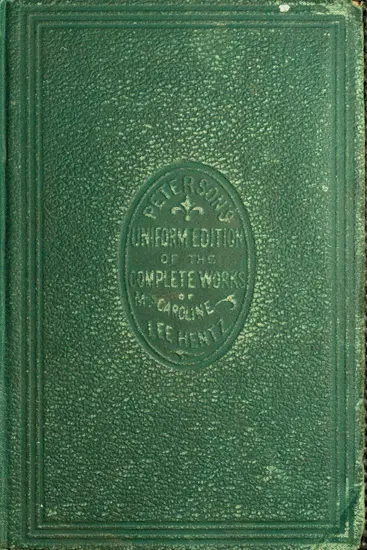
THE CLASSIC COLLECTION · 1857
"Love After Marriage; and Other Stories of the Heart" by Caroline Lee Hentz is a collection of short stories written in the late 19th century. The anthology appears to delve into themes related to love, relationships, and societal expectations, particularly focusing on the emotional intricacies surrounding marriage. The opening story introduces us to key characters whose fates become intertwined, setting the stage for the exploration of affection and social perceptions. At the start of the opening portion, readers are introduced to Augusta Temple, who is anxiously awaiting the arrival of her betrothed, Sydney Allison. However, their first encounter unfolds humorously, as Augusta reacts with dismay to Sydney's changed appearance, a result of illness, leading to feelings of disappointment and disdain. As Sydney, unaware of her reaction, contemplates his own acceptance of their union, both characters grapple with the emotional nuance of their situation. The narrative foreshadows a complex dynamic as they navigate their obligations, expectations, and personal feelings, ultimately hinting at deeper themes of love and emotional growth amidst societal pressures and personal struggles.
Introduction adapted from the source catalogue; source summaries may be automatically generated.
Free to read · English · 100,134 words · No account needed
MAKE TIME FOR A GOOD BOOK
On by default. Untick to stop anonymous reading totals. Each page counts after 10 seconds in view. How this works.
Anonymous counting is on unless you have switched it off.
"My mother!" ejaculated Rosamond, and drawing away her hand from her husband, she covered her face and wept. He reproached himself for his transient oblivion of her sorrow, and in endeavouring to soothe it, Eugenia was for a while forgotten. But he little dreamed of the fountain of Rosamond's tears. It would have been difficult for herself to have analyzed the strange feelings struggling within her. The bosom serpent, of whose existence she had been previously unconscious, then wound its first cold coil in her heart, and instead of shuddering at its entrance, and closing its portals on the deadly guest, she allowed it to wind itself in its deepest foldings, where its hissings and writhings were no less terrible, because unheard and unseen. Rosamond from earliest childhood had been the object of exclusive devotion from those she loved. She had never known a sharer in her mother's love, for unhappily she was an only child. The undivided fondness of her husband had hitherto been all that her exacting heart required. Now, she must admit an acknowledged sharer of his thoughts and affections, not as an occasional visiter, but as an constant inmate, an inseparable companion. The hallowed privacy of the domestic altar was destroyed, for the foot of the stranger had desecrated it. She could no longer appropriate to herself every look and smile of him, whose glances and smiles she believed her own inalienable right. If she walked abroad, another beside herself, must henceforth lean upon his arm. If she remained at home, another must also be seated at his side. And this invasion of her most precious immunities, was not to be endured for a short season, for weeks or months, but years, perhaps for life. These new and evil anticipations swept darkly across the troubled surface of Rosamond's mind, as she gazed on the varying countenance of Eugenia, and wondered she had never thought her handsome before. The gratitude and sensibility that beamed from her eyes whenever they turned on her benefactor, seemed to her diseased imagination the harbingers of a warmer emotion, and the constitutional ardour and frankness of her expressions were indicative of the most dangerous of characters. It was well for Rosamond that the recent death of her mother was a legitimate excuse for her pensiveness and gloom, as the incipient stage of the malady that was beginning to steal into her soul must otherwise have been perceived. Cecil, frank, confident, and unsuspecting, never dreamed that every attention bestowed on Eugenia was considered as a robbery to herself. Eugenia, warm-hearted, impulsive, and grateful, as little imagined that the overflowings of her gratitude were construed into feelings she would have blushed to have cherished. Cecil was passionately fond of music. Since her mother's death, Rosamond could not be prevailed upon to touch the keys of the instrument, and he was too kind to urge upon her a task repugnant to her feelings. But when Eugenia discovered that she possessed an accomplishment capable of imparting pleasure to him who had given her the means of acquiring it, she was never weary of exercising it. She sang too with rare sweetness and power, and never refused to sing the songs that Cecil loved to hear. Rosamond could not sing. She had never mourned over this deficiency before, but now she could not bear to think that another should impart a pleasure to her husband, she had not the means of bestowing. She forgot that she had selfishly denied to gratify his taste, in the way she had the power of doing, because it would have interrupted the indulgence of her filial grief. Another thing deeply wounded Rosamond's feelings: always accustomed to being waited upon by others, to have all her wishes anticipated, she never thought of showing her love by those active manifestations which most men love to receive. She would have laid down her life for her husband, if the sacrifice were required, but she never thought of offering him a glass of water with her own hand, because it was the office of the servants to supply his recurring wants. Never till she saw these attentions bestowed by another who was not a menial, did she imagine that affection could give an added relish, even to a cup of cold water, when offered to the thirsty lip. One warm, sultry day, Cecil entered after a long walk, and throwing himself on a sofa exclaimed, "Give me some drink, Titania--for I faint--even as a sick girl." Rosamond smiled at his theatrical assumption of Cæsar's dignity, and reaching out her hand, rang the bell. Eugenia flew out of the room, and returned long before a servant could answer the summons, with a glass of water, and bending one knee to the ground, with sportive grace she offered it to his acceptance.
Your reading position is saved on this browser. Take it to another device with a library code. Reading pages adapt to text, rather than matching a printed edition.
Caroline Lee Hentz
Caroline Lee Hentz
BEHIND THE BOOK
This eBook is for the use of anyone anywhere in the United States and most other parts of the world at no cost and with almost no restrictions whatsoever. You may copy it, give it away or re-use it under the terms of the Project Gutenberg License included with this eBook or online at www.gutenberg.org. If you are not located in the United States, you will have to check the laws of the country where you are located before using this eBook. Read the source licence.
The original source file, including credits and licence, is retained by this library. Request an original-format copy at no charge. Please include the book title and Project Gutenberg identifier #43019.
KEEP YOUR CURIOSITY GOING
Coulson Kernahan

Maurice Baring
Frances Wright
Cécile Tormay

Frederic Jesup Stimson

W. H. P. (William Henry Pope) Jarvis