THE CLASSIC COLLECTION✦Stories of Charlemagne and the twelve Peers of FranceCLASSIC FREE BOOKS
Stories of Charlemagne and the twelve Peers of France
Alfred John Church
THE CLASSIC COLLECTION · 1897
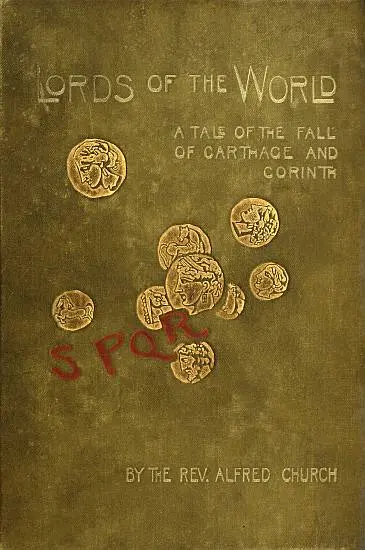
"Lords of the World: A Story of the Fall of Carthage and Corinth" by A. J. Church is a historical account written in the late 19th century. The narrative is focused on the dramatic events surrounding the fall of Carthage and Corinth in 146 B.C. and the struggles of the characters, particularly a young Greek named Cleanor, against the rise of Roman power." The opening of this work introduces readers to the fateful voyage of the "Melcart", a sacred Carthaginian ship, tasked with a vital mission despite the looming threat from the Romans. The ship's captain, Hanno, and his nephew, Mago, spot a Roman warship that threatens their return to Carthage. This tense encounter serves as a backdrop to depict the dire situation of Carthage as it faces imminent destruction. Following the fate of the "Melcart", the narrative shifts to the city of Chelys, where Lysis, a leading citizen, learns of Rome's brutal terms that threaten his family. The chapter ends with a poignant decision made by Lysis and his children, foreshadowing the sacrifices they must make amidst the chaos of their changing world.
Introduction adapted from the source catalogue; source summaries may be automatically generated.
Free to read · English · 91,511 words · No account needed
MAKE TIME FOR A GOOD BOOK
On by default. Untick to stop anonymous reading totals. Each page counts after 10 seconds in view. How this works.
Anonymous counting is on unless you have switched it off.
"They are in the temple of Æsculapius," replied the Carthaginian.
"Think you that they will be willing to surrender? They are brave men, and have done their best, and they shall be honourably treated."
"I know not what they intend," muttered the fugitive, with as much shame as it was in his nature to feel.
"I will at least try them," said Scipio, and he advanced towards the citadel, followed by some of his staff. Hasdrubal, much against his will, was constrained to accompany them.
A number of figures could be seen on the roof of the temple, which, as has been explained, formed the summit of the citadel. As soon as he came within ear-shot of the place he bade one of the prisoners step forward and communicate his ultimatum to what may be called the garrison of the temple.
"Scipio offers to all freeborn Carthaginian citizens, life on honourable terms. To all those who have deserted he promises a fair trial, so that if they can show any just cause for having left their country, even they may not despair of safety."
To this appeal no answer was made. After a while, as Scipio and his attendants waited for a reply, thin curls of smoke were seen to rise from the temple. Next a woman, leading a young boy by either hand, approached the edge of the roof. She was clothed in a flowing robe of crimson, confined at the waist by a broad golden girdle. Her long hair, which streamed far below her waist, was bound round her temples by a circlet of diamonds that flashed splendidly in the sun.
"By Baal," cried the Carthaginian prisoner who delivered Scipio's message, "it is the Lady Salamo herself."
"Who is it, say you?" asked Scipio.
"The Lady Salamo," answered the man, "the wife of my lord the general."
It was indeed the wife of Hasdrubal.
"Man of Rome," she began in a clear, penetrating voice, which made itself heard far and wide, addressing herself to Scipio, who was conspicuous in the scarlet cloak worn by generals commanding armies, "man of Rome, to thee there comes no blame from gods or men. Carthage was the enemy of your country, and thou hast conquered it. But on this Hasdrubal, this traitor who hath been false to his fatherland, to his gods, to me,--whose shame it is to have been his wife,--and to his children, may the gods of Carthage wreak their vengeance! And thou, Scipio, I charge thee, fail not to be their instrument."
She then turned to Hasdrubal.
Your reading position is saved on this browser. Take it to another device with a library code. Reading pages adapt to text, rather than matching a printed edition.
Alfred John Church
Alfred John Church
Alfred John Church & Homer

Alfred John Church
BEHIND THE BOOK
This eBook is for the use of anyone anywhere in the United States and most other parts of the world at no cost and with almost no restrictions whatsoever. You may copy it, give it away or re-use it under the terms of the Project Gutenberg License included with this eBook or online at www.gutenberg.org. If you are not located in the United States, you will have to check the laws of the country where you are located before using this eBook. Read the source licence.
The original source file, including credits and licence, is retained by this library. Request an original-format copy at no charge. Please include the book title and Project Gutenberg identifier #41464.
KEEP YOUR CURIOSITY GOING
Cécile Tormay

Moritz Busch
Coulson Kernahan
John L. Ransom

Maurice Baring
Frances Wright