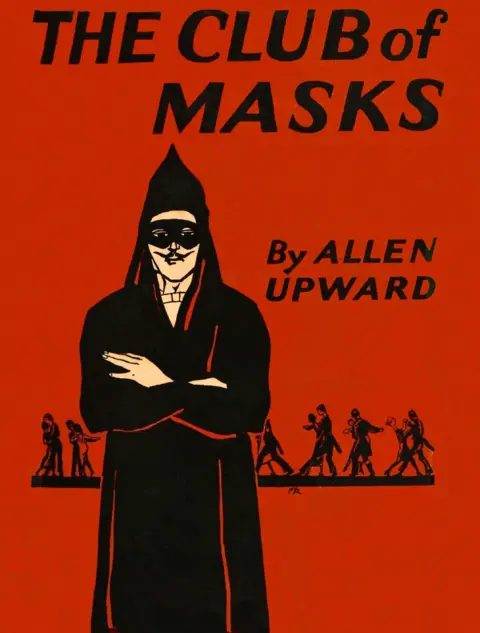
The club of masks
Allen Upward
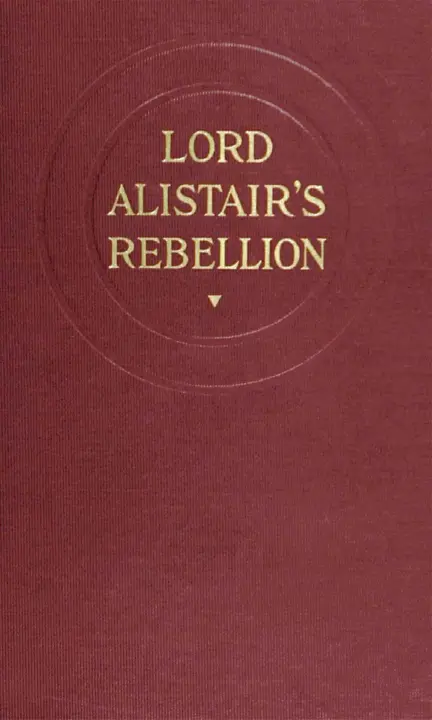
THE CLASSIC COLLECTION · 1910
"Lord Alistair's Rebellion" by Allen Upward is a novel written in the early 20th century. It presents a compelling narrative centered on Lord Alistair Stuart, a young man grappling with his failures and tumultuous relationship with the enigmatic Molly Finucane. As society watches from the sidelines, the story delves into themes of identity, morality, and the struggles against societal pressures within the backdrop of early 20th-century England. At the start of the story, London is vividly described at night, mirroring the contrasts in Alistair's life as he stands on Westminster Bridge. He contemplates his failures and the burden of his familial legacy while external tensions reflect the divide between the affluent north bank and the deprived south. The narrative introduces Alistair as a man facing public disgrace over his bankruptcy, which coincides with the success of his brother, the Duke of Trent. Alistair is emotionally intertwined with Molly Finucane, a woman of dubious reputation, whose influence complicates his journey toward self-discovery and societal redemption. Their complex romance, coupled with familial expectations, sets the stage for the unfolding consequences of Alistair's choices as he seeks to understand his place in a world steeped in moral ambiguity.
Introduction adapted from the source catalogue; source summaries may be automatically generated.
Free to read · English · 94,225 words · No account needed
MAKE TIME FOR A GOOD BOOK
On by default. Untick to stop anonymous reading totals. Each page counts after 10 seconds in view. How this works.
Anonymous counting is on unless you have switched it off.
He found himself intruding on the privacy of a stout, vulgar-looking man of sixty or thereabouts, whose name was too freely displayed over all his belongings, from a giant portmanteau down to a rug-strap, to leave the least observant fellow-passenger ignorant of his identity. It was the great Sir Gilbert Lawthorn, whose discovery that pickles could be sold three-halfpence a bottle cheaper than the prevailing price, and still be made to yield a profit, had earned him seven hundred thousand pounds and a baronetcy.
This great personage scowled on the inspector who admitted Stuart into his compartment, and then, after a scornful glance at the modest dressing-case, he remarked rudely:
“I generally have a carriage reserved for me, but this time I thought no one would be in the train. Are you going far?”
“I am going to Easterthorpe,” said Alistair, lowering a window.
The pickle-seller gazed at him in displeasure.
“I live there,” he announced, with conscious superiority. “My place is close to the Prince’s. I don’t think I have seen you in the neighbourhood.”
“I am going down to stay with friends,” said Stuart carelessly, as he
took up a paper.
“Do your friends know the Prince?” Sir Gilbert inquired, with patronage. “He called on me last week.”
Alistair lowered his paper and looked at the fat baronet over with
unfeigned surprise.
“I have not the honour of your acquaintance, sir,” he said deliberately, beginning to read again.
“I am Sir Gilbert Lawthorn!” burst out the indignant magnate.
“Thank you. Your pickles are excellent,” replied Alistair. And this time he was allowed to read his paper in peace.
When the train stopped at Easterthorpe a groom in neat black livery appeared at the door of the carriage, and touched his hat. Sir Gilbert, who evidently recognized him, took the salute to himself.
“His Royal Highness is not in here,” he proclaimed pompously. “Did you expect him by this train?”
The groom, without replying, took the case which Lord Alistair passed
out to him.
“This way, my lord, if you please,” he said deferentially, as Alistair prepared to follow his luggage.
The baronet turned crimson.
“I--I beg your pardon,” he stammered awkwardly, half holding out his hand. “I had no idea that you were going to stay with the Prince.”
But Alistair was not in a merciful mood as far as the middle class was
concerned.
“Who the devil do you suppose cares what you think, or who you are, or anything about you? I wish I had come third class.”
Your reading position is saved on this browser. Take it to another device with a library code. Reading pages adapt to text, rather than matching a printed edition.
Allen Upward
Allen Upward
Allen Upward
Allen Upward
BEHIND THE BOOK
This eBook is for the use of anyone anywhere in the United States and most other parts of the world at no cost and with almost no restrictions whatsoever. You may copy it, give it away or re-use it under the terms of the Project Gutenberg License included with this eBook or online at www.gutenberg.org. If you are not located in the United States, you will have to check the laws of the country where you are located before using this eBook. Read the source licence.
The original source file, including credits and licence, is retained by this library. Request an original-format copy at no charge. Please include the book title and Project Gutenberg identifier #66617.
KEEP YOUR CURIOSITY GOING
Coulson Kernahan

Maurice Baring
Frances Wright
Cécile Tormay

Frederic Jesup Stimson

W. H. P. (William Henry Pope) Jarvis