THE CLASSIC COLLECTION✦Captain Mary MillerCLASSIC FREE BOOKS
Captain Mary Miller
Harriet Jane Hanson Robinson
THE CLASSIC COLLECTION · 1898
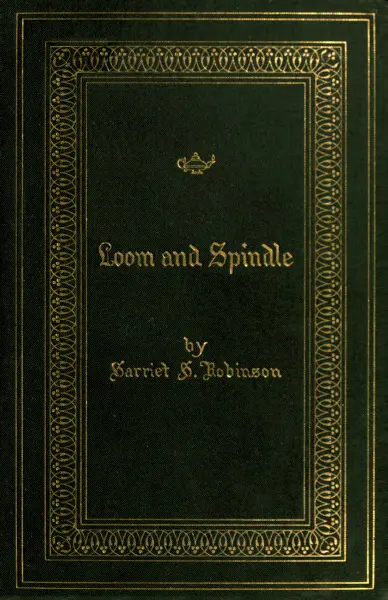
"Loom and Spindle: Or Life Among the Early Mill Girls" by Harriet H. Robinson is a historical account written in the late 19th century. This work offers an intimate look into the lives of women who worked in the textile mills at Lowell, Massachusetts during the early years of industrialization. Robinson chronicles the experiences of these women, emphasizing their resilience and the societal shifts that accompanied their entrance into the workforce. At the start of the narrative, the author reflects on the simplicity of life in rural New England prior to the dawn of mechanical industry. She describes how the advent of factories changed traditional roles for women, offering them opportunities for economic independence and education. Through the lens of her own experiences and those of her peers, the opening of this account paints a vivid picture of early mill life, highlighting the challenges and triumphs that defined the mill girls' experiences as they transitioned into a new era of labor and social status. The author appeals to both the nostalgia and the critical eye of her readers, setting the stage for a deeper exploration of the impact these women's lives had on American society.
Introduction adapted from the source catalogue; source summaries may be automatically generated.
Free to read · English · 48,295 words · No account needed
MAKE TIME FOR A GOOD BOOK
On by default. Untick to stop anonymous reading totals. Each page counts after 10 seconds in view. How this works.
Anonymous counting is on unless you have switched it off.
Cotton-mills had also been started in Waltham, Mass., where the first power-loom went into operation in 1814; but, for lack of water-power, these could be carried on to a limited extent only. It was therefore resolved, by gentlemen interested, that the “plant” should be moved elsewhere, and water privileges were sought in Maine, New Hampshire, and in Massachusetts. Finally, Pawtucket Falls, on the Merrimack River, was selected, as a possible site where a large manufacturing town could be built up. Here land was bought, and the place, formerly a part of Chelmsford, set off in 1826, was named Lowell, after Francis Cabot Lowell, who, through his improvements, was practically the inventor of the power-loom, and the originator of the cotton-cloth manufacture as now carried on in America.
Kirk Boott, the agent of the first corporation, (as the mills, boarding-houses,--the whole plant was called), was a great potentate in the early history of Lowell, and exercised almost absolute power over the mill-people. Though not an Englishman, he had been educated in England, had imbibed the autocratic ideas of the mill-owners of the mother country, and many stories were told of his tyranny, or his “peculiarities,” long after he ceased to be a resident.
Of his connection with the early history of Lowell, it is stated that, before the water-power was discovered there, he went as agent of the purchasers, to Gardiner, Me., and tried to buy of R. H. Gardiner, Esq., the great water privilege belonging to his estate. Mr. Gardiner would not sell, but was willing to lease it. Kirk Boott would not agree to this, or Lowell might now have been on the Kennebec in Maine. Then he came to Chelmsford, and saw the great Merrimack River and its possibilities, and set himself shrewdly to work to buy land on its banks, including the water-power. He represented to the simple farmers that he was going to raise fruit and wool, and they, knowing nothing of “mill privileges,” believed him, and sold the greatest water-power in New England for almost nothing. When they discovered his real design in buying the land, and the chance for making money that they had lost, they were angry enough. A song was made about it, and sung by everybody. It began thus:--
There came a young man from the old countree, The Merrimack River he happened to see, What a capital place for mills, quoth he, Ri-toot, ri-noot, ri-toot, ri-noot, riumpty, ri-tooten-a.
The next verse told how he swindled the farmers by inducing them to sell the water-power for nothing:--
And then these farmers so cute,
They gave all their lands and timber to Boott,
Ri-toot, ri-noot, etc.
Your reading position is saved on this browser. Take it to another device with a library code. Reading pages adapt to text, rather than matching a printed edition.
Harriet Jane Hanson Robinson
BEHIND THE BOOK
This eBook is for the use of anyone anywhere in the United States and most other parts of the world at no cost and with almost no restrictions whatsoever. You may copy it, give it away or re-use it under the terms of the Project Gutenberg License included with this eBook or online at www.gutenberg.org. If you are not located in the United States, you will have to check the laws of the country where you are located before using this eBook. Read the source licence.
The original source file, including credits and licence, is retained by this library. Request an original-format copy at no charge. Please include the book title and Project Gutenberg identifier #72757.
KEEP YOUR CURIOSITY GOING
Cécile Tormay

Moritz Busch
John L. Ransom
Frances Wright
Cécile Tormay

Mabel Potter Daggett