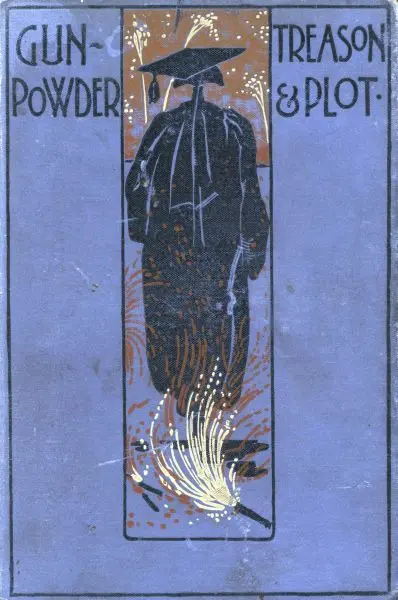
Gunpowder Treason and Plot, and Other Stories for Boys
Harold Avery & R. B. (Richard Baxter) Townshend & Frederick Whishaw
THE CLASSIC COLLECTION · 1899
"Lone Pine: The Story of a Lost Mine" by R. B. Townshend is a fictional narrative likely written in the late 19th century. The story is set in a New Mexican pueblo and follows the interwoven tales of several characters, particularly focusing on the young Indian lovers, Felipe and Josefa, who are navigating the obstacles of their forbidden love amidst societal expectations and family pressures. The opening of the book introduces us to Felipe, a young Indian boy in the pueblo of Santiago, as he secretly meets with his beloved Josefa. In a tense exchange, they discuss her impending arranged marriage to an undesirable suitor, Ignacio, which propels them towards the desperate thought of eloping. Meanwhile, a white prospector, known as Don Estevan, is also introduced, who is trying to help the pueblo with their irrigation issues while harboring his own ambitions related to an ancient and hidden silver mine. This dual storyline sets the stage for a rich exploration of love, cultural conflict, and the pursuit of dreams against the backdrop of a vibrant yet challenging landscape.
Introduction adapted from the source catalogue; source summaries may be automatically generated.
Free to read · English · 118,020 words · No account needed
MAKE TIME FOR A GOOD BOOK
On by default. Untick to stop anonymous reading totals. Each page counts after 10 seconds in view. How this works.
Anonymous counting is on unless you have switched it off.
Pedrito, a small son of the peon, came running from the kitchen with a live coal in a piece of hoop iron, which he offered to Stephens, pulling off his cap and standing bareheaded before the honoured guest, with old-world courtesy. Manuelita knew very well what was up, and fixed herself down to listen just by the door, where she could hear every word. Stephens settled himself down comfortably on the divan, and began.
"I picked up with this partner, who has just written me this letter, Rockyfeller his name is, when I was up in Idaho. We took to each other kind of natural-like, and he and I pulled together as amiably as a span of old wheel-horses for a goodish bit. We were quite different sort of men, too, in ourselves; but somehow that seemed to make it all the easier for us to get along. We worked in the mines all that winter, and when spring came we had enough saved to rig out a real A1 prospecting outfit. Rocky--that's what I called him--used to spree a bit every once in a while, but nothing really to hurt, you know. He could pull up short, which is more than most men who go on the spree have sense to do. His sprees didn't prevent our saving over four hundred dollars. Then we bought two cayuses to ride--cayuses is the name they give to those broncho horses up that way,--and a good pack-mule and plenty of grub and blankets. We put in the whole of that summer prospecting off in the Coeur d'Alène country, and we staked out a lot of claims on different lodes, and we put in a good bit of work on some of 'em so as to hold 'em for the year. Well, come fall, we hadn't been able to sell any one of our claims, and we hadn't taken out any high-grade ore that would pay for packing over the mountains to any reduction works, and there we were, short of cash. So we cleared from that Coeur d'Alène country at last. It was too far from a railroad. We sold our claims for what we could get, and that wasn't much, and we lit out for Montana, and there that next summer we just did everlastingly prospect over some of the roughest country I ever ran across. The Indians were powerful bad too, to say nothing of the road-agents. But we struck it at last pretty rich on a lode that we called 'The Last Lap'--that's the last round, you know, that the horses make on a race-track. I'd spent eight mortal years chasing my tail all round the Pacific slope looking for a good lode, and here it was, after all, across on the head-waters of the Missouri in Montana. We knew we'd got a good thing. The ledge was three to five feet thick, with a nice, uniform lot of high-grade ore, and a special streak that would assay up to five hundred dollars a ton. I never saw a nicer lode. The only thing was, it was a plaguy long way from any quartz mill for the free ore, and it was a plaguy sight farther to the only reduction works that could handle the richest portions of it. Of course what the mine wanted was a smelter of its own, right on the spot, but that's what got us. We hadn't the capital to start it. It wanted at least fifty or a hundred thousand dollars laid out before we could hope to get back a cent. That mine was worth a million, if we'd had it in California, but off there, five or six hundred miles from a railroad, owned by us two prospectors who'd just about got to the end of our tether, it was too big a thing for us to handle. Well, we did what work we could on it. We sunk a shaft and ran a bit of a drift, and we went into Helena and we offered a share in it to a few capitalists we thought we could trust. None of 'em would even look at it. At last we ran on to Colonel Starr,--old Beebee Starr; likely you never heard of him, but they knew him well enough up there,--and he rode out with us to see it; and he tumbled to it, too, as soon as ever he'd grubbed out a few specimens with his own pick and had 'em assayed. Well, he wouldn't take a half-interest and find the money to develop the mine, which was what we wanted him to do, and we were stony-broke by that time except for our cayuses and our camp outfit, and winter a-coming on; and the long and short of it was that we gave Colonel Starr a quitclaim deed to our whole interest in the Last Lap Lode for twelve thousand five hundred dollars in greenbacks, paid down on the nail. The Last Lap has paid more than that much in a month in dividends since then, but that's common enough; that's how things do pan out; but I don't believe in whining over my luck, never did. And I'd been waiting eight years for a look in, and I didn't despise getting my half of the twelve thousand five hundred dollars, if the Last Lap was worth a million.
Your reading position is saved on this browser. Take it to another device with a library code. Reading pages adapt to text, rather than matching a printed edition.
Harold Avery & R. B. (Richard Baxter) Townshend & Frederick Whishaw
BEHIND THE BOOK
This eBook is for the use of anyone anywhere in the United States and most other parts of the world at no cost and with almost no restrictions whatsoever. You may copy it, give it away or re-use it under the terms of the Project Gutenberg License included with this eBook or online at www.gutenberg.org. If you are not located in the United States, you will have to check the laws of the country where you are located before using this eBook. Read the source licence.
The original source file, including credits and licence, is retained by this library. Request an original-format copy at no charge. Please include the book title and Project Gutenberg identifier #42268.
KEEP YOUR CURIOSITY GOING
Cécile Tormay

Moritz Busch
Coulson Kernahan
John L. Ransom

Maurice Baring
Frances Wright