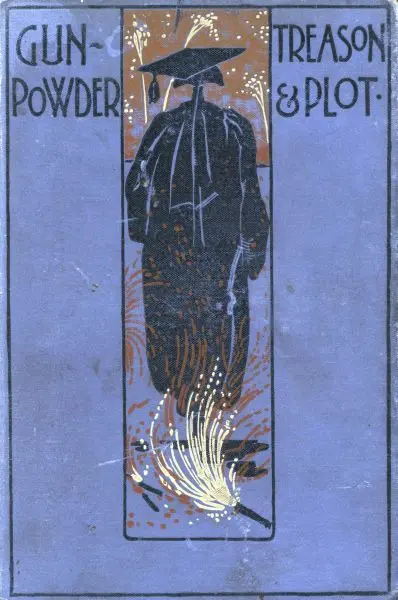
Gunpowder Treason and Plot, and Other Stories for Boys
Harold Avery & R. B. (Richard Baxter) Townshend & Frederick Whishaw
THE CLASSIC COLLECTION · 1899
"Lone Pine: The Story of a Lost Mine" by R. B. Townshend is a fictional narrative likely written in the late 19th century. The story is set in a New Mexican pueblo and follows the interwoven tales of several characters, particularly focusing on the young Indian lovers, Felipe and Josefa, who are navigating the obstacles of their forbidden love amidst societal expectations and family pressures. The opening of the book introduces us to Felipe, a young Indian boy in the pueblo of Santiago, as he secretly meets with his beloved Josefa. In a tense exchange, they discuss her impending arranged marriage to an undesirable suitor, Ignacio, which propels them towards the desperate thought of eloping. Meanwhile, a white prospector, known as Don Estevan, is also introduced, who is trying to help the pueblo with their irrigation issues while harboring his own ambitions related to an ancient and hidden silver mine. This dual storyline sets the stage for a rich exploration of love, cultural conflict, and the pursuit of dreams against the backdrop of a vibrant yet challenging landscape.
Introduction adapted from the source catalogue; source summaries may be automatically generated.
Free to read · English · 118,020 words · No account needed
MAKE TIME FOR A GOOD BOOK
On by default. Untick to stop anonymous reading totals. Each page counts after 10 seconds in view. How this works.
Anonymous counting is on unless you have switched it off.
"He could have eaten with me for all that," said Stephens, "but we hadn't decided about who was to go to Santa Fé with me. Will you?"
"Well, I have no horse here, Don Estevan," said the old man. "After breakfast we will see about it."
"Very well," said Stephens in a grumbling tone. "I suppose we must wait their pleasure. It isn't much running off to breakfast there'd be if it was anything they wanted to do."
However, there was nothing to do but wait, and Stephens had plenty of time to do his own cooking in the interval. It was nearly an hour before the chiefs were reassembled--having, indeed, to be sent for by Stephens individually; but by persistence he got them together at last and proceeded to business.
"Now, friends," he began, "who is going with me to Santa Fé? Don't all speak at once," he added in English for his own benefit, smiling grimly as he saw the blank look on their faces as he renewed his unwelcome proposal.
"Will you go, Benito?" he said, determined to press them one by one.
The Indian instead of replying conversed rapidly with the others. They had hoped that the transfer of Josefa to Stephens might have modified the American's absurd passion for what he considered to be justice.
"Look here, Don Estevan," began Benito, "it is better to wait. To-morrow, when Tito gets back, then----"
"Oh, nonsense!" broke in Stephens impatiently, "Tito mayn't be back for a week, and it makes no odds about him anyhow."
"But," interrupted Ramon, another of the chiefs, "we have got no horses here. You have your own mare, and the mule for Salvador, but we have none. When Tito comes back with your other mule----"
"Oh, Tito be bothered!" said the American. "I tell you we don't want
him."
Suddenly there was a shout outside. A Mexican rider came tearing up the village, and reined his reeking horse on to his haunches at Stephens's door. Flakes of bloody foam flew from the bit, and the horseman's rowels were red. He sprang into the room, covered with sweat and dust from the road.
"The Señorita Sanchez!" he exclaimed breathlessly, "the Señorita Sanchez has been carried off by the Navajos in the night." All present leapt to their feet.
"What!" cried Stephens, "Manuelita?" He stood aghast.
"Yes," repeated the Mexican; "the Señorita Manuelita Sanchez is in the hands of those villains."
"Of that Mahletonkwa!" the American exclaimed, seizing his rifle; "but
how? and where are they?"
Your reading position is saved on this browser. Take it to another device with a library code. Reading pages adapt to text, rather than matching a printed edition.
Harold Avery & R. B. (Richard Baxter) Townshend & Frederick Whishaw
BEHIND THE BOOK
This eBook is for the use of anyone anywhere in the United States and most other parts of the world at no cost and with almost no restrictions whatsoever. You may copy it, give it away or re-use it under the terms of the Project Gutenberg License included with this eBook or online at www.gutenberg.org. If you are not located in the United States, you will have to check the laws of the country where you are located before using this eBook. Read the source licence.
The original source file, including credits and licence, is retained by this library. Request an original-format copy at no charge. Please include the book title and Project Gutenberg identifier #42268.
KEEP YOUR CURIOSITY GOING
Cécile Tormay

Moritz Busch
Coulson Kernahan
John L. Ransom

Maurice Baring
Frances Wright