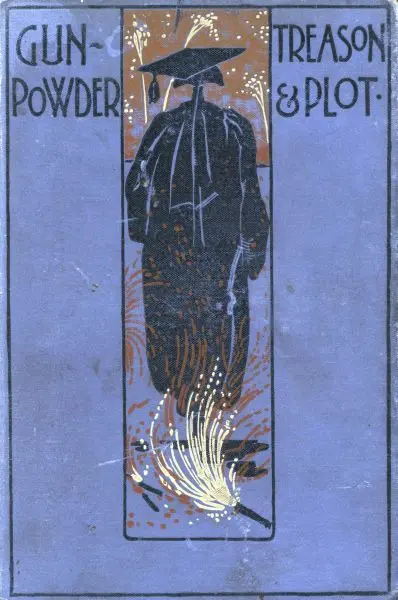
Gunpowder Treason and Plot, and Other Stories for Boys
Harold Avery & R. B. (Richard Baxter) Townshend & Frederick Whishaw
THE CLASSIC COLLECTION · 1899
"Lone Pine: The Story of a Lost Mine" by R. B. Townshend is a fictional narrative likely written in the late 19th century. The story is set in a New Mexican pueblo and follows the interwoven tales of several characters, particularly focusing on the young Indian lovers, Felipe and Josefa, who are navigating the obstacles of their forbidden love amidst societal expectations and family pressures. The opening of the book introduces us to Felipe, a young Indian boy in the pueblo of Santiago, as he secretly meets with his beloved Josefa. In a tense exchange, they discuss her impending arranged marriage to an undesirable suitor, Ignacio, which propels them towards the desperate thought of eloping. Meanwhile, a white prospector, known as Don Estevan, is also introduced, who is trying to help the pueblo with their irrigation issues while harboring his own ambitions related to an ancient and hidden silver mine. This dual storyline sets the stage for a rich exploration of love, cultural conflict, and the pursuit of dreams against the backdrop of a vibrant yet challenging landscape.
Introduction adapted from the source catalogue; source summaries may be automatically generated.
Free to read · English · 118,020 words · No account needed
MAKE TIME FOR A GOOD BOOK
On by default. Untick to stop anonymous reading totals. Each page counts after 10 seconds in view. How this works.
Anonymous counting is on unless you have switched it off.
He took down a coil of fuse from a shelf, cut off a piece, rolled it up, and stowed it away along with the charges of blasting-powder in his pockets, first feeling carefully for stray matches inside. "Yes," he continued, as his fingers pried into every angle of each pocket preparatory to filling it with explosive matter, "drones is the only name for Spaniards when it comes to talking real work. They don't work, and they never did. They've made this Territory into a Sleepy Hollow. What she wants is a few genuine Western men, full of vim, vinegar, and vitriol, just to make things hum for a change. New Mexico has got the biggest kind of a future before her when the right sort of men come along and turn to at developing her."
He stood in the middle of his outer room, patting himself gently in various parts to make sure that he had got all his needful belongings stowed away. "Now then, Faro," and he addressed the dog, who was still curled upon the bed eyeing his master doubtfully, uncertain whether he was to be left at home on guard or taken out for a spree; "what this here benighted country needs is the right kind of men and the right kind of dogs. Aint that the sort of way you'd put it if you were a human? Come along then, and you and me'll take a little trot up along the ditch and astonish their weak minds for 'em."
With yelps of joy, uttered in a bulldog's strangled whistle, Faro bounded off the bed on to the earthen floor, and danced rapturously round his master, who was still thoughtfully feeling his pockets from the outside to make certain that when he reached his destination he would not find that some quite indispensable requisite had been left behind. Then he bounced out of the open door into the street, scattered a pig and three scraggy chickens that were vainly hunting around after stray grains of corn where the horses had been fed, and then halted to await his master out by the corrals. Stephens, having at last assured himself that he had really forgotten nothing, came out after the dog, pulling to the door behind him, and the pair started off to walk up alongside the acequia. There was no water in it to-day, as it had been cut off up above to facilitate the work of blasting. Here and there in the fields Indians were at work: some wielded their great heavy hoes, with which they hacked away at the ground with astonishing vigour; others were ploughing with pairs of oxen, which walked stiffly side by side, their heads lashed firmly by the thick horns to the yoke, as they dragged the curious old-fashioned wooden ploughs, just like those described by Virgil in the Georgics two thousand years ago. In the peach orchards near the village women were at work, and little naked brown children stopped their play to stare at the white man as he passed, with the simplicity of Arcadia. After half an hour's walk he reached his destination, a rocky promontory that jutted out from the hills into the valley. The acequia ran round its base, and the Indians, in order to bring as much of the valley as possible under irrigation, had carried the line of the ditch as high as they could. They had carried it so high that where it rounded the rocks a point projected into it, and made it too narrow and too shallow to carry the amount of water that it was easily capable of containing both above and below. They had no saws to cut boards to make a flume for the ditch; and, besides, such a piece of engineering was quite beyond the range of their simple arts. This weak place had been a hindrance and a trial to them from time immemorial. If they attempted to run their ditch more than half full of water it brimmed over at this point, and then broke down the bank. It had to be patched every year,--sometimes several times in one year,--and this entailed much extra work on the members of the village community, who were all bound by their laws to work on the ditch when necessary, without pay. In fact, the repair of the ditch at the point of rocks was one of the stock grievances of the pueblo, everyone thinking that he was set to do more than his share of the work. Besides, it naturally broke down when fullest, that is to say, when they needed it most for irrigation, and everyone wanted water for his maize or his wheat crop. No wonder, then, they were first incredulous and then overjoyed when by a fortunate chance Stephens happened to hear of their difficulty and went to examine the spot, saw at once that it was a simple matter, and offered to lend them tools, to show them how to drill the necessary holes, and then to blast away the obnoxious rocks for them. These Indians were familiar with firearms and knew the force of gunpowder, but were ignorant of its use for blasting purposes; nor were their Mexican neighbours in this part of the country much more enlightened. Accordingly they had accepted with joy Stephens's proffered assistance, having learned by experience to set a high value on the skill and resource of their American friend.
Your reading position is saved on this browser. Take it to another device with a library code. Reading pages adapt to text, rather than matching a printed edition.
Harold Avery & R. B. (Richard Baxter) Townshend & Frederick Whishaw
BEHIND THE BOOK
This eBook is for the use of anyone anywhere in the United States and most other parts of the world at no cost and with almost no restrictions whatsoever. You may copy it, give it away or re-use it under the terms of the Project Gutenberg License included with this eBook or online at www.gutenberg.org. If you are not located in the United States, you will have to check the laws of the country where you are located before using this eBook. Read the source licence.
The original source file, including credits and licence, is retained by this library. Request an original-format copy at no charge. Please include the book title and Project Gutenberg identifier #42268.
KEEP YOUR CURIOSITY GOING
Cécile Tormay

Moritz Busch
Coulson Kernahan
John L. Ransom

Maurice Baring
Frances Wright