THE CLASSIC COLLECTION✦The art of fictionCLASSIC FREE BOOKS
The art of fiction
Walter Besant
THE CLASSIC COLLECTION · 1892
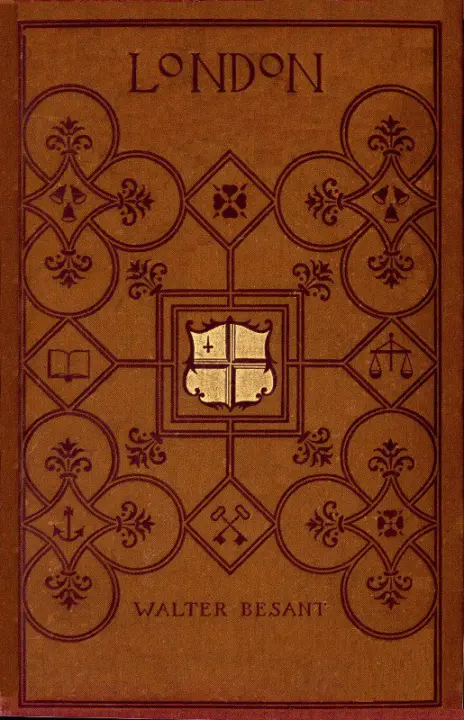
"London" by Walter Besant is a historical account, written in the late 19th century. The work aims to depict the city of London through vivid snapshots that reflect its streets, buildings, and especially its citizens engaging in various aspects of daily life, from trade to celebrations. Besant intends to delve into the lives of ordinary Londoners across different periods, offering readers a unique perspective on the social fabric of the city. The beginning of "London" introduces the author's intention to create a comprehensive portrayal of the city, highlighting the need to capture the essence of its history and the lives of its people. Besant references historical authorities such as Gildas and the Anglo-Saxon Chronicle to explain the context of London's evolution following the departure of the Romans. He elaborates on the city's topographical significance and its dramatic changes, indicating continuity in life despite conquests and societal shifts. Overall, the opening sets the stage for an in-depth exploration of London's transformation through various historical phases and its impact on the everyday lives of its inhabitants.
Introduction adapted from the source catalogue; source summaries may be automatically generated.
Free to read · English · 119,737 words · No account needed
MAKE TIME FOR A GOOD BOOK
On by default. Untick to stop anonymous reading totals. Each page counts after 10 seconds in view. How this works.
Anonymous counting is on unless you have switched it off.
"Thou, too, Cuneglass, why art thou fallen into the filth of thy former naughtiness? Yea, since the first spring of thy tender youth, thou Bear, thou Rider and Ruler of many and Guider of the chariot which is the receptacle of the Bear, thou Contemner of God and Vilifier of his order! Thou tawny Butcher! Why, besides thine other innumerable backslidings, having thrown out of doors thy wife, dost thou, against the apostle's express prohibition, esteem her detestable sister, who has vowed unto God everlasting continency, as the very flower of the celestial nymphs?"
In similar gentle strains he approaches, and delicately touches upon,
the sins of other kings.
This kind of language is difficult to sustain, and sometimes leads to contradictions. Thus, in one sentence, the Sapient speaks of his countrymen as wholly ignorant of the art of war, and in another he tells how the flower of the British youth went off to fight for Maximus.
As regards the alleged luxury of the time, this poor monk wrote from a dismal cell, very likely of wattle and daub, certainly draughty and cold; his food was poor and scanty; his bed was hard; life to him was a long endurance. The roasted meats, the soft pillows and cushions, the heated rooms of the better sort, seemed to him detestable and wicked luxury, especially when he thought of the Saxons and Jutes overrunning the ruined country. Of course, in every age the wealthy will surround themselves with whatever comforts can be procured. We are in these days, for instance, advanced to what our ancestors would have called an inconceivable height of luxury. One would like to invite the luxurious Cuneglass to spend a day or two with a young man of the present day. Those who were neither rich nor free lived hardly, as they do to this day, but more hardly; those who were young and strong, even though they were not perhaps trained to the use of arms, easily learned how to use them, and when it came to victory or death, they soon recovered the old British spirit. This is not the place, otherwise it would be interesting to show what a long and gallant stand was made by these people whom it is customary to call cowardly and luxurious--these ancestors of the gallant Welsh.[1] It is manifest that a period of two hundred years and more of peace, almost profound, their frontiers and their coasts guarded for them by the legions of Rome, must have lowered the British spirit. But the people quickly recovered it. The Arthurian epic, it is certain, has plenty of foundation in fact, and perhaps poor King Cuneglass himself, the Bear and Butcher, wielded a valiant sword in spite of his family troubles. The Britons were, it is quite certain, prone to internal dissensions, which greatly assisted their defeat and conquest. But they had one bond of union. Their enemies were pagan; they were Christian. Gildas addresses a nation of Christians, not a church planted among idolaters. Christian symbols and emblems have been found everywhere on the site of Roman towns, not, it is true, in large quantities, but they are found; while, though altars have also been found, and pagan emblems and statuettes of gods, there are no ruins anywhere in Britain, except at Bath, of Roman temples. Their faith, like the Catholicism of the Irish, was their national symbol. It separated them broadly from their enemies; it gave them contempt for barbarians. The faith therefore flourished with great strength and vigor. But the popular Christianity seems to have been in Britannia, as everywhere, a very mixed kind of creed. As in Southern Italy among the peasants there linger to this day traditions, customs, and superstitions of paganism which the people call the Old Faith, so in Britain there lingered among the people ceremonies and beliefs which the Church vainly tried to suppress, or craftily changed into Christian observances. Such things linger still in Wales, though the traveller regards them not. In the same way the folk-lore of our own time in our own villages is still largely composed of the beliefs and superstitions inherited from our old English--not British--ancestors. What happens is always the same, and must be the same. In times of religious revolution the common folk change the name of their God, but not his nature or his attributes. Apollo becomes the Christ, but in the minds of the Italian peasants he remains the old Apollo. The great Sun-God, worshipped under so many names and with so many attributes, remains in the hearts of rustics long, long centuries after mass has been said and the Host has been elevated. Nay, it has even been said that the mass itself is an adaptation of pagan ritual to Christian worship. But the people, whatever their old beliefs, called themselves Christian, and that one fact enabled them to forget their jealousies and quarrels in times of emergency, and sometimes to act together. They were Christian; their enemies were pagan. It is significant that in one passage Gildas--who is quoted by Bede--reproaches them for not converting their conquerors, among whom they lived. This proves, if the fact wanted proof, (1) that the Britons were not exterminated by their conquerors; (2) that they were allowed to continue unmolested in their own religion; and (3) that they kept it to themselves as a possession of their own, a consolation in disaster, and a mark of superiority and dignity.
Your reading position is saved on this browser. Take it to another device with a library code. Reading pages adapt to text, rather than matching a printed edition.
Walter Besant
Walter Besant

Walter Besant

Walter Besant
BEHIND THE BOOK
This eBook is for the use of anyone anywhere in the United States and most other parts of the world at no cost and with almost no restrictions whatsoever. You may copy it, give it away or re-use it under the terms of the Project Gutenberg License included with this eBook or online at www.gutenberg.org. If you are not located in the United States, you will have to check the laws of the country where you are located before using this eBook. Read the source licence.
The original source file, including credits and licence, is retained by this library. Request an original-format copy at no charge. Please include the book title and Project Gutenberg identifier #45752.
KEEP YOUR CURIOSITY GOING
Cécile Tormay

Moritz Busch
John L. Ransom
Frances Wright
Cécile Tormay

Mabel Potter Daggett