THE CLASSIC COLLECTION✦The art of fictionCLASSIC FREE BOOKS
The art of fiction
Walter Besant
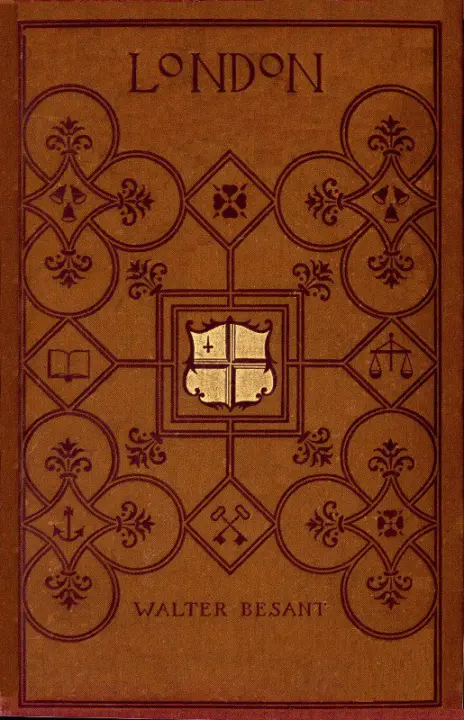
THE CLASSIC COLLECTION · 1892
"London" by Walter Besant is a historical account, written in the late 19th century. The work aims to depict the city of London through vivid snapshots that reflect its streets, buildings, and especially its citizens engaging in various aspects of daily life, from trade to celebrations. Besant intends to delve into the lives of ordinary Londoners across different periods, offering readers a unique perspective on the social fabric of the city. The beginning of "London" introduces the author's intention to create a comprehensive portrayal of the city, highlighting the need to capture the essence of its history and the lives of its people. Besant references historical authorities such as Gildas and the Anglo-Saxon Chronicle to explain the context of London's evolution following the departure of the Romans. He elaborates on the city's topographical significance and its dramatic changes, indicating continuity in life despite conquests and societal shifts. Overall, the opening sets the stage for an in-depth exploration of London's transformation through various historical phases and its impact on the everyday lives of its inhabitants.
Introduction adapted from the source catalogue; source summaries may be automatically generated.
Free to read · English · 119,737 words · No account needed
MAKE TIME FOR A GOOD BOOK
On by default. Untick to stop anonymous reading totals. Each page counts after 10 seconds in view. How this works.
Anonymous counting is on unless you have switched it off.
-- women, employment of, 92
Saxons, East, 35
-- -- before and after conversion to Christianity, 44
-- fond of vegetables, 87
Schools, Grammar, erected by Henry VI., 240, 303
-- -- in time of Elizabeth, 302
-- of the alien priories suppressed, 240
Sebbi, King, 53
Selds, 186
Sernes Tower, 83
Servants, ladies used to beat, 310
-- troop of, a mark of state, 310
"Setter," the, in the Georgian period, 489
Sevenoke, Sir William, 194, 216
"Shabbaroons," 415
Shakespeare, William, 364
Sion College, 269
Smithfield, horse-fair in, 51
"Sompnour" in Chaucer, 150
Soper's Lane, pepperers and grocers in, 217
Southwark Fair, 457
Sports, 51, 223
Stage-coaches, 465
Staple, Sir Richard, 297
Steelyard, the, 182
Still-room, importance of the, 473
Stodie, Sir John, 179, 238
Stow, John, the antiquary, 320
Sunday amusements in the Georgian period, 490
Sutton, Thomas, 266
Swan Inn, Dowgate, 368
-- with Two Necks, the, 465
Taxes of a house about 1750, 462
Tea becomes cheaper, temp. Charles II., 410
Tea-drinking, 467
-- John Wesley on, 470
Temple Bar, 433
-- Church, the, 67
Thames, River, in Tudor times, 366
-- Street, fishmongers in, 217
Theatre companies, temp. Elizabeth, 307
-- first, built in 1570, 307
Theatres at end of sixteenth century, 307
Tobacco, use of, spreads rapidly, 313
Tofig, the royal standard-bearer, 136
Tom's Coffee-house, 411
Torgnton, Desiderata de, hanged for theft, 247
Torold, Roger, imprisoned for speaking disrespectfully of the mayor, 247
Tournaments, temp. Elizabeth, 304
Tower of London, 82
"Town Parson" in Chaucer, 150
-- Royal, 82
Trade, foreign, of City, 190
-- great advance of, in time of Elizabeth, 289, 295
-- loss and injury caused to, by the Plague, 384
Trades carried on in the City, 218
-- enumerated by Daniel Defoe, 380
-- of the City allotted their own places of work and sale, 50
Tradition, continuity of, 20
Turkey Company, the, 297
Vegetables as part of daily diet reintroduced, 313
Venice treacle, 473
Vicinal Way, 23
Vintners' Hall, 179
Vintry, the, 179
Vox Civitatis, tract on the Plague, 392
Wages of the craftsmen, 243
Walls, City, 433
Waltham Abbey Church, 135
-- -- Cranmer at, 139
-- -- Foxe's Book of Martyrs written here, 139
-- -- Harold at, 138
-- -- history of, 136-139
-- -- Thomas Fuller wrote his Church History here, 139
Walworth, Sir William, 194
Wardens of Companies, 211
Washington, arms of, in Holy Trinity Church, Minories, 132
Water, supply of, 83
Watling Street, 23
Weavers, Guild of, 208
Wells, Sir John, 197
Wesley, John, on tea-drinking, 470
Wethell, Richard, 311
Wheat, price of, in time of George II., 482
"Whip Jack," the, 416
Whitawers' Company, 453
White Friars, the house of the Carmelites, 119
Whitefriars Theatre, 308
Whittington, Richard, 180, 199, 290, 301
-- College of, 143
"Wild Rogue," the, 416
William of Wykeham, 55
Willoughby, Sir Hugh, 297
Winchester House, 264, 269, 289
Window-tax, 462
Wine-drinking, introduced by Normans, 88
Women, English, excel in embroidery, 92
Wonderful Year, The, pamphlet on plague, 387
Wood Street Compter, a prison, 497
LONDON LETTERS, and Some Others. By GEORGE W. SMALLEY, London Correspondent of the New York Tribune. Two Volumes. 8vo, Cloth, Uncut Edges and Gilt Tops, $6 00.
Your reading position is saved on this browser. Take it to another device with a library code. Reading pages adapt to text, rather than matching a printed edition.
Walter Besant
Walter Besant

Walter Besant

Walter Besant
BEHIND THE BOOK
This eBook is for the use of anyone anywhere in the United States and most other parts of the world at no cost and with almost no restrictions whatsoever. You may copy it, give it away or re-use it under the terms of the Project Gutenberg License included with this eBook or online at www.gutenberg.org. If you are not located in the United States, you will have to check the laws of the country where you are located before using this eBook. Read the source licence.
The original source file, including credits and licence, is retained by this library. Request an original-format copy at no charge. Please include the book title and Project Gutenberg identifier #45752.
KEEP YOUR CURIOSITY GOING
Cécile Tormay

Moritz Busch
John L. Ransom
Frances Wright
Cécile Tormay

Mabel Potter Daggett